Fast, affordable Internet access for all.

Fast, affordable Internet access for all.

It’s been one long year since Chris took a bet with Travis over the FCC updating the definition of broadband, and this week we’ll find out who won (not looking good, Chris). In this episode of the Connect This!

Building on the fiber backbone that connects Choptank Electric Cooperative’s smart grid, the member-owned cooperative began construction of a fiber-to-the-home network (FTTH) last year that will reach all 54,000 of its members spread out across nine counties. Now subscribers are being lit up for service as the co-op continues to extend the network.

With nearly 65,000 households unable to connect to the Internet at basic broadband speeds of 25/3 Megabits per second (Mbps), municipalities across the Green Mountain State have risen to the fore in formulating creative models for addressing the tens of thousands of homes without broadband access.

In this episode of the Connect This! Show, co-hosts Christopher and Travis Carter (USI Fiber) are joined by Peggy Schaffer (ConnectME) and Matt Schmit (Connect Illinois) for a closer look at state broadband offices.

As it has become increasingly clear that the private market alone is not going to solve America’s connectivity crisis, last year two states (Arkansas and Washington) rolled back their preemption laws that were protecting monopoly incumbent providers from competition and now allow local and regional governmental entities to build the telecommunications infrastructure their residents need. Now, one Nebraska lawmaker has recently filed a bill that, if passed, would significantly remove the Cornhusker State’s current barriers to municipal broadband.

As federal funds to expand high-speed Internet access began to flow to states and local communities through the American Rescue Plan Act, and with billions more coming under the Infrastructure Investment and Jobs Act, Big Telecom is beginning to mount its expected opposition campaign designed to discourage federal (and state) decision-makers from prioritizing the building of publicly-owned networks. Part of the impetus, no doubt, was the flood of responses to the NTIA’s Notice and Request for Comment (including ours) documenting the need for community-driven solutions in this once-in-a-generation investment that could close the digital divide forever. Meanwhile, successful municipal broadband projects abound, hitting new milestones each year.

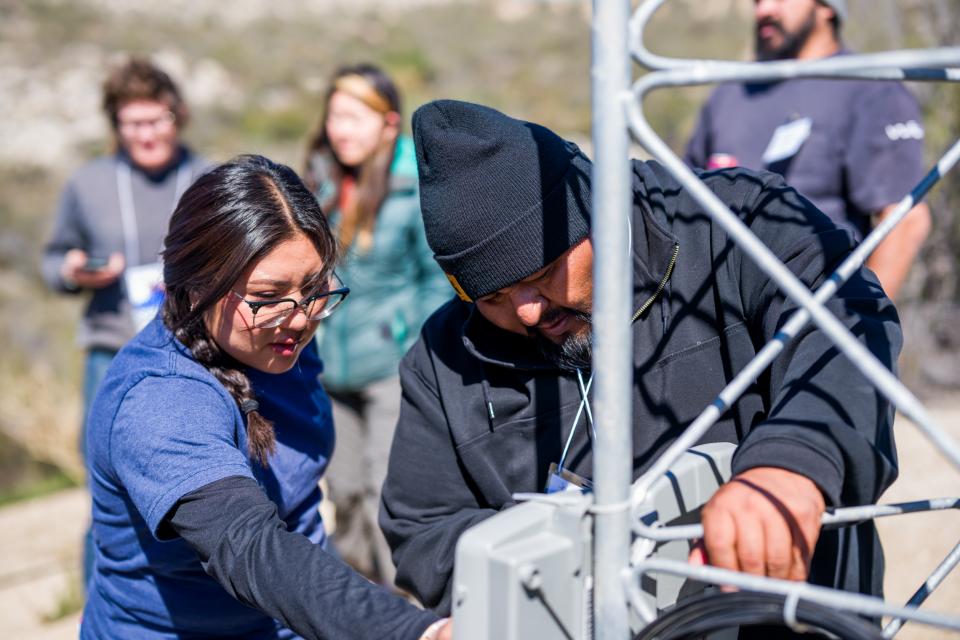
Last year, the Confederated Tribes of the Colville Reservation in Washington State were one of 327 Native Nations to receive wireless spectrum as part of the FCC’s Rural Tribal Window program.
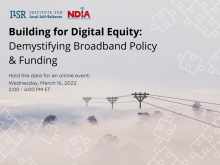
We're living through a time with an unprecedented level of broadband infrastructure funding, fueled not only by the American Rescue Plan, but the Consolidated Appropriations Act, the Coronavirus Capital Projects Fund, and the Infrastructure Investment and Jobs Act. Hundreds of community-driven projects are already underway, but finding solid footing amidst these programs, statutes, and evolving rules is difficult. To help, the Institute for Local Self-Reliance is teaming up with the National Digital Inclusion Alliance for a two-hour livestream event to demystify the landscape. On Wednesday, March 16th, from 2-4pm ET, we're hosting an online conversation to bring together local stakeholders, policy advocates, and funding experts in one place. We're calling it Building for Digital Equity: Demystifying Broadband Policy and Funding.

In November, a majority of voters in China (not the country, but a small town in Maine) cast their ballots in opposition to a $6.4 million proposal for a municipal broadband network that, if built, would have provided high-speed Internet access to every household and business in this central Maine town of 4,300.

<p>Located in the most northeastern part of Tennessee, BrightRidge has served as Johnson City’s public power utility for nearly 80 years.