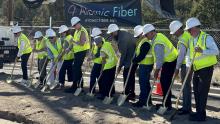
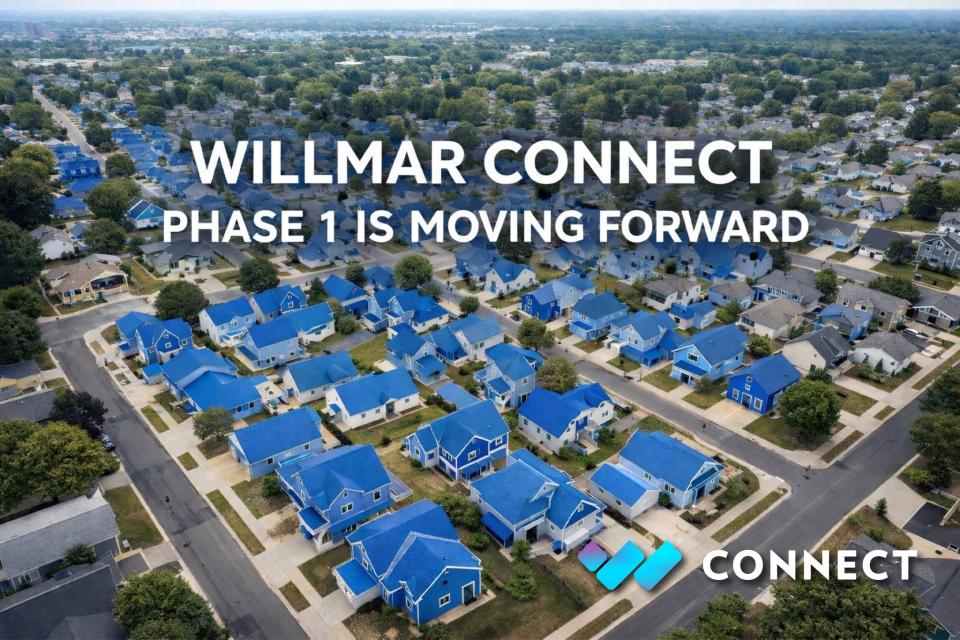
Willmar, Minnesota officials say they’re making steady progress on construction of the city’s planned $24.5 million open access fiber network, with the first residential and business customers slated to come online sometime later this year.
Should California have to give up its consumer protections to receive federal broadband dollars? Chris and Chao Jun Liu unpack Condition 50, the BEAD contract term that could stop states from enforcing their own Internet laws.
Join us today, Thursday, October 8, from 3:00 to 4:00 PM ET, for this latest installment of the Building for Digital Equity webinar series — a Digital Inclusion Week 2026 special edition.
The Washington State Broadband Office says it has signed contracts with seven broadband providers, tribes, and municipalities to begin work on a major affordable Internet expansion plan that should deliver $165 million in investment across nearly a dozen rural Washington counties and Tribal territories. Most of the impacted areas are rural communities long-neglected by regional dominant telecom monopolies.
ILSR's Christopher Mitchell joins Broadband Breakfast Live Online for a discussion on how Tribal communities are combining fiber, shared networks and adoption support to create Internet services they can govern and sustain. The conversation ranged from fiber and satellites to open-access networks, spectrum rights, data sovereignty and the cost of helping residents get online.
A recent study suggesting New York State officials are trying to hide that the state’s ambitious grant programs are facing significantly higher costs and lower reach doesn’t appear to be based in reality, and originates from a group that fails to disclose its funding. A recent analysis of New York State’s broadband grant programs by the Advanced Communications Law and Policy Institute (ACLP) at New York Law School claims that New York State’s ConnectALL Municipal Infrastructure Program (MIP) is facing $38 million in higher costs, resulting in 34,000 fewer connections than originally promised. The study also claims, incorrectly, that New York State is attempting to hide this data from the public.
Los Alamos County, New Mexico is inching closer to the launch of its “Atomic Fiber” county-wide open access fiber network, which aims to dramatically improve affordable Internet access to the county’s 19,400 heavily-rural residents. The $35 million network price tag is being financed via $40 million in New Mexico Gross Receipts Tax (GRT) revenue bonds. County leaders have stated that the 20-year maintenance and operations cost of the network will be around $15.9 million and paid off via subscription revenues.
A crushing near-miss at the ballot box last year hasn’t stopped the town of Southwick, Massachusetts from chipping away at Comcast’s local monopoly. After falling just 14 votes shy of the two-thirds majority required to authorize a full $16 million municipal fiber build at Town Meeting (353-204) last year, local officials refused to shelve the project. Instead, the Select Board approved a municipal agreement with Westfield Gas & Electric’s Whip City Fiber to construct a targeted pilot network funded entirely by existing money.
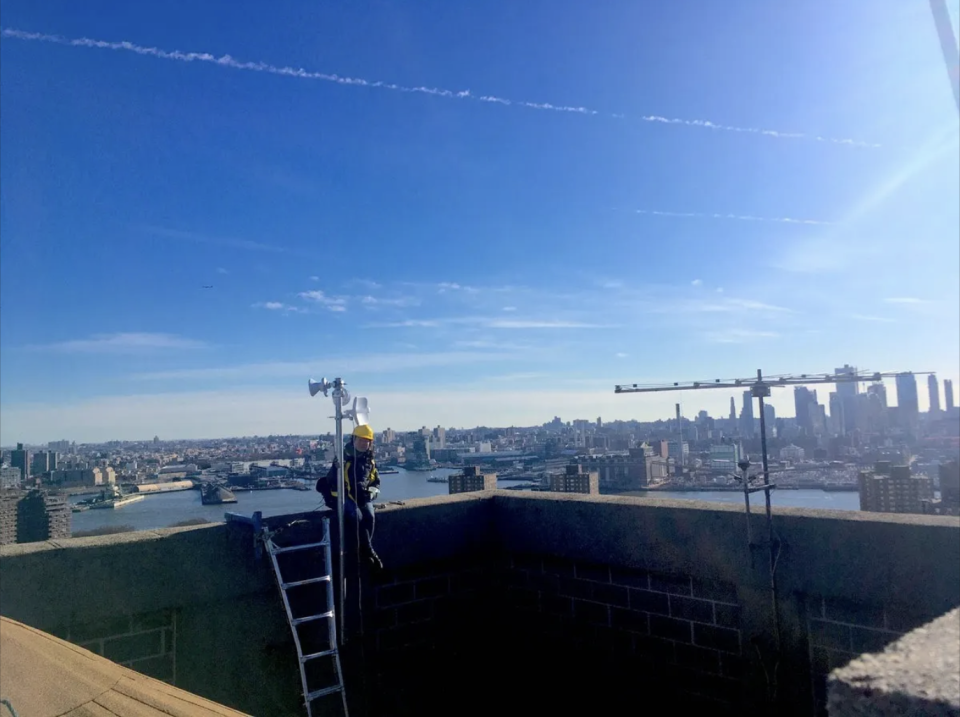
As Digital Inclusion Week 2026 kicks off October 4-10, the Building for Digital Equity webinar series — co-hosted by the Institute for Local Self Reliance’s (ILSR) Community Broadband Networks Initiative and the National Digital Inclusion Alliance (NDIA) — returns on October 8th. The livestream will feature a special spotlight on building wireless connectivity for tiny-home communities in Seattle that will uniquely engage the audience in a case-study exploring how local expertise is harnessed, coordinating a cadre of local volunteers, and facing down the challenges of sustainability.
The New Hampshire Electric Cooperative (NHEC) has been awarded a $5.58 million federal broadband grant to help expand affordable fiber access to the rural and underserved parts of its service territory in The Granite State. According to a cooperative announcement, NHEC officials say the New Hampshire Office of Broadband Initiatives has awarded it a $5.58 million grant courtesy of the Broadband, Equity, Access, and Deployment (BEAD) program, made possible by the 2021 infrastructure bill.
A recent Government Accountability Office report reveals what’s been obvious to broadband deployment experts for years now: the federal government’s multi-agency approach to closing the digital divide is undermined by a lack of coordination and data-management among agencies. The result is an FCC broadband coverage map with an amalgamation of inaccuracies that misrepresents where high-speed Internet service does or does not exist, a flaw that can steer taxpayer dollars away from communities that actually need them.
Researchers say they’re concerned that a massive influx of new federal grant money being redirected to Elon Musk’s Starlink satellite broadband company in Ohio will be thwarted by the simple fact that many targeted locations don’t have a clear, unobstructed view of the sky. Tom Reid of Reid Consulting conducted a study earlier this year taking a closer look at the 30,000 locations in Ohio that are poised to receive subsidized service from Starlink, and found that as many as 70 percent of the target locations were covered by tree canopy preventing the minimum 110-degree field of view Starlink dishes require.
Paulding Putnam Electric Cooperative (PPEC) was awarded $13.2 million in federal broadband grant support to help fund a major fiber-to-the-home expansion to rural unserved segments of northeast Indiana. According to a cooperative announcement, the co-op will receive $13.2 million in BEAD (Broadband, Equity, Access, and Deployment) federal grant funding from the Indiana Broadband Office, matched by $10.3 million in cooperative investment, to bring affordable fiber to thousands of unserved residents in Allen, Adams, DeKalb and Noble counties.
Researchers tells Pennsylvania House Communications & Technology Committee that persistent attacks by the federal government on Internet affordability protections and social safety nets are directly resulting in a drop in overall broadband adoption, with large numbers of low-income Americans unable to afford modern connectivity — and the vast benefits it provides. Researchers noted that sustained efforts by the federal government across numerous fronts — from attacks on the social safety net to the Republican destruction of the FCC Affordable Connectivity Program (which provided $30 broadband discounts to more than 23 million households) are directly driving vulnerable populations away from Internet adoption.
Working with the Federal Communications Commission's broadband data is hard. It's complex, at times capricious, and presents a host of pitfalls for analysts and researchers around the country. ILSR is here to help. We're excited to host the Broadband Data and Policy Forum, a place where data researchers across all sectors can compare notes, share tools, and troubleshoot with one another. Join us as we build a community of practice!