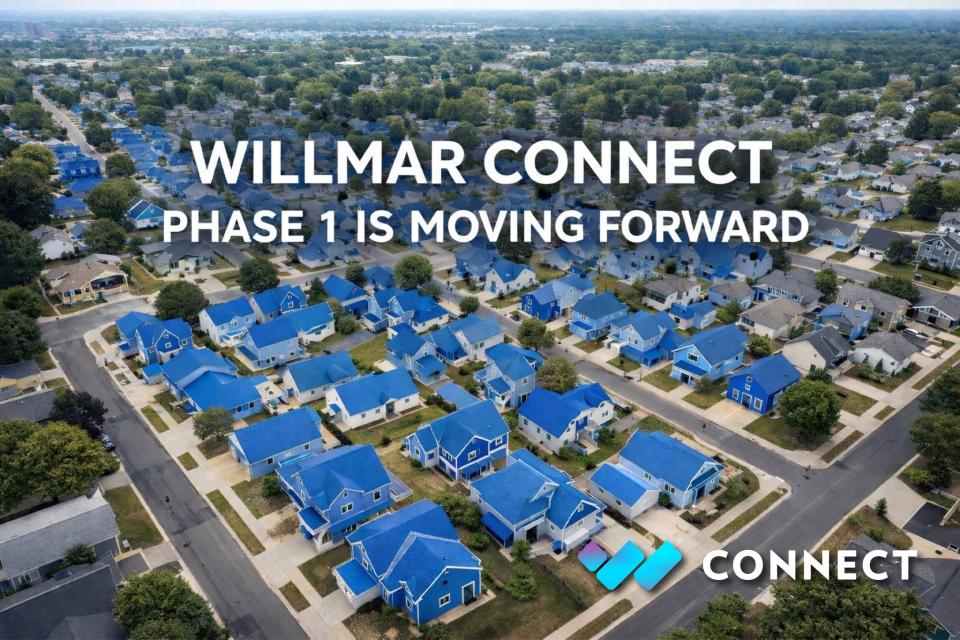
Willmar, Minnesota officials say they’re making steady progress on construction of the city’s planned $24.5 million open access fiber network, with the first residential and business customers slated to come online sometime later this year.
Should California have to give up its consumer protections to receive federal broadband dollars? Chris and Chao Jun Liu unpack Condition 50, the BEAD contract term that could stop states from enforcing their own Internet laws.
Join us today, Thursday, October 8, from 3:00 to 4:00 PM ET, for this latest installment of the Building for Digital Equity webinar series — a Digital Inclusion Week 2026 special edition.
The city of Longmeadow, Massachusetts has failed to get a two-thirds voting majority necessary to move forward with its plan to deploy affordable fiber to every city resident. The vote comes after local telecom monopolies were caught funding an out of town dark money nonprofit to sow doubt about the benefits of the project in the minds of the local electorate.
Consumer and civil rights groups last week told the Trump administration that their proposed “reforms” of the FCC’s Lifeline program would undermine efforts to ensure equitable, affordable access to the internet for all Americans, and are based on lies about immigrant fraud. Joint comments to the FCC filed this month (first spotted by Light Reading) by consumer groups including Public Knowledge and the National Digital Inclusion Alliance (NDIA) added to the chorus of criticism of the proposed changes, pointing out that the biggest abusers of the Lifeline program aren’t immigrants and poor minorities, but private companies.
Locals in Longmeadow, Massachusetts say they’re being bombarded with misleading mailers, texts, and phone calls from a telecom-industry linked group trying to mislead the public ahead of a key vote on the city’s plan to begin construction of a municipal broadband fiber network today. Longmeadow residents are voting today (May 12) on whether to approve an $8.6 million loan to construct the first phase of what will ultimately be a town-wide fiber broadband network.
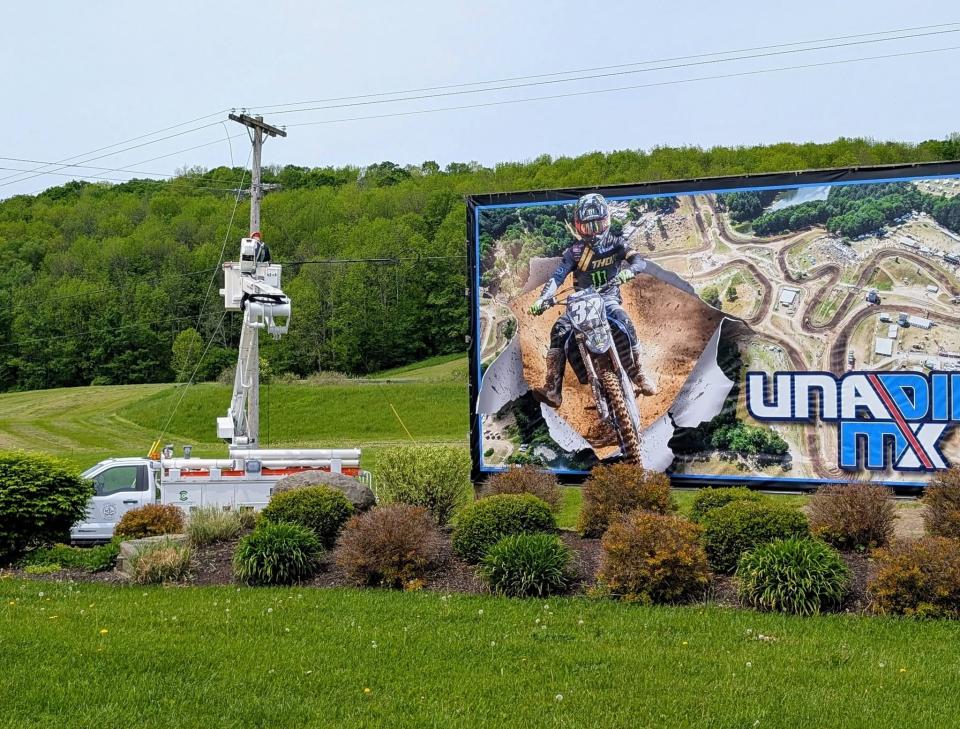
The Okanogan County Electric Cooperative and the Okanogan County Public Utility District say they’re making steady progress on bringing affordable fiber broadband access to Okanogan County, a highly rural stretch of rugged land in Washington state on the border of Canada. The coalition is poised to bring next-generation fiber to as many as 1,366 peppered along the upper Methow Valley this year starting near Chewuch River and ending at Lost River. Many of these areas will be seeing fiber upgrades for the first time ever after years stuck on the wrong side of the digital divide.
In yet another bruising blow in the fight to ensure equitable access to high-speed Internet service, an appeals court struck down federal rules this week that aimed to combat digital redlining. Though the FCC had not exercised its anti-digital discrimination authority in a single instance, the US Court of Appeals for the 8th Circuit ruled that the FCC had exceeded its authority by even having a rule that threatened to impose liability on ISPs for “disparate impact,” instead of relying on instances of “disparate treatment.”
The California Public Utilities Commission has approved $3.29 million in grants aimed at dramatically shoring up digital training and public broadband access in communities across the state. All told, more than 18 new digital literacy projects and three expanded public broadband access projects will be funded, impacting more than 16,000 Californians.
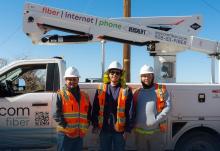
The public-private partnership the city struck Arizona-based Wecom Fiber is expected to inject at least $100 million into local economy over five years while saving the city an estimated $18 million in capital expenses. The fiber network will ultimately pass 30,000 locations within Flagstaff city limits, but also connect 34 municipal facilities. Construction of the network began in April of 2025, and is poised to deliver more than 815 miles of new fiber across Coconino County.
Congressmembers Rob Menendez, Doris Matsui (CA-07), Nanette Barragán (CA-44), and Troy Carter, Sr. (LA-02) have introduced new legislation that would compel the Federal Communications Commission (FCC) to re-establish the Communications Equity and Diversity Council. The Council had operated in some capacity since 2003 under multiple partisan administrations to make the communications sector more equitable and reduce digital discrimination, until FCC Chair Brendan Carr arbitrarily disbanded it in January 2025.
Local government organizations are voicing their strong opposition to the American Broadband Deployment Act, an industry friendly proposal being cooked up in the House that would take public rights of way management and property decisions away from state, local, and tribal governments through federal preemption and industry-friendly defaults. The American Broadband Deployment Act (HR 2289) saw initial approval by the US House Energy and Commerce Committee last January. It’s being presented by telecom companies as a way to dramatically streamline government broadband permitting and regulation, something they insist will speed up the deployment of fast, affordable broadband access.
Roanoke Cooperative’s Fybe has been awarded $2.4 million in state funds to expand affordable access to high speed Internet to 826 locations across eight predominantly rural North Carolina counties. Fybe, the cooperative's fiber business, will receive $2.4 million through the state’s Stop-Gap Solutions program to connect 826 locations across Bertie, Chowan, Gates, Granville, Halifax, Hertford, Martin, and Northampton counties. The fiber expansion is expected to be completed by the end of 2026.
The remote islands of San Juan County, Washington are increasingly being served with next-generation fiber and wireless thanks to Rock Island Communications, a locally-owned Internet subsidiary of the Orcas Power & Light Cooperative. RIC is celebrating a decade of what it calls “remarkable growth” for the tall task of remote island deployments to the county of 18,000. The subsidiary says it just reached 7,000 subscribers across San Juan County, and that its annual revenue has grown dramatically during the last decade – from approximately $1.8 million in 2015 to more than $12.3 million in 2025.
Join us for our very first episode of Unbuffered Live! at our new time, on Tuesday, April 28th at 2pm ET. Host Christopher Mitchell will be joined by guests Doug Dawson (CCG Consulting), Heather Mills (ITG) and Drew Garner (Benton Institute for Broadband and Society) to talk about the intersections of tech, Internet access, and policy.