A recent Government Accountability Office report reveals what’s been obvious to broadband deployment experts for years now: the federal government’s multi-agency approach to closing the digital divide is undermined by a lack of coordination and data-management among agencies.
Researchers say they’re concerned that a massive influx of new federal grant money being redirected to Elon Musk’s Starlink satellite broadband company in Ohio will be thwarted by the simple fact that many targeted locations don’t have a clear, unobstructed view of the sky.
Researchers tells Pennsylvania House Communications & Technology Committee that persistent attacks by the federal government on Internet affordability protections and social safety nets are directly resulting in a drop in overall broadband adoption, with large numbers of low-income Americans unable to afford modern connectivity — and the vast benefits it provides.
As Digital Inclusion Week 2026 kicks off October 4-10, the Building for Digital Equity webinar series — co-hosted by the Institute for Local Self Reliance’s (ILSR) Community Broadband Networks Initiative and the National Digital Inclusion Alliance (NDIA) — returns on October 8th.
Chris and Doug Dawson break down new Ookla FWA data, critique the FCC’s flawed mapping challenges, examine the final BEAD funding numbers, and tackle the wild economics of artificial intelligence.
The New Hampshire Electric Cooperative (NHEC) has been awarded a $5.58 million federal broadband grant to help expand affordable fiber access to the rural and underserved parts of its service territory in The Granite State.
Paulding Putnam Electric Cooperative (PPEC) was awarded $13.2 million in federal broadband grant support to help fund a major fiber-to-the-home expansion to rural unserved segments of northeast Indiana.
The Texas Broadband Development Office (BDO) says that it has placed Broadband, Equity, Access, and Deployment (BEAD) broadband grant money on hold to address continued claims that the program has been unfairly tilted to the direct benefit of billionaire Elon Musk.
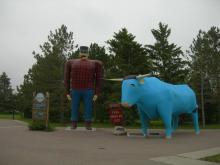
The telephone cooperative-owned Paul Bunyan Communications in Northern Minnesota recently announced it was giving a $3.6 million profit windfall back to local community members. It’s the fourth such payout to local subscribers in the last seven years. For distributions of $150 or less, a credit was applied to subscriber’s bills. For sums greater than $150, the cooperative mailed checks out to locals.
Slated for October 1 at 3 pm EST, the next B4DE virtual gathering will spotlight local strategies for digital equity and explore why it’s necessary for frontline digital inclusion practitioners to be “Moving at the Speed of Trust.” Building on a phrase popularized by Stephen Covey and echoed by noted writer and activist Adrienne Maree Brown in her book “Emergent Strategy,” the line-up of guests will share their on-the-ground experiences and stories to showcase why bottom-up trust building is not just a soft, emotional concept but a measurable, actionable asset that improves outcomes.
Vermont’s Otter Creek Communications Union District not only recently finished its major fiber deployment, CUD leaders say the project came in significantly under budget, saving Vermont state leaders more than $3 million in taxpayer dollars. That money will now be redirected toward efforts to make access more affordable for state residents.
The California Public Utilities Commission (CPUC) is poised to include new broadband affordability requirements as part of the state’s looming approval of Verizon’s massive $20 billion merger with Frontier Communications, even as some consumer advocacy groups worry the changes may not go quite far enough to hold Verizon accountable. The CPUC’s Public Advocates Office has struck a partial settlement with Verizon that the state hopes will take some of the sting out of the telecom industry’s latest consolidation spree.
NTIA, the federal office administering the largest single investment to expand Internet access across the nation, appears to once again be changing the BEAD program in ways that would only force states to further reduce investment in rural areas. NTIA seems to have added yet another time-consuming wrinkle: a super secret “Best and Final Offer” round imposed on states after submitting final proposals.
Michigan-based Thumb Electric Cooperative says its ongoing fiber deployment has hit a new milestone: its 4000th connected broadband subscriber. The cooperative’s latest customer, Verona Hills Golf Course in Huron County, Michigan, comes three years after the cooperative joined the growing trend of expanding into broadband access.
The first installment of an ongoing series we are calling Connected Complex looks at how states, local communities, and Internet service providers are working to address the often complex challenges involved in bringing high-speed Internet access to multi-dwelling units. In Massachusetts, state leaders have announced a new $31.5 million investment to bring reliable, high-speed Internet access to residents in affordable and public housing statewide by helping to update long outdated wiring in multiple-dwelling-units, many of which were built before the advent of the Internet.
The second installment in the ongoing Community Broadband Film Series spotlights “Rocketeers: The UTOPIA Fiber Story” – an eye-opening documentary that tells the story of how a publicly-owned fiber network has ignited local Internet choice and competition across dozens of cities. The event will begin with a screening of the 24-minute film and then treat attendees to a live Red Carpet discussion with UTOPIA Fiber CEO Roger Timmerman and key leaders of two communities that are now part of the fast growing UTOPIA network – Sid Boswell, CEO of Yellowstone Fiber in Bozeman, Montana; and Bountiful, Utah Councilmember Kate Bradshaw.
As states struggle to readjust their plans to expand high-speed Internet access in the wake of the Trump administration “termination” of the Digital Equity Act, Vermont is working to address the multi-million dollar shortfall by aligning the state’s Digital Empowerment initiative with its newly established Affordable Long Drop Program. The Affordable Long Drop Program was established to provide grants to eligible Internet service providers (ISPs) in order to cover the connection costs for Vermonters whose homes are beyond standard drop distances.
On September 10th, in New Prague, the Minnesota Public Broadband Alliance (MPBA) will be hosting an in-person event with speakers aimed at community leaders and residents working to expand Internet access to unserved and underserved homes.
Vineland, New Jersey officials say they’ve secured a $3.7 million grant from the state that will help expand fiber and wireless broadband access to the city of 62,000. Local officials are hopeful the grant is just the beginning steps toward dramatic expansion of affordable access.
Officials in Bountiful, Utah say they’ve completed the city’s $48 million open access fiber network a year ahead of schedule, bringing fast, affordable broadband access to the Salt Lake City suburb of 45,000. The city of Bountiful owns the network while UTOPIA designed, built and manages the network and takes a share of the revenue.