

Persistent attacks by the federal government on Internet affordability protections and social safety nets are directly resulting in a drop in overall broadband adoption, with large numbers of low-income Americans unable to afford modern connectivity — and the vast benefits it provides.
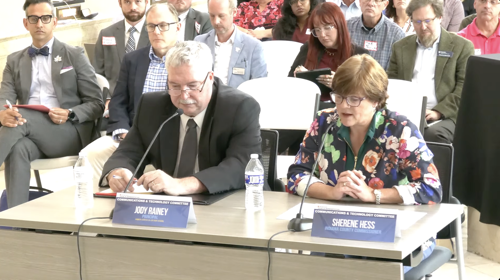
That was the message sent by local and national broadband researchers attending an informational meeting last month in Indiana, Pennsylvania before the Pennsylvania House Communications & Technology Committee.
Researchers noted that sustained efforts by the federal government across numerous fronts — from attacks on the social safety net to the Republican destruction of the FCC Affordable Connectivity Program (which provided $30 broadband discounts to more than 23 million households) are directly driving vulnerable populations away from Internet adoption.
Attendees noted that the One Big Beautiful Bill (OBBB) alone — which dramatically lowered taxes for U.S. corporations and the wealthy — is projected to reduce broadband connections by approximately 233,000 in Pennsylvania's lowest income quintile.
One attendee, Indiana County Commissioner Sherene Hess, pointed to 2024 data from public-benefit corporation Ready.net showing that Indiana County is among the least-connected counties in Pennsylvania, with 22 percent of county locations without broadband access.
According to notoriously unreliable FCC data (coverage and speed gaps are usually worse than the federal government claims), of the 103,986 “serviceable locations” in Indiana County, 23,049 locations are unserved and 3,927 locations are underserved — meaning they fail to meet FCC minimum broadband speed standards.
Hess combined data from the U.S. census and a 2022 United Way ALICE (Asset Limited Income Constrained, Employed) report to conclude that 46 percent of Indiana County was facing financial hardship, suggesting that $80 to $200 monthly Internet bills “create a choice between Internet service and other basic needs.”
“For many, affordable Internet service may not represent the most pressing topic in human services needs,” Hess said. “However, so often it is the prerequisite to accessing all the things that help people improve their employment, housing, food security, health care, transportation and education situations … when it is too expensive for so many of our residents, the ecosystem of human services and support program delivery is severely limited and vulnerable to breakdown.”

Multi-pronged Assault on Affordability
Benton Institute for Broadband and Society Senior Fellow John B. Horrigan directed attendees' attention to a recent Congressional Budget Office (CBO) report that found that the OBBB reduced low-income family resources by an average of $1,200 via cuts to SNAP benefits and ACA benefits.
Additional strain has been placed on families due to high gas prices from the Iran war, accelerating inflation, and the higher overall cost of goods due to tariffs.
“These impacts are likely to force many low-income households to choose between broadband, feeding the kids, having health insurance or paying for medical care out of pocket,” Horrigan said. “A broadband connection that helps with homework, finding cheaper options for consumer goods and managing the household, will be on the chopping block.”
Horrigan also pointed to the pain caused by the Republican refusal to continue funding the ACP program, which provided a $30 discount off of the monthly broadband bills of low-income Americans, and a $45 monthly discount to Tribal residents. The program’s 23 million households immediately faced skyrocketing bills once ACP was shuttered.
While Congressional Republicans claim they dismantled the ACP program to “save taxpayers money,” a study published by the Brattle Group in March 2025 found that the ACP generated more savings for taxpayers than it cost. The $7.3 billion annual program price tag was more than compensated by the $28.9 to $29.5 billion taxpayers saved from access to cheaper remote telehealth visits, the researchers found.
The Brattle Group study also found the ACP generated $3.7 billion in increased annual earnings for students due to expanded remote education opportunities, and $2.1 to $4.3 billion in annual wage gains from expanded labor force participation.
A similar study published by the USC Annenberg School for Communication found that access to affordable, high-speed Internet improves employment outcomes by enabling remote work and greater labor market participation, such that “when these employment impacts are factored in, the benefits of ACP far outweigh its costs.”
“As one interviewee in our research said about the ACP and the consequences of its termination: ‘When we were on it, we felt almost normal,” Horrigan said.
Horrigan told hearing attendees that for every $1 put into programs like the ACP, $2 flows back into the economy. He urged state officials to follow the lead of other states (like New Mexico) and implement state-level subsidized Internet plans modeled after the Affordable Connectivity Program.
Also in attendance was Penn State communications professor Dr. Christopher Ali, who urged state leaders to embrace policies that challenge telecom monopoly domination, noting most Pennsylvania residents “have access to only one, or no, broadband provider, with many confined to local monopolies or duopolies at best.”
In addition to the OBBB and attacks on the ACP, the Trump administration has also stripped affordability requirements out of federal broadband grant programs like BEAD, killed a program that delivered free Internet access to school children via mobile hotspots, and illegally discarded the Digital Equity Act, which looked to boost affordability and equitable broadband deployment.
The federal assault on low-income Americans (and the programs designed to protect them) has created new opportunities for any state lawmakers eager to demonstrate ethical competency in the gigabit broadband era.
"Access to high-speed, affordable Internet is vital, and we all deserve the opportunity to contribute to a more inclusive, resilient and thriving community,” Keystone Internet Coalition State Coordinator Jennifer Blatz.
“Those without reliable connectivity are excluded from the systems that enable full participation in our increasingly online world. We applaud Pennsylvania’s efforts, which will bring connectivity to hundreds of thousands of Pennsylvanians that have been offline for decades, but that access cannot be realized if the associated costs are too high,” she said.
Watch the Pennsylvania House Communications & Technology Committee hearing below:
Header image of No Internet Connection sticky note courtesy of Ben Dalton on Flickr, Attribution-ShareAlike 2.0 Generic, CC BY-SA 2.0
Inline image of woman in distress in front of laptop courtesy of Pexels, Creative Commons, Public Domain