


A recent Government Accountability Office (GAO) report reveals what’s been obvious to broadband deployment experts for years now: the federal government’s multi-agency approach to closing the digital divide is undermined by a lack of coordination and data-management among agencies.
The result is an FCC broadband coverage map with an amalgamation of inaccuracies that misrepresents where high-speed Internet service does or does not exist, a flaw that can steer taxpayer dollars away from communities that actually need them.
Since 2020, four federal agencies — the FCC, NTIA, USDA and Treasury — have been administering nine different grant programs to build-out new Internet networks in unserved and underserved areas across the nation, including the $42.5 billion federal flagship BEAD (Broadband Equity Access and Deployment) program.
As ILSR’s Senior GIS Analyst Christine Parker notes, the report devotes considerable attention to “de-duplication” — the process of cross-referencing which locations have already received funding or service commitments from one program so that other programs don't waste money doubling up, or worse, leave locations out entirely because it was wrongly assumed to be covered elsewhere.
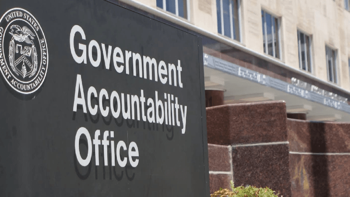
“But there’s no documented process or timeline for actually doing this,” Parker says.
Garbage In, Garbage Out
Part of the problem, the report notes, is that agencies track and report funding data in different formats, with some programs collecting far more granular location-level detail than others so that it is much harder to reconcile the datasets and match them up. GAO indicates the agencies are aware of the issue and are working to reconcile it, but as of the report’s release, no consistent process was in place.
Because of the poor coordination among the agencies, the report says, the “FCC may not be able to obtain the most accurate information about broadband availability and therefore may not be able to effectively identify and target funding to underserved areas.” (emphasis added).
And while legislation has mandated the FCC to create a public challenge process to help fix the as-reported-by-providers map, the study found: “Some program participants and stakeholders said this challenge process was burdensome and unclear,” particularly when it comes to “challenging a large number of locations in an area (which) could be difficult for smaller communities and providers with limited resources.”
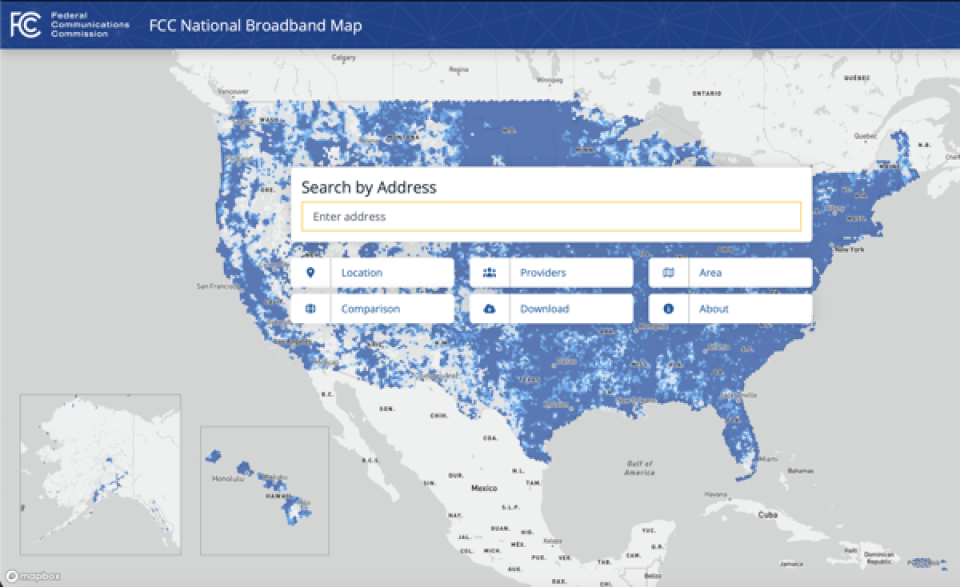
As the report further explains, “the accuracy of FCC’s maps depends, in part, on stakeholders’ ability to submit challenges to inaccuracies in the maps’ underlying data. However, this check is not effective if stakeholders with necessary information choose not to participate due to hurdles in submitting such challenges.”
As we saw during the BEAD challenge process (and could have predicted), fixing bad government data by asking individuals and communities to spend their time and resources submitting evidence was doomed from the start.
Marshalling “acceptable” evidence, navigating the portal, and dealing with the agency’s black-box process which let ISPs rebut challenges without clear explanations or outcomes was prohibitively expensive and time-consuming such that few participated. As a result, it ended up being a mostly performative act.
Therefore, to help smaller communities and providers navigate the byzantine bureaucracy, the GAO report recommends “that FCC work with smaller communities and providers to identify and address difficulties in completing the challenge process” — something ILSR tried to help mitigate with a FCC Broadband Map Guide to Challenges even before the Trump administration revamped the BEAD program that forced three states who had already received final BEAD approval to go through the process again.
“Targeted outreach to these participants and their broadband providers would help ensure the accuracy of FCC’s Broadband Data Collection and help agencies identify underserved areas,” the report says.
Of course, the GAO’s recommendations are only advisory and seem unlikely to be taken seriously under an FCC chaired by Brendan Carr, who appears far more interested in approving mega-mergers, stripping consumer protections, and punishing late-night TV show hosts for airing content critical of the Trump administration than in carrying out the FCC’s core mission: “to ensure that all people of the United States have available...nation-wide…world-wide wire and radio communication service with adequate facilities at reasonable charges.”
The Sustainability Problem
The report makes one other “Recommendation for Executive Action:” provide clearer guidance to states and territories on when and why to check in with BEAD grant recipients building in high-cost areas to ensure financial problems are caught early-on, ultimately to ensure affordable broadband service is sustainable over the program’s 10-year commitment period.
“The underserved areas funded by the broadband deployment programs we reviewed typically lack service because they are more expensive and less profitable for providers to serve, for reasons such as geographic barriers (mountains or other rugged terrain), lower population density, and lower incomes of potential subscribers,” the report notes.
And while the various federal programs pay for the capital expenses deploying new networks, once those networks are built, the report continues, “providers then face the costs of operating and maintaining those networks — and making them financially sustainable. Operations and maintenance costs are often higher in the remote and rural areas served by these programs than in more accessible locations.”
Sound advice. However, what the GAO report does not say is that by Congress allowing the federal Affordable Connectivity Program (ACP) to expire, which offered 23 million households a $30 a month discount on their Internet bills, the financial viability of networks built in high-cost locations will be much more fragile with fewer subscribers able to afford service.

While Congressional Republicans claim they dismantled the ACP program to “save taxpayers money,” a study published by the Brattle Group in March 2025 found that the ACP generated more savings for taxpayers than it cost. The $7.3 billion annual program price tag was more than compensated by the $28.9 to $29.5 billion taxpayers saved just from access to cheaper remote telehealth visits, the researchers found.
The Brattle Group study also found the ACP generated $3.7 billion in increased annual earnings for students due to expanded remote education opportunities, and $2.1 to $4.3 billion in annual wage gains from expanded labor force participation.
Additionally, the report also fails to mention how the termination — and then recently partially re-instated Digital Equity Act — which was designed to work in tandem with the BEAD program to increase adoption rates by funding digital skills training and device support programs, also undermines the revenue stream for Internet service providers in high-cost areas who need as many subscribers as possible to stay above water.
Still, for those who care about whether all U.S. households have high-speed Internet access so that everyone can meaningfully participate in modern economic and civic life, the GAO conclusions are worth serious consideration:
“NTIA’s BEAD program is one of the largest investments yet to build-out broadband networks in underserved areas. As such, this program represents an important opportunity to take steps to avoid the defaults that have plagued prior federal broadband programs … Doing so will also better ensure that the significant public investment in broadband can achieve its fullest potential.”
Header image of man with head in hands at computer courtesy of Peter Alfred Hess on Flickr, CC BY 2.0, Attribution 2.0 Generic
Inline image of GAO sign and building website screenshot
Inline image of FCC Broadband Map website screenshot
Inline image of FCC Chair Brendan Carr courtesy of Internet Education Foundation on Flickr, CC BY 4.0, Attribution 4.0 International
Inline image of distressed mother on laptop courtesy of userpilot on Flickr, Creative Commons, Attribution 2.0 Generic