Fast, affordable Internet access for all.

Fast, affordable Internet access for all.

The Vermont Department of Public Service released its most recent 10-year telecommunications plan earlier this month, once again prioritizing Communication Union Districts (CUDs) as the key to closing the digital divide and connec

Our new report, Minnesota Broadband: Land of 10,000 Connectivity Solutions [pdf], showcases the diverse range of approaches communities and local Internet Service Providers (ISPs) have taken to expand affordable, high-quality Internet access in Minnesota.

Hampton Roads, a metropolitan region bordering the Chesapeake Bay in southeastern Virginia, is known for its 17th century historical sites, shipyards crowded with naval aircraft carriers, and mile-long bridge tunnels.

After working over a year to obtain licenses to deploy fiber across town, by this time next week the central Connecticut town of Plainville, home to approximately 17,500 residents, will begin construction of a municipal fiber network. When finished, the network will connect all town offices, public education facilities, public safety services, and wastewater treatment facilities.
Snapshot
New Jersey establishes state committee to strategize deployment of community broadband networks
Louisiana Senate amends bill, opening state grant program to municipally-owned providers
Washington laws expanding municipal authority to provide retail service take effect
The State Scene

In a video published by Corning Optical Communications in June, ILSR Community Broadband Networks Director, Christopher Mitchell explains why municipal networks are so important to consider when communities are trying to connect more of the
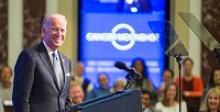
In case you missed it, earlier this month President Biden signed an executive order that aims to promote competition in the U.S. economy. The order includes 72 initiatives, directing a dozen different federal agencies to promote competition in key sectors.

We're excited to announce that two postdoctoral fellows will be joining the Institute for Local Self-Reliance this coming fall to undertake one-year broadband projects to advance policy intitiatives and help move the needle towards universal, affordable, high-speed Internet access in the United States.

As Senators involved in the Bipartisan Infrastructure Framework are negotiating over legislative language on how to spend $65 billion aimed at expanding high-speed Internet connectivity in “unserved” and “underserved” par

Since the passing of the Tennessee Broadband Accessibility Act (TBAA) in 2017, the state has poured more than $100 million into connecting its

With an estimated 22 percent of Americans in rural areas and 28 percent of indigenous Americans on Tribal lands living without access to broadband that meets the federal minimum definition of 25/3 Mbps, the Wireless Communication Alliance is bringing together a panel of experts to explore how broadband deployment will transform rural America and Native Nations in