As Digital Inclusion Week 2026 kicks off October 4-10, the Building for Digital Equity webinar series — co-hosted by the Institute for Local Self Reliance’s (ILSR) Community Broadband Networks Initiative and the National Digital Inclusion Alliance (NDIA) — returns on October 8th.
A recent Government Accountability Office report reveals what’s been obvious to broadband deployment experts for years now: the federal government’s multi-agency approach to closing the digital divide is undermined by a lack of coordination and data-management among agencies.
Researchers say they’re concerned that a massive influx of new federal grant money being redirected to Elon Musk’s Starlink satellite broadband company in Ohio will be thwarted by the simple fact that many targeted locations don’t have a clear, unobstructed view of the sky.
Chris and Doug Dawson break down new Ookla FWA data, critique the FCC’s flawed mapping challenges, examine the final BEAD funding numbers, and tackle the wild economics of artificial intelligence.
The New Hampshire Electric Cooperative (NHEC) has been awarded a $5.58 million federal broadband grant to help expand affordable fiber access to the rural and underserved parts of its service territory in The Granite State.
Paulding Putnam Electric Cooperative (PPEC) was awarded $13.2 million in federal broadband grant support to help fund a major fiber-to-the-home expansion to rural unserved segments of northeast Indiana.
Researchers tells Pennsylvania House Communications & Technology Committee that persistent attacks by the federal government on Internet affordability protections and social safety nets are directly resulting in a drop in overall broadband adoption, with large numbers of low-income Americans unable to afford modern connectivity — and the vast benefits it provides.
lllinois State Sen. Rachel Ventura, D-Joliet, has introduced legislation directing regulators to set broadband price protections for low-income residents, though the bill text leaves key details to be determined later. The measure joins those in other states, including Connecticut, Maryland, and Minnesota, that have introduced measures aimed at capping broadband prices for qualifying households.
New Mexico Gov. Michelle Lujan Grisham signed into law today new legislation that aims to provide tens of thousands of low-income households in “The Land of Enchantment” an Internet lifeline similar to the now-expired federal Affordable Connectivity Program. It makes the state the first to step up in the absence of federal action to support households that just can’t afford to pay for monthly service, and will directly support 173,000 households, offering up to a $30/month for qualified households to pay for Internet service.
The Bois Forte Band of Chippewa (also referred to as Ojibwe) has officially begun construction on a foundational fiber optic broadband expansion project in northern Minnesota. The ambitious undertaking is supported by a significant $20 million grant awarded under the 2021 Tribal Broadband Connectivity Program, marking a major step forward in modernizing infrastructure for the sovereign nation.
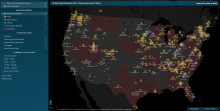
We've been adding features and functionality to our brand new community network map to show in more detail where and what publicly owned networks are building around the United States. Today, we take a big step: adding Tribal networks serving their communities to the map.
Close to a 1,000 broadband-minded registrants attended yesterday’s NTIA listening session, surfacing suggestions on how to spend “non-deployment” funds. Given how many advocates attended yesterday’s listening session, NTIA officials agreed to hold yet another listening session next Wednesday, February 18.
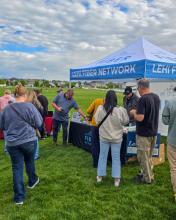
Lehi, Utah and its partner Strata Networks say they’ve completed construction of Lehi Fiber, the city-owned, open access fiber network that’s dramatically reshaped broadband affordability and competition in the city of 80,000. Locals now have the options of multiple tiers of service across the five different Internet Service Providers.
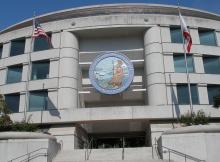
California’s Public Utilities Commission (CPUC) recently signed off on Verizon’s $20 billion merger with telecom giant Frontier with some notable conditions. While the concessions extracted from Verizon by the CPUC are promising, they’ll require consistent monitoring and enforcement, something that hasn’t always been a strong suit when it comes to state and federal oversight of politically powerful regional telecom monopolies.
Elon Musk’s Starlink is making new demands of states with an eye on eroding accountability and oversight, reheating concerns about whether spending big money on the Low Earth Orbit (LEO) network is the best possible use of taxpayer resources. Last week, Broadband.io and the Benton Institute for Broadband & Society obtained a copy of a letter Starlink parent company SpaceX sent to individual states, demanding freedom from state oversight and monitoring should they bungle installs or fail to deliver acceptable bandwidth.
New Mexico’s Office of Broadband Access and Expansion has announced the completion of a landmark broadband infrastructure expansion project that delivered affordable next-gen broadband access to dozens of long-neglected homes in a remote subdivision in rural Chaves County. The successful completion of the Chaves County project is OBAE’s first grant project to reach 100 percent completion, and the first Connect New Mexico Pilot Program project funded through the federal American Rescue Plan Act Capital Projects Fund to reach the final stage.
Two dozen state lawmakers in Maryland have signed on to the Broadband Opportunity and Fairness Act, state legislation that seeks to address broadband affordability. Introduced by Delegate Kris Fair (D-3A, Frederick Co.), the bill now has 25 co-sponsors and is slated for a Feb. 12 legislative hearing before the House Economic Matters Committee. Companion legislation has yet to be filed in the Senate, though Delegate Fair’s office says they are in discussions with state Senators about advancing a bill through that chamber as well.
This week, the Institute for Local Self-Reliance joined with other public interest groups and Tribal nations to urge the Federal Communications Commission (FCC) to adopt a Tribal Licensing Window in the upcoming auction of Upper C-Band spectrum.
Vienna, Maine recently launched its own municipal fiber network, finally bringing affordable next-generation broadband access to the small town’s 600 residents. The town’s focus has shifted to demonstrating the value of fast affordable access to remaining locals that regional incumbents are trying to lure away with temporary promotional offers.