Fast, affordable Internet access for all.

Fast, affordable Internet access for all.

Lighting up the first phase of middle-mile network Project THOR isn’t the only good news coming out of northwest Colorado recently. Glenwood Springs, a city of 10,000 forty-five minutes north of Aspen, is once again looking to secure the future of its information infrastructure. In a recent 6-1 decision, the city council voted to replace and expand the reach of its existing fiber system, which currently serves businesses and a select number of residents.

In response to the increased reliance on connectivity precipitated by the Covid-19 pandemic, the Minnesota Legislature is working on legislation to improve access to broadband, online education, and telehealth services throughout the state.
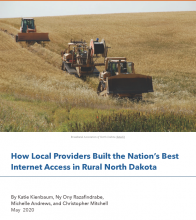
A recent case study from the Community Broadband Networks initiative at the Institute for Local Self-Reliance (ILSR) finds that rural North Dakotans are more likely to have access to fiber connectivity and gigabit-speed Internet than those living in urban areas.
The Daily Journal reported last week on one co-op, Pontotoc Electric Power Association (PEPA), that has chosen not to invest in broadband at this time, citing high costs. PEPA's decision faces strong opposition from some of its members as well as a commissioner from the Mississippi Public Service Commission. Critics claim that cooperative leaders did not fully consider all of the possibilities, and they take issue with the board’s choice to hold the vote during a closed meeting without issuing public notice.

Arizona
Mohave Electric Cooperative moves forward to build fiber optic network in partnership with TWN Communications, Cision PR Newswire
Arkansas

Not only has the ongoing Covid-19 pandemic exposed our nation’s dire lack of medical equipment and protective gear, but it has also shone a light on the inadequacy of our rural broadband networks.

Ry Marcattilio-McCracken recently joined the Community Broadband Networks Initiative as Senior Researcher. In his new role, Ry will research and write about community owned broadband networks, universal Internet access, and other related topics. He is also the new editor of MuniNetworks.org and will manage the site’s various resources, including our many articles, reports, and podcasts.

There’s a new Thor in town, but instead of lighting up the night sky like the Norse god of thunder, it’ll be lighting up communities in rural Colorado with fiber optic connectivity.

The ongoing Covid-19 pandemic has highlighted the yawning gaps in broadband access throughout the country. Yet the Federal Communications Commission (FCC), in its 2020 Broadband Deployment Report released on April 24, found that “advanced telecommunications capability is being deployed on a reasonable and timely basis." The agency came to this conclusion despite years of concern over how the FCC’s flawed data collection method systematically overstates broadband coverage.
Colorado
Glenwood working toward installing a new broadband system over the next two years by Matthew Bennett, Post Independent
Kentucky

MINNEAPOLIS, MINN. (April 24, 2020) - The Federal Communications Commission has concluded that broadband is being deployed “on a reasonable and timely basis” across America.

Across the country, schools have shifted to distance learning after the Covid-19 pandemic resulted in widespread school closures and stay-at-home orders. But many students still can’t get online to learn.