Fast, affordable Internet access for all.

Fast, affordable Internet access for all.

As the novel coronavirus has spread across the United States, so too have efforts to bring Internet access to digitally disconnected households during a time of nationwide social distancing.

Across the country, more people than ever are working and learning from home, making a quality Internet connection vital for everyone in every locality during the Covid-19 pandemic. For Americans in inadequately connected areas — rural and urban — adapting to a more isolated and remote learning and working lifestyle proves extremely difficult when lacking a reliable Internet connection.
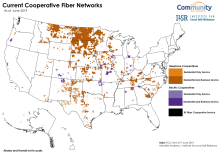
The fourth edition of our report, Cooperatives Fiberize Rural America: A Trusted Model for the Internet Age, reveals the steady growth of cooperative fiber since we originally released the report in 2017. In the report, we present rural telephone and electric cooperatives as a proven model to connect rural communities across the country with high-quality Internet access. This version updates the maps and analysis in the report with the most recent federal data.

BroadbandNow.com — a company that mostly focuses on crunching different data sets to provide information on where broadband is available — has released its second report on municipal broadband barriers.

California
Partnerships can close the digital divide by Apoorva Pasricha & Kevin Frazier, GovTech
Colorado

In March, we reported on the formation of Deerfield Valley Communications Union District in Vermont.

In their recent, biased report bashing community broadband, the Taxpayers Protection Alliance (TPA) alleges that municipal broadband networks are “GON With the Wind,” but it’s really the report’s authors who have run off with reality. To counter TPA’s erroneous and misleading claims, the Community Broadband Networks initiative has prepared a response to the report in which we summarize its many shortcomings and errors.

Yesterday, the Transnational Institute (TNI) released The Future Is Public, a book that explores international municipalization efforts and the benefits of public ownership.

Late last month, we reported on Frontier Communications’ claim that it now offers broadband in 17,000 rural census blocks in an effort to remove those areas from the Federal Communications Commission’s (FCC’s) upcoming rural broadband funding program.

Merit Network is hosting a weekly Michigan Moonshot Educational Series in the lead-up to their Broadband Summit this fall, and as part of the programming, Director of Community Broadband Networks initiative Christopher Mitchell recently hosted a webinar called “Exploring the Basics of Broadband.” Aimed at community leaders

Earlier this week, Community Broadband Networks Director Christopher Mitchell joined the radio talk show 1A, distributed by NPR, to talk about poor connectivity in rural America and how the Covid-19 pandemic is exacerbating existing digital divides. U.S.