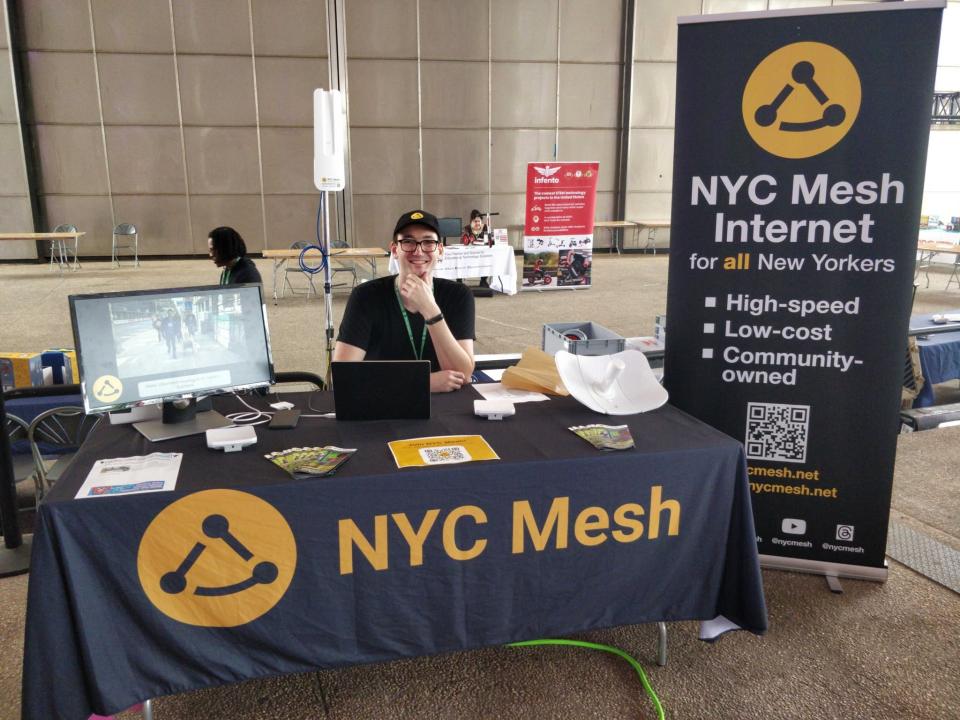
Officials for the volunteer-run nonprofit NYC Mesh have been been awarded a new $898,000 grant from New York State’s ConnectALL initiative that should help the project expand affordable wireless Internet access to the Big Apple’s most vulnerable populations.
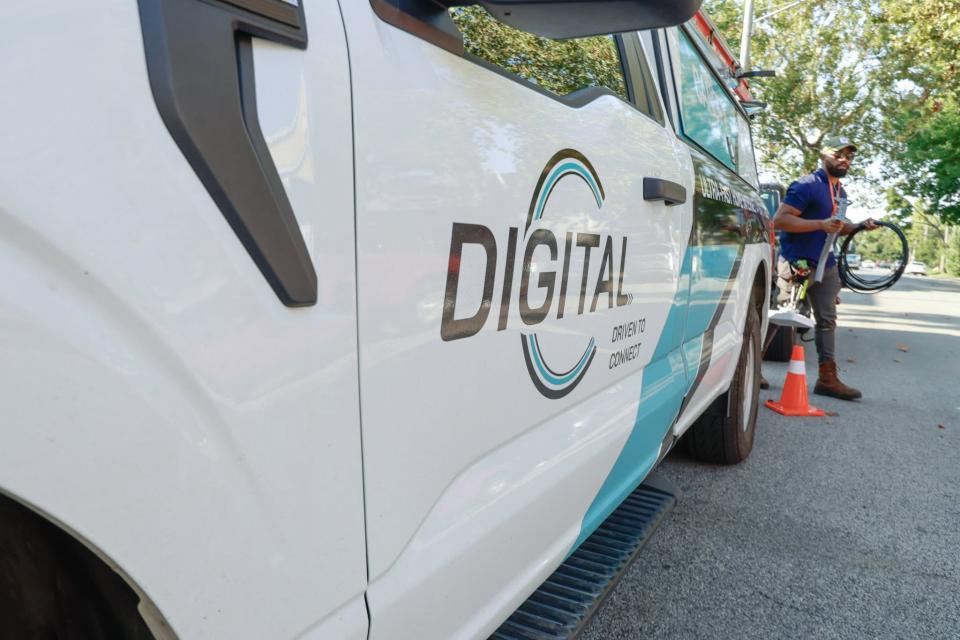
For years, Cleveland was labeled as one of the worst-connected cities in the nation despite the presence of AT&T and Charter Spectrum. But all of that is changing, thanks to DigitalC, an innovative nonprofit community network provider.
RiverStreet Networks has been removed from multiple broadband deployment projects by the Virginia Broadband Office after years of delays, leaving the state scrambling to find a replacement suitor for projects intended to bring affordable Internet access to more than 30,000 rural customers across The Old Dominion state.
Three months after town meeting voters in Longmeadow, Massachusetts rejected an $8.6 million proposal to kickstart the construction of a municipal fiber network, Town Councilors in the neighboring town of East Longmeadow moved in a different direction, voting to take control of its digital future and provide its residents and businesses with next-generation Internet access.
Chris and Doug Dawson discuss a major court ruling that could make Fiber deployment across railroad rights-of-way easier, Starlink’s ambitions to become a mobile network operator, and what recent court decisions could mean for the future of the FCC.
New Mexico-based Penasco Valley Telephone Cooperative (PVT) is using a $1 million disaster relief grant from the New Mexico Office Of Broadband Access and Expansion (OBAE) to construct and expand reliable Internet access in numerous New Mexico communities that have historically been subjected to wildfires and flooding.
HomeWorks Tri-County Electric Cooperative says it has acquired the cable and fiber broadband systems of private ISP Vogtmann Engineering (VEI) in order to expand its broadband footprint across central Michigan.
The National Association of Telecommunications Officers and Advisors (NATOA) recently announced that its Community Broadband Projects of the Year Awards for 2023 will go to the Connexion network in Fort Collins, Colorado and TeamPharr.net in Pharr, Texas. Fort Collins is also a part of a municipal-owned communications partnership known as Northern Colorado Community Fiber, which received the Fiber Broadband Association Star Award for going “above and beyond what is expected in the advancement of Fiber-to-the-Home.”
Local electrical cooperatives say they’re making inroads on efforts to finally bring affordable gigabit fiber connections to long neglected portions of rural South Carolina. Dubbed Carolina Connect, the alliance has delivered broadband to more than 14 towns and cities, is currently in the process of bringing broadband to eight more.
One major barrier to providing universal access to fast, reliable and affordable Internet service–long recognized by ILSR, telecom experts, and a growing number of ordinary citizens–are the monopoly-friendly preemption laws that either outright ban or erect insurmountable barriers to municipal broadband. Here’s a look at what three of the 17 states with preemption laws are saying about those barriers in their BEAD Five Year Action Plans.
In November of 2022, the FCC issued a Notice of Proposed Rulemaking detailing how the broadband nutrition label will be implemented. Industry and consumer advocates alike submitted nearly 250 filings during the public comment period. The FCC recently responded to three petitions it received from coalitions pushing back on the rules outlined in the proposed rulemaking.
With Digital Inclusion Week (DIW) less than a month away, ILSR and the National Digital Inclusion Alliance (NDIA) are gearing up for the next Building for Digital Equity (#B4DE) event on October 3. The popular virtual gathering will be held from 12 noon to 1:15 pm ET and will focus on the DIW-inspired theme: “Building Connected Communities: Sustaining Momentum.”
A massive coalition of more than 300 broadband policy experts and organizations have written a letter to the U.S. government, warning that smaller broadband providers, nonprofits, and municipalities will be elbowed out of an historic $42.45 billion broadband grant program without some notable changes to program rules. BEAD program rules currently require grant recipients to obtain a letter of credit (LOC) from a bank, collateralized by cash or cash-equivalent. According to the coalition’s letter to lawmakers, such requirements present unnecessary obstacles for smaller ISPs and cash-strapped municipalities
Berthoud is the latest Colorado community to explore community broadband alternatives to expand public access to affordable fiber. Currently in the process of crafting a request for quote (RFQ), the city says it hopes to make its final determination by November and have a preliminary plan in place by the end of the year.
The key for states to unlock their portion of the $42.5 billion in federal BEAD funds is the submission and approval of their Five Year Action Plans and Final Proposal. Today, we will look at two states (Maine and Louisiana) and follow up with the others as we are getting a clearer picture of how each state intends to put this historic infusion of federal funds to use.
Launched in 1975, the member-owned Nushagak Electric & Telephone Cooperative, based in Dillingham, Alaska, offers locals broadband access through microwave towers. But the co-op, which also offers a electric, telephone, and cable TV service, says it’s on the cusp of new fiber deployments that should finally bring next-generation speeds to a chunk of the co-op’s members.
Arizona State University (ASU) and the Marconi Society announce the creation of a first-of-its-kind Digital Inclusion Leadership Certificate program that aims to provide “a foundational understanding of the technology, policy and digital inclusion essentials needed to create true digital equity.” The Digital Inclusion Leadership Certificate is the nation’s first professional certificate in the field as the program is geared to educate individuals and teams at all levels of government, as well as nonprofits and anchor institutions.
Officials in Loveland and Timnath, Colorado recently announced the ratification of an Inter-Governmental Agreement (IGA) that greenlight’s a plan to bring ubiquitous, affordable high-speed Internet access to yet another community in the Centennial State, as an increasing number of Colorado cities and towns embrace municipal broadband after years of frustration with the inadequate, high-priced service from the region’s monopoly incumbents.
Each year since its creation in 2017, the Indigenous Connectivity Summit (ICS) has convened those working on the frontlines of Tribal connectivity. This year the Summit was held in Anchorage, Alaska, where participants agreed on a series of calls-to-action for governments and other entities with an eye on promoting digital equity in Indigenous communities.