
News

‘Not Living in the Cloud’: Hoopa Valley Tribe Builds Digital Sovereignty With New Network Hub

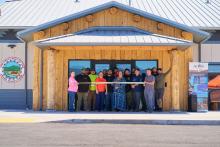
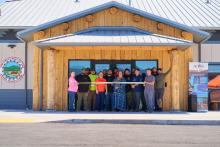
The Hoopa Valley Tribe is celebrating the opening of its new fiber network operations center as the Hoopa Valley Public Utilities District (HVPUD) expands fiber-to-the-home Internet service throughout the Hoopa Valley Reservation and into neighboring communities just outside of its Tribal lands. To mark the occasion earlier this summer, more than 50 community members, Tribal leaders, HVPUD staff, and project partners attended the July 17 opening celebration.

Penasco Valley Co-op Uses $1 Million Grant For Fiber Disaster Prep

New Mexico-based Penasco Valley Telephone Cooperative (PVT) is using a $1 million disaster relief grant from the New Mexico Office Of Broadband Access and Expansion (OBAE) to construct and expand reliable Internet access in numerous New Mexico communities that have historically been subjected to wildfires and flooding. According to cooperative leadership, PVT is building an alternate fiber broadband route to establish more resilient and redundant connectivity to inhabitants of areas like the Capitan Mountains Wilderness, where the Seven Cabins Fire recently burned 31,000 acres after the crash of a medical plane last June.

East Longmeadow Approves $43.5 Million for Municipal Fiber Network

Three months after town meeting voters in Longmeadow, Massachusetts rejected an $8.6 million proposal to kickstart the construction of a municipal fiber network, Town Councilors in the neighboring town of East Longmeadow moved in a different direction, voting to take control of its digital future and provide its residents and businesses with next-generation Internet access. The move was formalized earlier this month when East Longmeadow Town Councilors unanimously approved issuing $43.5 million in bonds to finance the construction of a municipally-owned fiber network.

With State Backing, NYC Mesh's Volunteer-Run Mesh Network Pushes Into Central Brooklyn

Officials for the volunteer-run nonprofit NYC Mesh have been been awarded a new $898,000 grant from New York State’s ConnectALL initiative that should help the project expand affordable wireless Internet access to the Big Apple’s most vulnerable populations. The grant is one of $8.3 million in new grants recently awarded by New York State providing much-needed financial assistance to community or municipally run broadband connectivity initiatives through the Connectivity Innovation – Business Model Awards, which support organizations using “novel financing strategies” to serve low-income and rural communities.

Coos-Curry Electric Co-op Completes Biggest Fiber Expansion In Co-op History

Cooperative officials say the six-year, $60 million project was the largest infrastructure investment in the cooperative's 88-year history. 7,000 of the co-op’s 14,000 electrical customers are now subscribed to broadband service after the deployment of 14,000 miles of fiber optic lines that have also streamlined maintenance and monitoring of the electrical grid.

HomeWorks Tri-County Electric Cooperative Acquires VEI’s Cable Broadband Network

HomeWorks Tri-County Electric Cooperative says it has acquired the cable and fiber broadband systems of private ISP Vogtmann Engineering (VEI) in order to expand its broadband footprint across central Michigan. According to Homeworks, the acquisition of VEI’s network assets includes 15 miles of cable in the neighboring villages of Nashville and Vermontville, passing just over 1,000 homes and businesses.

DigitalC Beats 2025 Targets, Now Tests If ‘Cleveland Model’ Can Be Replicated

For years, Cleveland was labeled as one of the worst-connected cities in the nation despite the presence of AT&T and Charter Spectrum. But all of that is changing, thanks to DigitalC, an innovative nonprofit community network provider. The data-backed progress was enough to convince the Cleveland City Council to recently sign off on a $4.35 million “performance payment” to DigitalC after the nonprofit Internet provider blew past its 2025 goals for getting residents online and teaching them digital skills, a milestone city leaders are pointing to as proof that “The Cleveland Model” for closing the digital divide actually works.

Decatur County Electric Cooperative Leads Charge as Indiana's BEAD Rollout Begins

Indiana Cooperatives are once again at the front of the pack as the state prepares to dramatically expand affordable fiber access on the back of $483 million in Broadband, Equity, Access, and Deployment (BEAD) broadband grants. The first round of bead funding is expected to connect an estimated 123,000 Indiana households and businesses that currently have either substandard Internet access, or no access at all.

RiverStreet Networks Loses Virginia Contracts After Numerous Delays

RiverStreet Networks has been removed from multiple broadband deployment projects by the Virginia Broadband Office after years of delays, leaving the state scrambling to find a replacement suitor for projects intended to bring affordable Internet access to more than 30,000 rural customers across The Old Dominion state. The company was stripped of its state contracts after it repeatedly failed to meet deadlines and struggled to find additional funding needed to complete promised state deployments. Most of the state contracts heavily subsidized RiverStreet via the American Rescue Plan Act (ARPA).

California Greenlights Another $74 Million for Rural Internet Access

The California Public Utilities Commission says it has approved another $74 million in California Advanced Services Fund grants to expand affordable high-speed Internet infrastructure to underserved communities across the Golden State. According to the CPUC’s recent announcement, the funding will support six new Internet access infrastructure projects across Marin, Monterey, San Luis Obispo, Santa Barbara, Santa Clara, Santa Cruz, and Sonoma counties, bringing reliable, high-speed Internet service to nearly 1,800 previously completely unserved homes and businesses.

Massachusetts' Residential Retrofit Program Hits Its Stride

Officials from the Massachusetts Broadband Institute and Community Broadband Networks America — an independently-owned fiber Internet service provider — gathered with dozens of residents at two Southbridge Housing Authority properties to celebrate the expansion of the state's Residential Retrofit Program. The event marked the latest milestone for a program that, more than two years after its launch, has grown from a $22 million pilot project into a $74 million initiative to rewire some of the Commonwealth's oldest affordable housing stock in order to allow residents living there faster and more reliable access to the Internet.

‘Normalcy, Never Again:’ Building for Digital Equity Asks What the ‘Dream’ for Digital Equity Looks Like Now

On Wednesday, August 19 at 3pm ET, just eight days before the anniversary of King’s most celebrated speech, Building for Digital Equity webinar series returns to pose a pointed question to the digital inclusion community: what is our dream for digital equity — and what kind of ecosystems do we need to, at last, build a “Beloved (connected) Community?” The live-streamed webinar — "Normalcy, Never Again" — takes its name from the spirit of King's August 28, 1963 address and will serve as a rallying point to reaffirm that the digital equity movement will not accept business as usual.

Oregon Picks New BEAD Winners After Four Bidders Retreat

The Oregon Broadband Office has announced the preliminary awardees selected to assume BEAD projects that were voluntarily declined by their original awardees. The new awardees include a municipal broadband provider and an electric cooperative. According to an OBO announcement, four of the state’s original BEAD awardees declined a total of 15 projects prior to the state’s June 10 Notice of Intent to Award acceptance deadline.

Indiana Awards $250,000 In New Internet Access Grants

While the grant amounts are relatively small, they’re a big deal to the small independent providers and member-owned cooperatives who received them. The grant awards have been made possible by the 2021 American Rescue Plan Act (ARPA), featuring $250,749 in new Internet access grants that will connect 63 new locations across 21 counties in The Hoosier State.

AT&T vs California: The Life-and-Death Battle Over Landline Service

California residents are engaged in a protracted, ugly battle with telecom giant AT&T over their ability to receive life-saving communications during an emergency. The battle comes as the telecom monopoly attempts to eliminate most meaningful oversight of the company’s communications networks, actively putting human lives – and state rights – at risk.

California Greenlights Another $18.2 Million For Affordable Broadband

California and the California Public Utilities Commission (CPUC) continue to heavily invest in state efforts to expand affordable Internet access, and bolster digital equity, inclusion, and education programs to ensure freshly-connected communities are able to make the most of it. According to a new announcement by the CPUC, the agency has freshly approved $14.7 million in California Advanced Services Fund (CASF) Broadband Infrastructure Grant Account funding for four fiber-optic broadband projects in rural Northern California.

Rural Cooperatives Frustrated With NTIA BEAD Changes

Earlier this month rural electric and broadband cooperatives gathered in Washington, DC, for their fifth-annual Broadband Leadership Summit. The topic du jour was broadly unpopular changes made by the NTIA to the Broadband, Equity, Deployment, and Access program (BEAD) created by the 2021 infrastructure bill. Cooperatives attending the event expressed concerns at a number of cumbersome new bureaucratic hurdles imposed by the NTIA. Most prominently discussed was the NTIA’s decision to impose new pole attachment regulations on cooperatives that have historically been exempt.

Beyond the Fiber: Vermont's Community Network Model Aims to Improve Lives One Hub at a Time

New Community Technology Center expands digital access, remote work, telehealth, education, and high-speed Internet opportunities in rural Vermont. The initiative, funded on the back on a $2.9 million USDA Community Connect Grant, includes 2 gig symmetrical fiber connectivity to five different hubs: one in the town clerk’s office, one in the town garage, fire department, with the fifth hub located inside the Ryegate Library, in the town neighboring Groton.