
municipal broadband

Content tagged with "municipal broadband"

Displaying 1 - 10 of 200

How NextLight Became the #1 Internet Service Provider in the Country - Episode 12 of Unbuffered

Unbuffered Logo - Two text bubbles

In this episode of Unbuffered, Chris is joined by Valerie Dodd and Scott Rochat for a conversation about the history, growth, and continued success of Longmont's NextLight fiber network.

They begin with some recent recognition for NextLight, including being named the number one Internet Service Provider in the country, the top municipal ISP, the most recommended provider, and the highest-value provider according to customer surveys. Valerie reflects on the network's continued growth and why community support has become one of its greatest strengths.

From there, the conversation turns to the history of the network, from Longmont's early investment in fiber infrastructure to the community campaigns that helped secure voter approval for city-owned broadband despite significant opposition spending. Scott shares stories from the effort to build the network and how public support continued to grow over time.

Chris, Valerie, and Scott also discuss lessons learned along the way, including managing rapid growth, maintaining customer trust, planning for success, and avoiding common mistakes. They reflect on what it takes to build and sustain a community-owned network and why success requires both local leadership and long-term commitment.

The episode also explores NextLight's commitment to affordability and accessibility. Valerie explains how Longmont developed discounted service offerings, expanded support during the pandemic, and continued providing low-cost Internet options even after federal subsidy programs ended.

The conversation closes with a look at the network's financial position, including subscriber growth, debt repayment, and what comes next for one of the country's most successful municipal broadband networks. 

This show is 39 minutes long and can be played on this page or via Apple Podcasts or the tool of your choice using this feed

You can also check out the video version via YouTube.

Transcript below.

We want your feedback and suggestions for the show-please e-mail us or leave a comment below.

Listen to other episodes (formerly Community Broadband Bits) or view all episodes in our index. See other podcasts from the Institute for Local Self-Reliance.

Thanks to Whitedrift for the song Operator, licensed Creative Commons Attribution (3.0).

Rebooted: New York City's Buried Internet Master Plan Is Coming Back to Life

In 2020, former New York City Mayor Bill de Blasio unveiled an Internet Master Plan that was one of the most ambitious municipal broadband proposals in U.S. history. 

It detailed a $2.1 billion commitment to deploy publicly-owned, open-access fiber across the city’s five boroughs, promising to reshape how the nation's largest city would connect a then-estimated 1.5 million city residents without Internet access.

Then, Mayor Eric Adams came into office and quietly killed it.

Now, with new Mayor Zohran Mamdani – whose entire political brand is built on making essential services affordable to the people who need them most – pursuing a popular affordability agenda that has energized his base and inspired electoral interest far outside the Big Apple, the prospect for a city-wide municipal Internet network is back on the radar.

Last week, Public Advocate Jumaane Williams – a non-voting member of the New York City Council with the right to introduce and co-sponsor legislation – released a detailed “Get Connected” report calling “for the city to deliver high-speed, low-cost citywide municipal Internet service akin to a public utility,” laying the policy groundwork for what at least has the potential to become the Mamdani administration's signature infrastructure initiative.

The Cost of Killing the Master Plan

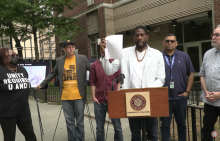
At a press conference with advocates and tenants at the Grand Street Guild Housing Complex, where NYC Mesh has successfully installed fiber connections, Williams said “in the [I]nternet age, we cannot afford to be disconnected, yet many can’t afford to connect.”

Los Alamos County Signs Partner ISPs For Open Access Fiber Network

Los Alamos County, New Mexico is inching closer to the launch of its “Atomic Fiber” county-wide open access fiber network, recently announcing they’ve received signed contracts with the partner ISPs that will be tasked with providing affordable fiber access to local residents.

An announcement by the county indicates that they’ve signed agreements with four providers:  XMission, Anthem Broadband, Intellipop, and LANet. The county says network construction is still slated to begin this spring (likely April). Some locals are expected to be connected by the fall of 2026, with network completion expected sometime in 2030.

As with most open access fiber networks, locals will eventually have the option to quickly switch between multiple competing broadband providers in pursuit of the best price, speed, customer service, and performance.

Bonfire Fiber (Bonfire Engineering & Construction LLC) is the primary partner contracted by Los Alamos County to design, build, and operate the Atomic Fiber Community Broadband Network (CBN). County officials previously told ISLR that the total network cost is expected to be around $35 million, and the finished network should pass 10,014 addresses.

A 2023 Strategic Leadership Plan adopted by the County Council identified that broadband is an “essential service,” stating that a county-owned community broadband network would be a top priority to improve economic vitality of the county. So in late 2023, the county issued a project request for proposals (RFP).

Vienna, Maine Looks To Grow Fledgling Muni-Network

Vienna, Maine recently launched its own municipal fiber network, finally bringing affordable next-generation broadband access to the small town’s 600 residents. As soon as service was made available, 240 of the town's 400 plus households immediately signed up for service, and the town’s focus has shifted to demonstrating the value of fast affordable access to remaining locals that regional incumbents are trying to lure away with temporary promotional offers.

The Vienna Broadband Authority recently told the Bangor Daily News it needs 270 consistent subscriber households to maintain financial viability, so they’ve taken to demonstrating high speed connectivity at the local firehouse in order to pique the public interest.

The Vienna network was made possible largely thanks to a $2.3 million grant in 2023 from the Maine Connectivity Authority (MCA), which in turn was made possible by the 2021 American Rescue Plan Act (ARPA) passed by Congress. The town-owned network is being run in cooperation with Machias-based Axiom.

Image
A dozen or so residents stand outside the Vienna Fire department for an event

Axiom is providing locals with three options for service: symmetrical 100 megabit per second (Mbps) service for $60 a month; symmetrical 250 Mbps service for $65 a month; and symmetrical 500 Mbps service for $110 a month. The town also offers yearly seasonal rates of $612, $663, and $1122, respectively.

The municipality’s pricing comes without usage caps, hidden fees, or long term contracts. Interested locals have to pay a $99 installation deposit that is refunded once a customer is connected.  

Predictions for 2026: CBN Edition - Episode 673 of the Community Broadband Bits Podcast

In this episode of the podcast, Chris is joined by CBN colleagues Ry Marcattilio, Sean Gonsalves, and Christine Parker for a lively conversation about what they expect to shape broadband and technology policy in 2026. 

The team shares forecasts on everything from how many new municipal networks may come online to which states will keep building with local funding even as federal programs remain uncertain.

The discussion digs into the ongoing turbulence surrounding BEAD, including shifting rules, state-level roadblocks, and growing concerns that more communities could be left waiting yet another year for funding to arrive. 

They also debate the rise of fixed wireless access, the risks and limits of satellite connectivity, and why long-term infrastructure decisions can’t ignore real-world constraints.

Beyond broadband, the group explores the growing backlash to AI and data centers, questions about trust in government and Big Tech, and why digital skills and media literacy may become even more essential in daily life.

This show is 45 minutes long and can be played on this page or via Apple Podcasts or the tool of your choice using this feed.

You can also check out the video version via YouTube.

Transcript below.

We want your feedback and suggestions for the show-please e-mail us or leave a comment below.

Listen to other episodes or view all episodes in our index. See other podcasts from the Institute for Local Self-Reliance.

Thanks to Arne Huseby for the music. The song is Warm Duck Shuffle and is licensed under a Creative Commons Attribution (3.0) license

Meet the Municipal Networks that Launched in 2025

By any measure, 2025 was a tough year in the grand project to extend fast, affordable, reliable broadband access to every home in the United States. The Digital Equity Act was abruptly cancelled, BEAD was restructured, small- and large-scale outages were common, and prices from the monopolies rose yet again.

But good things happened, too. In 2025, we saw seven new municipal broadband networks across the country that were lit up for service. As is usual, it was a mixture of partnerships, business models, and construction approaches to meet the unique challenges of a patchwork broadband landscape.

A Bountiful 2025 for Municipal Broadband

In California, the Gateway Cities Fiber Optic Network launched (eventually covering 23 cities); it will eventually cover 72 community anchor institutions and almost 5,000 unserved locations across member cities with the help of state grants.

Year in Review 2025 - Episode 670 of the Community Broadband Bits Podcast

In this special year-end episode of the podcast, Chris is joined by Community Broadband Networks colleagues Jordan Pittman, Sean Gonsalves, Jess Auer, Christine Parker, Ry Marcattilio, and DeAnne Cuellar for a wide-ranging and candid review of 2025’s biggest broadband developments.

The team revisits their predictions from the start of the year, unpacking what they got right—and where reality proved far harsher than expected. 

The conversation dives deep into the troubled rollout of the BEAD program, including delays, shrinking ambitions, and the growing uncertainty facing rural and Tribal communities. 

They also explore the fallout from the end of the Affordable Connectivity Program, the chilling effect on state affordability efforts, and the broader consequences of federal inaction on digital equity.

Along the way, the group highlights important bright spots, including Tribal Nations securing BEAD awards, new municipal networks coming online, and continued local leadership in states like New York and California. 

At the same time, they grapple with rising broadband prices, consolidation in the telecom industry, stalled competition policy, and what it means when Internet access continues to fall off the national priority list.

Tune in for thoughtful reflection, sharp analysis, and a clear-eyed discussion of what 2025 taught us—and what communities should be watching as the fight for fast, affordable, and accountable Internet access continues into 2026.

This show is 51 minutes long and can be played on this page or via Apple Podcasts or the tool of your choice using this feed.

You can also check out the video version via YouTube.

Transcript below.

We want your feedback and suggestions for the show-please e-mail us or leave a comment below.

Listen to other episodes or view all episodes in our index. See other podcasts from the Institute for Local Self-Reliance.

Thanks to Arne Huseby for the music. The song is Warm Duck Shuffle and is licensed under a Creative Commons Attribution (3.0) license

Chicopee Electric Light, Sertex Renew Partnership To Expand Affordable Fiber Access

Chicopee Electric Light (CEL) has chosen Sertex Broadband Solutions to help the Massachusetts-based municipal utility expand access to affordable fiber across the city of 55,000. The agreement is an extension of a 2019 deal with Sertex to help the utility launch residential broadband services under the Crossroads Fiber brand.

Frustrated by a lack of affordable broadband access, the city tabbed Magellan Advisors in 2015 to conduct a feasibility study into city-provided broadband access. 

After a survey showed a majority of city residents would support such an initiative, Chicopee Electric Light launched Crossroads Fiber in the summer of 2019 in a small pilot area.

Since then, the utility has been expanding access steadily to the rest of the city – joining a growing roster of city-owned utilities that are responding to broadband market failure by taking matters into their own hands.

Chattanooga’s Municipal Fiber Network Has Delivered $5.3 Billion in Community Benefits, New Study Finds

For years, it’s been known as “America’s first Gig City,” thanks to its city-owned fiber network. 

That same infrastructure has positioned Chattanooga to potentially become the nation’s first “Quantum City,” according to a new economic impact analysis showing EPB Fiber and the utility's smart-grid systems has generated $5.3 billion in net community benefits for Hamilton County since 2011. 

The city is now poised to enter the Quantum realm.

The research builds on an earlier 10‑year return‑on‑investment analysis – published in August 2020 – that showed the city’s publicly-owned fiber network had delivered $2.69 billion in value over its first decade. 

The new follow-up study – From Gig City to Quantum City: The Value of Fiber Optic Infrastructure in Hamilton County, TN 2011-2035 – expands the time horizon and finds that over 15 years the total community benefit has grown to $5.3 billion, illuminating how the long‑term value of municipal broadband can really pay-off.

A Massive Economic Boost

Image
A table shows data from the study explained in the accompanying story

Conducted by researchers at the University of Tennessee at Chattanooga, the study finds that the municipal fiber network has dramatically reshaped the regional economy, supporting 10,420 jobs from 2011 to 2024 – about 31 percent of all net new jobs created locally over the past decade.

The return on investment has been extraordinary: the network has delivered 6.4 times the value of its original $396 million investment, the study indicates.

Traverse City, Michigan Finalizes Citywide Fiber Expansion

Traverse City, Michigan’s public, community-owned utility, Traverse City Light and Power (TCL&P), is putting the finishing touches on its $14 million plan to deliver affordable fiber to the community of 15,424. With build out estimates significantly lower than initial projections, the utility is finalizing an additional $1 million in loans to fund the recently started expansion project.

Already named last month to the 2025 Broadband Communities Top 100 list, a recent update by the city notes that the utility is currently extending the network to the Base of Old Mission Peninsula, Hastings, Parsons, Munson, and Barlow. 

Complete citywide deployment is expected by the Spring of 2026, though the city says it maintains a “stretch goal” of completing the entirety of the “rapid deployment” by this fall.

In deployed markets, locals have three speed and pricing options: a symmetrical 1 gigabit per second (Gbps) tier for $90 a month; a symmetrical 500 megabit per second (Mbps) option for $70 a month; and a symmetrical 200 Mbps option for $60 a month.

Image
Traverse City Fiber map

None of the options come with long-term contracts, hidden fees, or usage caps. All three broadband tiers can be bundled with phone service for an additional $10 a month.

Like countless U.S. communities, Traverse City locals were tired by expensive, spotty, substandard broadband access being provided by regional telecom monopolies. In Traverse City that usually means a monopoly on broadband access by Charter Spectrum, peppered with some scattered Brightspeed (formerly Lumen and Centurylink) DSL and fiber lines.