
legislation

Content tagged with "legislation"

Related Topics
Displaying 1 - 10 of 409

A California Democrat Is Trying to Gut the State’s Broadband Watchdog

Today, the American Prospect published an analysis – “A California Democrat Is Trying to Gut the State’s Broadband Watchdog” – authored by our own Sean Gonsalves that examines a recently filed bill in California which aims to “strip telecommunications oversight authority away from the California Public Utilities Commission (CPUC) and shift it to a more easily lobbied state legislature and a hypothetical state broadband office that doesn’t yet exist.”

The piece details how the CPUC has become a national model for broadband consumer protection, extracting landmark affordability commitments from the proposed Charter-Cox merger, launching a state-funded broadband subsidy program, and administering the only public loan fund in the nation dedicated exclusively to community-owned Internet networks.

Here's a few excerpts:

“Given what the CPUC has done over the past several years to ensure that every family in California can afford internet access, Boerner’s characterization of her poison pill is enough to make Orwell blush and MAGA operatives smile.”

“To understand what’s really at stake in Boerner’s proposal, it helps to understand what the CPUC has built, mostly behind the scenes, and what would be lost.”

“On telecom issues, the CPUC is not just a passive regulator. In the words of Ernesto Falcon, branch manager of the Communications and Broadband Policy division of the agency’s Public Advocates Office, the CPUC is something closer to ‘a public defender in the regulatory space.’”

“The office employs 22 public servants—attorneys, researchers, and policy specialists—whose sole job is to advocate for California consumers in a regulatory arena dominated by monopoly telecom companies with virtually unlimited resources to influence lawmakers and set the agenda.”
New Law Would Force FCC To Restore Communications Equity And Diversity Council

Lawmakers are pressuring the FCC to restore a council dedicated to ensuring that broadband availability is both equitable and affordable, especially for marginalized communities that have historically been overlooked and overcharged when it comes to Internet access.

A cornerstone of the Trump administration has been the wholesale (and at times illegal) termination of any and all digital equity initiatives aimed at making broadband more uniformly available and affordable for those long stuck on the wrong side of the digital divide.

That included last year’s dismantling of the federal Digital Equity Act, which mandated the creation of three different grant programs intended to shore up equitable, widespread access to affordable Internet, while providing the tools and digital literacy education needed to help neglected U.S. communities get online.

It also included the Trump FCC’s dismantling of the Communications Equity and Diversity Council (CEDC), which has operated in some capacity since 2003 under multiple partisan administrations to make the communications sector more equitable and reduce digital discrimination. Until FCC Chair Brendan Carr arbitrarily disbanded it in January 2025.

Image
FCC Commissioner Brendan Carr on CSPAN

Carr has historically been allied with the nation’s biggest telecom giants, consistently siding with regional monopolies on nearly all policy initiatives. But he’s also dutifully loyal to President Trump, who has targeted efforts to combat systemic racism.

Local Governments Strongly Oppose The American Broadband Deployment Act

Local government organizations are voicing their strong opposition to the American Broadband Deployment Act, an industry friendly proposal being cooked up in the House that would take public rights of way management and property decisions away from state, local, and tribal governments through federal preemption and industry-friendly defaults.

The American Broadband Deployment Act (HR 2289) saw initial approval by the US House Energy and Commerce Committee last January. It’s being presented by telecom companies as a way to dramatically streamline government broadband permitting and regulation.

With bill proponents insisting it will speed up the deployment of fast, affordable broadband access, the massive 100-page omnibus bill integrates more than 20 different permitting and preemption changes that would impact cellular tower siting, wireline broadband deployment, cable franchising, and federal review processes in ways favorable to industry.

Image
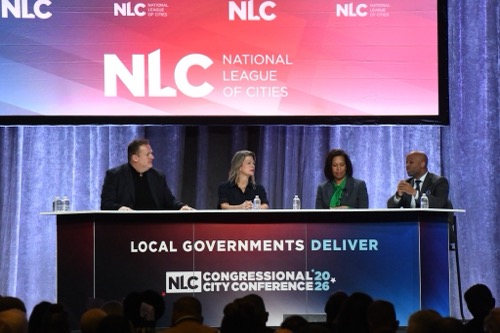
Four local leaders sit at table on stage at National League of Cities 2026 Conference

But organizations representing local governments say the sales pitch for the bill is the latest in a long line of misleading gambits by industry, designed to eliminate oversight of heavily-taxpayer subsidized providers at the cost of state, local, and tribal autonomy and public safety.

Illinois Takes Major Steps To Improve Broadband Affordability, Cooperative Expansion

The Illinois Legislature has taken several major legal steps to not only improve broadband affordability in The Prairie State, but empower local cooperatives to expand affordable, reliable fiber access to state residents long trapped on the wrong side of the digital divide.

Illinois State Sen. Rachel Ventura (D-Joliet) recently introduced Senate Bill 3612, which would amend the state’s Utilities Act to require that large private telecoms in the state provide affordable, fast broadband access to low-income state residents.

More specifically the updated law, which would take effect at the beginning of 2027, would require ISPs to provide minimum broadband download speeds of 25 megabits per second (Mbps) for no more than $15 per month and $20 per month for high-speed service of at least 200 Mbps, including all recurring taxes and equipment fees, to qualifying households.

As with other proposals of its kind, recipients would need to already participate in existing low-income assistant programs.

“Investments in broadband are essential for all Illinoisans, regardless of whether they live in a rural, suburban or urban community,” Ventura said of the proposal. “We’ve entered a new age where broadband is no longer a luxury, but an essential amenity, driving economic activity, improving education, expanding health care access and enhancing public services for all.”

Illinois Bill Seeks Broadband Price Caps for Low-Income Customers

*The following story by Broadband Breakfast Reporter Sergio Romero was originally published here.

lllinois State Sen. Rachel Ventura, D-Joliet, has introduced legislation directing regulators to set broadband price protections for low-income residents, though the bill text leaves key details to be determined later.

The measure joins those in other states, including Connecticut, Maryland, and Minnesota, that have introduced measures aimed at capping broadband prices for qualifying households.

Ventura said Senate Bill 3612 would require providers to offer broadband at “a minimum broadband download speed of 25 Megabits per second (Mbps) for no more than $15 per month and $20 per month for high-speed service of at least 200 Mbps per second, including all recurring taxes and equipment fees,” she said in a Feb. 9 press release.

Image
Illinois State Sen. Rachel Ventura speaks into microphone at table during a legislative hearing

But the bill itself does not reference specific price points or speed tiers. Instead, it directs the Illinois Commerce Commission to establish rules requiring broadband providers to offer “affordable rates” for low-income customers beginning Jan. 1, 2027. 

The commission would be tasked with setting minimum service speeds and a maximum low-income rate through rulemaking.

With ACP Gone, New Mexico Creates First State-Level Internet Affordability Program

New Mexico Gov. Michelle Lujan Grisham signed into law today new legislation that aims to provide tens of thousands of low-income households in “The Land of Enchantment” an Internet lifeline similar to the now-expired federal Affordable Connectivity Program (ACP).

It makes the state the first to step up in the absence of federal action to support households that just can’t afford to pay for monthly service, and will directly support 173,000 households.

Image
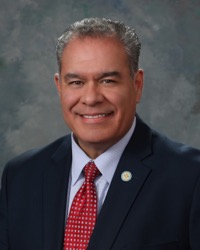
Headshot of NM State Sen Michael Padilla

Senate Bill 152 – first filed on January 26 of this year by State Sen. Michael Padilla, (D) Majority Whip – will update the state’s Rural Telecommunications Act and empower the New Mexico Public Regulation Commission (PRC) to offer up to $30/month for qualified households to pay for Internet service.

The broadband bill, known as the Low-Income Telecommunications Assistance Program (LITAP), passed through the formal legislative session in high-speed fashion. It was first introduced at the end of January, passed by the House, and then the Senate by a 38-0 margin last Thursday (Feb. 12), making its way to the governor’s desk to be signed into law today. That’s a 25-day marathon from legislative start-to-finish.

Maryland Lawmakers Advance Broadband Affordability Bill Despite Federal Pushback

Despite a memo issued by the NTIA last summer that sought to discourage states from passing affordable broadband legislation similar to New York State’s Affordable Broadband Act, two dozen state lawmakers in Maryland have signed on to the Broadband Opportunity and Fairness Act, state legislation that seeks to address the single biggest barrier to Internet access anywhere: affordability.

HB-382, if passed, would require Internet Service Providers (ISPs) operating in Maryland to offer low-cost Internet service plans to eligible low-income households.

Introduced by Delegate Kris Fair (D-3A, Frederick Co.), the bill now has 25 co-sponsors and is slated for a Feb. 12 legislative hearing before the House Economic Matters Committee. Companion legislation has yet to be filed in the Senate, though Delegate Fair’s office says they are in discussions with state Senators about advancing a bill through that chamber as well.

Stepping Up and 'Doing Something'

Bill Would Reauthorize And Expand ReConnect To Include Communications Union Districts

U.S. Senators Peter Welch (D-Vt.) and Roger Marshall (R-Kan.) have introduced a bill that would not only reauthorize the USDA’s ReConnect Loan and Grant program.

As part of the reauthorization, the proposed legislation aims to improve and expand the program so that Communications Union Districts (CUDs) would be eligible for federal broadband subsidies.

According to the announcement, the reauthorization would set a baseline of symmetrical 100 megabits per second (Mbps) connections for broadband grants, up from the program’s dated current standard of 25/3 Mbps.

The bill also clarifies that the USDA can make grants, loans, or grant-loan combinations under ReConnect, and claims to “improve coordination and communication among stakeholders at the federal level.”

“The last few years have shown all of us how important high-speed broadband is to our communities. From online school and remote work to telemedicine, a good connection is essential,” Senator Welch said of the reauthorization. 

“Many rural communities don’t have access to broadband at all, let alone the higher speeds needed to participate in today’s digital economy.”

The duo are quick to point out that over a third of Americans lack access to one or no broadband provider, and more than 45 million Americans lack fixed terrestrial 100 megabit per second (Mbps) downstream broadband, the Federal Communications Commission’s (FCC) minimum standard for broadband access.

California Law Lets Renters Opt Out Of Landlord ‘Bulk Billing’ Broadband Arrangements

*This is the second installment of an ongoing series we are calling Connected Complex looks at how states and local communities are working to address the often complex challenges involved in bringing high-speed Internet access to multi-dwelling units.

California lawmakers approved new legislation letting renters opt out of bulk-billing arrangements that force them to pay for Internet service from a specific provider. Lawmakers say they didn’t ban the practice for fear of undermining some of the more beneficial aspects of bulk billing, which can make deployments more financially tenable for smaller providers.

Starting January 1, AB1414 requires that landlords “allow the tenant to opt out of paying for any subscription from a third-party Internet service provider, such as through a bulk-billing arrangement, to provide service for wired Internet, cellular, or satellite service that is offered in connection with the tenancy."

Image
A logo that depicts clip art of several apartment buildings clustered together with "Connect Complex" at the top. Under the clip art is another phrase: "A Series on Internet Connectivity in Multi-Dwelling Units

The new law states that if landlords prevent tenants from opting out of such arrangements, tenants "may deduct the cost of the subscription to the third-party Internet service provider from the rent." Landlords are also prohibited from any sort of retaliation.

AB1414 passed the California state Senate in a 30–7 vote a month ago, and was signed into law by California Governor Gavin Newsom last week.

Affordability Law Whodunnit Gets Less Mysterious, But Murkiness Remains

The mystery of who and what killed the California Affordable Home Internet Act is coming into view.

As a California lawmaker hinted when the bill was abruptly withdrawn in June, the evidence seems to be pointing to the new leadership now directing the National Telecommunications and Information Administration (NTIA) – the agency administering the $42.5 billion federal BEAD program to expand Internet access.

In a recently released FAQ published by the NTIA this week, a corroborating clue has emerged.

And what may be the smoking gun is a bullet buried on page 48, under section 3.29, after the question: "May an Eligible Entity (states) require a specific rate for the low-cost service option (LCSO) when required by state law?”

NTIA's answer:

“No. The IIJA prohibits NTIA or the Assistant Secretary from engaging in rate regulation. Because the Assistant Secretary must approve the LCSO in the Final Proposal, the rate contained may not be the result of rate regulation. The RPN (Restructuring Policy Notice) addressed this fundamental flaw in the BEAD NOFO. The RPN eliminated BEAD NOFO requirements dictating price and other terms for the required low-cost service option.”

“Per the RPN, states may not apply state laws to reimpose LCSO requirements removed by the RPN. More specifically, the RPN ‘prohibits Eligible Entities from explicitly or implicitly setting the LCSO rate a subgrantee must offer’ (BEAD Restructuring Policy Notice, p.7). Violation would result in rejection of the Final (BEAD) Proposal (emphasis added).”