

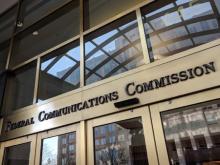
Lawmakers are pressuring the FCC to restore a council dedicated to ensuring that broadband availability is both equitable and affordable, especially for marginalized communities that have historically been overlooked and overcharged when it comes to Internet access.
A cornerstone of the Trump administration has been the wholesale (and at times illegal) termination of any and all digital equity initiatives aimed at making broadband more uniformly available and affordable for those long stuck on the wrong side of the digital divide.
That included last year’s dismantling of the federal Digital Equity Act, which mandated the creation of three different grant programs intended to shore up equitable, widespread access to affordable Internet, while providing the tools and digital literacy education needed to help neglected U.S. communities get online.
It also included the Trump FCC’s dismantling of the Communications Equity and Diversity Council (CEDC), which has operated in some capacity since 2003 under multiple partisan administrations to make the communications sector more equitable and reduce digital discrimination. Until FCC Chair Brendan Carr arbitrarily disbanded it in January 2025.

Carr has historically been allied with the nation’s biggest telecom giants, consistently siding with regional monopolies on nearly all policy initiatives. But he’s also dutifully loyal to President Trump, who has targeted efforts to combat systemic racism.
Hoping to counter that, Congressmembers Rob Menendez, Doris Matsui (CA-07), Nanette Barragán (CA-44), and Troy Carter, Sr. (LA-02) have introduced a new legislation that, if passed, would compel the Federal Communications Commission (FCC) to re-establish the CEDC.
The Communications Equity and Diversity Council Act would require the FCC to re-establish the council with a goal of advancing equity with respect to the provision of and access to communication services, without discrimination on the basis of race, color, religion, national origin, sex, or disability.
“The termination of the Communications Equity and Diversity Council is one of the most damaging and ill-advised decisions made by Chairman Carr,” said Congressman Menendez in a statement.
“Ensuring equal access and the inclusion of all Americans in shaping our digital future remains more essential than ever. The legislation we are introducing today will compel the Trump Administration and Chairman Carr to re-establish the CEDC so it can continue its important work of ensuring all communities thrive in our growing digital economy.”
Marginalized Populations Always Hit The Hardest
For years, academics, journalists, and consumer rights organizations have found that major telecom giants routinely discriminated against minority and marginalized neighborhoods when deploying next-generation broadband access.
Organizations like the National Digital Inclusion Alliance (NDIA) have released numerous studies showing how companies like AT&T often refused to deploy next-generation broadband access to lower-income and minority communities, despite being heavily subsidized by the taxpayer. This digital redlining was particularly pronounced in cities like Detroit and Cleveland.

In addition to a refusal to upgrade or repair minority communities, reporting by The Markup found that many large providers charge poor, minority neighborhoods significantly more money for slower broadband access than their more affluent, less diverse counterparts.
It mirrors the documented discrimination that has long been present in the construction of U.S. highways and the equitable delivery of reliable and affordable electricity. The deployment of next-generation fiber often runs parallel with both, shaped by decisions made decades or generations earlier.
The U.S. broadband market is broadly uncompetitive due to regional monopolies and duopolies that work tirelessly to undermine both competition and oversight. This results in high prices, spotty access, slow speeds, and substandard customer service, all of which tend to disproportionately impact low income, minority, and marginalized communities.
Reversing a Trend Generations In The Making
The 2021 federal infrastructure bill set aside $42.5 billion to expand broadband into all unserved and underserved parts of the United States. But it also tasked the FCC with crafting new rules taking aim at “digital discrimination.” On November 15th of 2023 the agency obliged, passing rules banning ISPs from broadband discrimination based on income, race, or religion.
The Trump administration took a hatchet to most of those requirements, dismissing them as “DEI” and an example of wasteful spending. The efforts were part of a much broader Trump administration attempt to undermine civil rights reforms and enforcement, including the complete halt of all current and future civil rights litigation at the Department Of Justice.
Many telecom experts say the FCC’s civil rights reforms targeted by the Trump administration were neither radical nor wasteful. Several didn’t even have anything to do with “DEI” programs, a term that has become a rhetorically broad bogeyman for right wing politicians to demonize civil rights protections and undermine diversity efforts.

Congresswoman Matsui notes that the restoration of the FCC’s Communications Equity and Diversity Council is a direct path toward restoring bipartisan collaboration on equitable access.
“The FCC should be focused on closing the digital divide, not shutting out the voices that help guide its mission,” she wrote. “Chairman Carr’s decision to dismantle the Council was a step backward. That's why I am proud to co-lead this bill to codify the CEDC and make clear that communities too often left out of these decisions deserve a seat at the table.”
Consumer and equity groups were unsurprisingly supportive of the proposal.
“Good governance depends on policymakers hearing from the people impacted by the policies. Reinstating and codifying the recently disbanded Communications Equity and Diversity Council at the Federal Communications Commission (FCC) is essential to good governance,” said Angela Seifer, Executive Director, National Digital Inclusion Alliance. “The Council is an effective and proven structure for ensuring the FCC hears from the broad range of people and communities in our nation.”
While the Republican-controlled House and Senate seem unlikely and unwilling to challenge Trump and restore popular civil rights reforms, a potential shakeup of House and Senate majorities in the coming midterms could quickly change the legislative landscape.
Inline image of FCC Commissioner Brendan Carr courtesy of Broadband Breakfast
Inline image of DigitalC CEO Joshua Edmonds celebrating with resident after DigitalC completed the full network deployment at Glen Haven courtesy of DigitalC Facebook page
Inline image of Congresswoman Doris Matsui courtesy of Doris Matsui Facebook page