

FTTH

Content tagged with "FTTH"

Fiber to the Home
Displaying 791 - 800 of 1320

United Fiber Tackles Missouri's Most Rural - Community Broadband Bits Podcast 240
The most rural area of Missouri is getting a Fiber-to-the-Home network from the United Electric Cooperative, which has created United Fiber and is expanding across its footprint and to adjacent areas that want better Internet access. Chief Development Officer Darren Farnan joins us to explain why his co-op has taken these steps.

We discuss how they are rolling it out - focusing on areas that need the service while respecting the telephone cooperatives that are within their electric footprint. The project has benefited from a broadband stimulus award and also incorporates fixed wireless technology in some areas.

We discuss some of the economics behind the project and are sure to clarify that though the utility has needed some capital subisides to build the network, it does not need any operating subsidies to continue - it runs under its own revenue. And we talk about the demand for better, faster connections - it is much higher than most realize.

This show is 30 minutes long and can be played on this page or via Apple Podcasts or the tool of your choice using this feed

Transcript below. 

We want your feedback and suggestions for the show-please e-mail us or leave a comment below.

Listen to other episodes here or view all episodes in our index. See other podcasts from the Institute for Local Self-Reliance here.

Thanks to Admiral Bob for the music. The song is Turbo Tornado (c) copyright 2016 Licensed under a Creative Commons Attribution (3.0) license. Ft: Blue Wave Theory.
Businesses Can Get A Gig in West Plains, MO

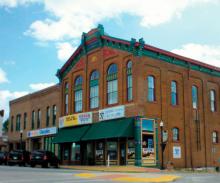
The city of West Plains, Missouri, is now offering high-quality fiber connectivity up to 1 Gigabit (1,000 Megabits) per second to local businesses. The community is also exploring the possibility of a pilot project to a limited area of households as the city considers whether or not to also offer Fiber-to-the-Home (FTTH).

No Time To Dawdle

According to City Administrator Tom Stehn, the decision to move forward was prompted by the state legislature: first last year's HB 2078 and now by SB 186, which will be heard in committee tomorrow, Feb. 14th. City leaders decided to preserve their local authority by establishing a broadband utility and expanding a plan to improve local connectivity. Since they are up and operating now, they expect to be grandfathered in under the language of the statute.

Open For Business

The network is now serving the West Plains Senior Center and the Ozarks Small Business Incubator. Ozarks Medical Center may soon be on the network and, according to Stehn, the city is still deploying the network but wants to let local businesses know that it is up and running. Access from incumbent providers is available in West Plains, but prices are high and some local businesses report rates up to three times those paid for similar needs in urban areas. City leaders see the network as an economic development tool that will attract new businesses and will help control prices for existing businesses and keep rates in check for residents.

West Plains is home to approximately 12,000 people and the county seat in Howell County. The town is in the center of the county, which is located on the southern border. Missouri State University has a campus at West Plains with a number of Associate degree programs and the community has an airport, the Heart of the Ozarks Fairgrounds, and several private schools in addition to the public school system.

Fairlawn Folks Get FTTH; Residents Now Connected

Not long ago, FairlawnGig in Ohio began serving businesses with symmetrical connectivity, offering speeds up to 1 Gigabit (1,000 Megabits) per second. The incremental build is progressing and now the city is offering Fiber-to-the-Home (FTTH) connectivity to residents in Fairlawn.

They Want It

According to a recent Akron Beacon Journal article, demand for residential services is already strong with more than 1,400 subscribers in line for installation; one-third of the installation is now complete. If 4,100 households and businesses in Fairlawn sign up, the city estimates it will break even. In the neighborhood where the first series of installations are taking place, 80 percent of households have signed up.

Fairlawn's goal is not to make profits from its investment; city leaders consider the network an essential piece of infrastructure like roads or sewers. They’ve chosen to fund the investment with municipal bonds, an atypical funding mechanism for Internet infrastructure. Their decision, however, underscores their commitment and belief that better connectivity is an essential service that will keep the community competitive.

“It’s going to make [Fairlawn] much more attractive,” [said local business development manager Mike Perkins]. “Fairlawn is at the forefront and everyone else is going to be playing catch-up.”

Nuts And Bolts Of FairlawnGig

When we interviewed Deputy Director of Public Service Ernie Staten about the project last spring, he described the city’s partnership with Extra Mile Fiber, an Ohio company that collaborates with Fairlawn to provide Internet access services. The city and Extra Mile will share revenue from the service, FairlawnGig.

Muscatine Upgrade Ready To Begin

Muscatine, Iowa, is ready to begin its upgrade, bringing municipal cable network customers up to Fiber-to-the-Home (FTTH) technology. Last week, the Board of Water, Electric & Communications Trustees from Muscatine Power & Water (MP&W) awarded the contract to a firm that will transform the network and bring speeds up to 1 Gigabit per second (1,000 Megabits per second) download tier. No word yet on upload speeds.

As we reported last spring, MP&W is taking a slow march toward finishing this project because there are a number of interlocking pieces that need to fit together correctly. The firm awarded the contract was able to introduce several alternatives that reduced the initial estimate of $8.7 million to $7.5 million. The upgrade will be funded with an interdepartmental loan from the electric utility.

At the same meeting, the Board also reviewed the 2016 budget which came out well for the MachLink communications utility.

Net income of $1,372,919 was budgeted for the communications utility, but actual net income was $2,148,272, with an ending cash balance of $8,257,000. There also is debt of $9,044,000 owed to the electric utility. Gowey said revenues were 3.2 percent over budget, while expenses were 25 percent under.

The upgrade will begin in May and customers are expected to be on the new system as early as August. The project should be completed by the end of 2018.

Ammon Launches Its FTTH; Bye-Bye Broken Market

Folks in Ammon, Idaho, are now getting choice, speed, and affordability from their new municipal Fiber-to-the-Home (FTTH) network. Home owners are making the switch and waving "bye-bye" to the burdens of a broken market for the benefits of publicly owned infrastructure.

High Demand

Out of 369 homes in the first district, 239 have signed up to be connected to the open access network; 22 installations are complete. Installations are on hold until winter is over, but the city’s Technology Director Bruce Patterson expects to add more as people experience their neighbors’ fiber service. 

In order to connect to the network, homeowners pay for the cost of the installation themselves either with a $3,000 direct payment when the project is completed or through a special property assessment over a 20-year period. Property owners who don’t want to be connected aren’t obligated to pay. Residents or businesses connected to the network then choose an Internet Service Provider (ISP) from those offering services over the network infrastructure. The network’s technology makes switching providers a simple task that can be done online. 

ISP Like It, Too

Ammon makes it easy and inexpensive for new providers to offer services on their fiber as a way to encourage competition. Ammon told the Post Register:

“We tried to make sure the barriers to entry were as low as possible to encourage competition,” Patterson said. “There’s the potential for market disruption. If somebody else can get to you cheaper and present a better economic number, they have the potential to disrupt the marketplace, which is better for all of us.”

Mount Washington, MA, Makes The Next Move: Design, Construction

Mount Washington has selected a firm to handle the design and construction services for its planned Fiber-to-the-Home (FTTH) network.

Mount Washington

This past summer, the community received word that it would receive a $230,000 grant from the Massachusetts Broadband Institute (MBI), the state agency set up to administer federal and state funds for broadband network deployment. Mount Washington had already obtained special permission from the state legislature to proceed with a network sans a Municipal Light Plant (MLP). In Massachusetts, municipalities are required to establish MLPs to operate and manage any publicly owned Internet network. Because Mount Washington is so small, however, they felt creating another administrative entity would be an undue burden; state legislators agreed and created an exception for them in statute.

This past spring, they released a Request for Proposals (RFP) to locate a firm for design and construction.

An Important Step

The town of 150 full-time residents is located in the far southwest corner of the state and much of the community is covered by forest. The Mount Washington State Forest, the Mount Everett State Reservation, and the Taconic Mountains, give the community its nickname: “The Town Among The Clouds.” Incumbents have shied away from investing in Mount Washington; even plain old telephone service is bad there. 

The town considered participating in the Wired West broadband cooperative, but eventually chose to pursue their own network. Mount Washington’s publicly owned network will connect to MassBroadband 123, the statewide middle mile network. The network will also need to find an Internet Service Provider (ISP) to offer Internet access via the new infrastructure.

In the press release, announcing the decision to move on to the next step:

RFQ From Glenwood Springs, CO: Proposals Due Feb. 28

Glenwood Springs recently released a Request for Qualifications (RFQ) as it looks for firms to help them develop broadband planning. The Colorado community’s residential Fiber-to-the-Home (FTTH) pilot program obtained a 25 percent take rate just by word of mouth and according to the RFQ, community leaders in Glenwood Springs are ready to expand that success. Proposals are due February 28th.

Beyond The Pilot

We told you about the community’s early deployment of fiber for businesses, community anchor institutions (CAIs), and  municipal facilities, and how the city offered wireless service to residents. The pilot program offers the opportunity for 36 homes to connect to the fiber network; speeds range from 100 Megabits per second (Mbps) to 1 Gigabit per second (Gbps) at $40 - $70 per month, respectively. The program obtained a positive cash flow in its third month and broke even at 58 months, according to the RFQ.

The RFQ states:

The City is seeking qualified firms to assist the City with the development of (1) a financially sustainable broadband internet business model (“Model”) and (2) a detailed implementation plan.  The Model will consist of a comprehensive business plan, detailed financial model, and recommended financing options.  Upon successful delivery and adoption of the comprehensive business model (Phase 1), an implementation plan consisting of network design, construction documents, sample RFP documents, and a marketing strategy will be developed (Phase 2).  

Glenwood Springs already owns significant fiber resources, its own Broadband Department within the municipal electric utility, and has been operating the network since 2002. The community opted out of restrictive state law SB 152 in 2008.

Kitsap Residents Demand Fiber - And Get it - Community Broadband Bits Podcast 237

When we first learned of the Lookout Lane fiber-optic project in the Kitsap Public Utility District in Washington, we knew we wanted to learn more. Kitsap PUD General Manager Bob Hunter and Telecommunications Superintendent Paul Avis join us for episode 237 of the Community Broadband Bits podcast.

KPUD has historically focused on water and wastewater services but they increasingly hear from residents and businesses that Internet access is a major priority. We talk about their approach and how neighborhoods are able to petition KPUD to build fiber to them. The first area to use this option had very poor Internet access from the incumbent telephone provider.

The discussion covers a lot of interesting ground, from how it is financed to where the demand is heaviest, and why public utility districts should have the option of using a retail model in some areas rather than continuing to be limited solely to wholesale-only by state law. 

For related information, consider our coverage of the Northwest Open Access Network.

This show is 33 minutes long and can be played on this page or via Apple Podcasts or the tool of your choice using this feed

Transcript below. 

We want your feedback and suggestions for the show-please e-mail us or leave a comment below.

Listen to other episodes here or view all episodes in our index. See other podcasts from the Institute for Local Self-Reliance here.

Thanks to Admiral Bob for the music. The song is Turbo Tornado (c) copyright 2016 Licensed under a Creative Commons Attribution (3.0) license. Ft: Blue Wave Theory.

Spencer, Iowa, About To Go Citywide FTTH

Last spring we reported that Spencer Municipal Utilities (SMU) was marching steadily on with its Fiber-to-the-Home (FTTH) project that it started in 2015. Within a few months, SMU is set to begin the fourth and final phase; the entire community will soon will have access to fiber connectivity. 

Last And Final Phase

As part of the last phase, the utility will place a new substation in the northeast section of town. According to SMU General Manager and CEO Steve Pick, the utility has purchased a prefabricated structure built especially for this purpose. The structure will be delivered and installed by the sellers and the utility will pay approximately $40,000 for the building.

Spencer, Iowa, population 11,200, is one of the many rural towns that chose to invest in the necessary infrastructure to improve connectivity for local businesses and residents, rather than gamble on whether or not national companies would ever deliver. They began serving customers in 2000 with a cable network and, after they realized customers’ bandwidth demands would continue to rise, decided to upgrade to fiber. The network has been good for the quality of life and economic development in Spencer.

Prepping For The Future

Amanda Gloyd, SMU marketing and community relations manager, told the Daily Reporter:

“Our customers continue to use more bandwidth and we only see that continuing to increase in the future. In the areas of Spencer where the conversion is already complete, we are able to offer 50 [Mbps] all the way to 1 [Gbps] of service, which is exciting to be able to offer in addition to the increased reliability, decreased maintenance and paving the way for how our communication services will be delivered in the future.”

Transcript: Community Broadband Bits Episode 235

This is the transcript for episode 235 of the Community Broadband Bits Podcast. Lee Brown and John Williams from Erwin, Tennessee, join Christopher Mitchell to talk about the incremental build out of a Fiber-to-the-Home network. Listen to this episode here.

Lee Brown: The great thing about municipal broadband is it allows each community to decide what's right for them. We're in the greatest place of all time is being able to make that decision to do what's right for your community.

Lisa Gonzalez: This is episode 235, of the Community Broadband Bits Podcast from the Institute from Local Self-Reliance. I'm Lisa Gonzalez. We wanted to interview folks from Erwin, Tennessee for some time, now, and this week we're lucky to have them. The community, population around 6,000, has been building out a Fiber-to-the-Home system incrementally for the past few years. In addition to improving connectivity for residents and local businesses, the network has improved operations for the municipality's other utilities. Today, Christopher talks with Lee Brown, general manager of Erwin Utilities, and John Williams, fiber engineer. Lee and John, describe how the community had carefully considered what was best for them, before pursuing a fiber network. As it turns out they had considered fiber for a while before the circumstances were right to deploy. They started with a pilot program, and the network continues to grow. John and Lee offer Erwin's rational for the incremental approach, and share the way the network has improved services for all utility customers. Not only those that take Internet access services. Now, here's Christopher talking with Lee Brown, general manager, and John Williams, fiber engineer from Erwin Utilities in Erwin, Tennessee.

Christopher Mitchell: Welcome to another edition of the Community Broadband Bits Podcast. I'm Chris Mitchell, and today I'm speaking with two gentlemen from Erwin, Tennessee. We'll start with Lee Brown, the general manager of Erwin Utilities. Welcome to the show.

Lee Brown: Thanks, Chris. We appreciate being able to be part of this, today.

Christopher Mitchell: We also have with us, John Williams a fiber-optic engineer for Erwin Utilities. Welcome to the show.