
Digital Equity Act

Content tagged with "Digital Equity Act"

Related Topics
Displaying 1 - 10 of 44

Federal Agencies Still Can't Get Their Broadband Data Straight, GAO Finds

A recent Government Accountability Office (GAO) report reveals what’s been obvious to broadband deployment experts for years now: the federal government’s multi-agency approach to closing the digital divide is undermined by a lack of coordination and data-management among agencies.

The result is an FCC broadband coverage map with an amalgamation of inaccuracies that misrepresents where high-speed Internet service does or does not exist, a flaw that can steer taxpayer dollars away from communities that actually need them.

Since 2020, four federal agencies — the FCC, NTIA, USDA and Treasury — have been administering nine different grant programs to build-out new Internet networks in unserved and underserved areas across the nation, including the $42.5 billion federal flagship BEAD (Broadband Equity Access and Deployment) program.

As ILSR’s Senior GIS Analyst Christine Parker notes, the report devotes considerable attention to “de-duplication” — the process of cross-referencing which locations have already received funding or service commitments from one program so that other programs don't waste money doubling up, or worse, leave locations out entirely because it was wrongly assumed to be covered elsewhere.
Image
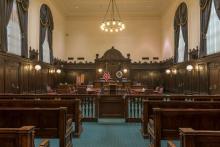
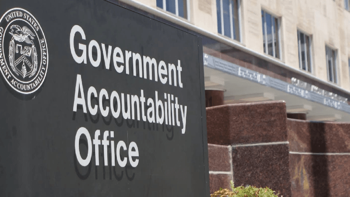
GAO sign and building in background

“But there’s no documented process or timeline for actually doing this,” Parker says.

Garbage In, Garbage Out

Part of the problem, the report notes, is that agencies track and report funding data in different formats, with some programs collecting far more granular location-level detail than others so that it is much harder to reconcile the datasets and match them up. GAO indicates the agencies are aware of the issue and are working to reconcile it, but as of the report’s release, no consistent process was in place.

Researchers Say Federal Policy Is Pricing Low-Income Pennsylvanians Off the Internet

Persistent attacks by the federal government on Internet affordability protections and social safety nets are directly resulting in a drop in overall broadband adoption, with large numbers of low-income Americans unable to afford modern connectivity — and the vast benefits it provides.

That was the message sent by local and national broadband researchers attending an informational meeting last month in Indiana, Pennsylvania before the Pennsylvania House Communications & Technology Committee.

Researchers noted that sustained efforts by the federal government across numerous fronts — from attacks on the social safety net to the Republican destruction of the FCC Affordable Connectivity Program (which provided $30 broadband discounts to more than 23 million households) are directly driving vulnerable populations away from Internet adoption.

Attendees noted that the One Big Beautiful Bill (OBBB) alone — which dramatically lowered taxes for U.S. corporations and the wealthy — is projected to reduce broadband connections by approximately 233,000 in Pennsylvania's lowest income quintile.

One attendee, Indiana County Commissioner Sherene Hess, pointed to 2024 data from public-benefit corporation Ready.net showing that Indiana County is among the least-connected counties in Pennsylvania, with 22 percent of county locations without broadband access.

According to notoriously unreliable FCC data (coverage and speed gaps are usually worse than the federal government claims), of the 103,986 “serviceable locations” in Indiana County, 23,049 locations are unserved and 3,927 locations are underserved — meaning they fail to meet FCC minimum broadband speed standards.

Hess combined data from the U.S. census and a 2022 United Way ALICE (Asset Limited Income Constrained, Employed) report to conclude that 46 percent of Indiana County was facing financial hardship, suggesting that $80 to $200 monthly Internet bills “create a choice between Internet service and other basic needs.”

IN OUR VIEW: Statement on Federal Court Decision to Reinstate Digital Equity Act Grant Funding

Yesterday a federal district court judge ruled that Digital Equity Act programs should resume, although without any of the Act’s original race-based factors, which the judge deemed to be unconstitutional.

In response to the ruling in the on-going lawsuit filed by the National Digital Inclusion Alliance (NDIA), Christopher Mitchell, Director of the Community Broadband Networks initiative at the Institute for Local Self-Reliance (ILSR), made the following statement:

“Yesterday’s ruling on the Digital Equity Competitive Grant Program is, on balance, a victory. The National Digital Inclusion Alliance deserves enormous credit for fighting to get to this point. The court affirmed what should have been obvious all along: the Trump administration had no legitimate basis to hold this program hostage. The only real question now is how quickly NTIA moves to actually implement it.”

“The removal of racial and ethnic minorities as a designated ‘covered population’ are  a loss because the Trump Administration continues to find ways to undermine populations that have been historically disadvantaged.  But I don’t think it will significantly change who the program actually serves or what work gets done on the ground. The Digital Equity Act’s continued focus on low-income communities, older adults and veterans means that the people who most need to be prioritized will still be prioritized. Due to historic discrimination, many racial minorities will remain the focus of the program due to their disproportionately low income.”

“Digital equity work does not cost the federal government money – our taxpayer dollars are used inefficiently when millions of people cannot access telehealth and similar services. Additionally, the benefits of federal investments into new Internet networks are greatly enhanced when more people are able to take advantage of modern technology.” 

Too Easy to Reach Orbit? - Episode 16 of Unbuffered

Unbuffered Logo - Two text bubbles

In this episode of Unbuffered, Chris is joined again by Douglas Dawson for a conversation about the challenges and opportunities shaping the future of broadband.

Chris and Doug begin by discussing the latest developments in the National Digital Inclusion Alliance's lawsuit against the Trump administration over the Digital Equity Act, examining what the case could mean for digital equity efforts and the communities working to expand access, affordability, and digital skills.

From there, they turn to the results of a recent survey examining how rural Americans use the Internet, exploring what it reveals about changing consumer habits, growing bandwidth demands, and the ways AI and other emerging technologies are reshaping how people connect online.

The conversation then shifts to the practical realities of building broadband networks, including the rising cost of Fiber construction, permitting delays, make-ready work, and why better pole inventories could significantly reduce deployment costs and speed up network expansion.

Chris and Doug also take a closer look at the Federal Communications Commission's evolving approach to satellite broadband, discussing recent regulatory changes, what they could mean for the industry, and whether the agency's approach strikes the right balance as more companies look to launch satellite broadband services. They also explore how satellite fits alongside Fiber and other technologies as communities work to expand reliable Internet access.

Throughout the episode, Chris and Doug connect today's policy debates with broader questions about technology, infrastructure, and what it will take to ensure communities have reliable, affordable Internet in the years ahead.

This show is 48 minutes long and can be played on this page or via Apple Podcasts or the tool of your choice using this feed

You can also check out the video version via YouTube.

Transcript below.

We want your feedback and suggestions for the show-please e-mail us or leave a comment below.

Listen to other episodes (formerly Community Broadband Bits) or view all episodes in our index. See other podcasts from the Institute for Local Self-Reliance.

Thanks to Whitedrift for the song Operator, licensed Creative Commons Attribution (3.0).

Digital Equity Act Program Can Proceed Without Race Criteria, Trump Attorneys Say

*The following story by Broadband Breakfast Reporter Jericho Casper was originally published here.

Trump administration attorneys told a federal judge that the Digital Equity Act's competitive grant program could likely continue if a challenged provision is struck down.

During a hearing before U.S. District Judge John Bates, Commerce Department attorney Patrick Butler argued that a statutory provision identifying certain racial and ethnic groups as “covered populations” could be severed from the law if found unconstitutional.

(Should that happen, it would allow) the rest of the program to move forward without considering race. 

The clarification came during a motion hearing in a suit brought by the National Digital Inclusion Alliance (NDIA), which challenged the administration's decision to halt the Digital Equity Act program after President Donald Trump characterized it as unconstitutional.

The hearing, held in the U.S. District Court for the District of Columbia on June 11, was made public Monday.

During the hearing, Bates repeatedly questioned both sides about whether the constitutional issue could be resolved now, at the motion-to-dismiss stage, and whether any part of the case would remain if the challenged provision were severed and the grant program continued.

Justice Department and Commerce Department attorneys argued that the disputed provision could be removed while leaving the rest of the program intact.

“It's our position that the racial classification is severable,”  Butler told the court. “If you decide that the racial classification is unconstitutional ... and then you sever it, we would obviously apply the grant program without considering race.”

Another Blow to Digital Equity: Court Kills FCC's Anti Digital Discrimination Rules

In yet another bruising blow in the fight to ensure equitable access to high-speed Internet service, an appeals court struck down federal rules this week that aimed to combat digital redlining.

The ruling came despite a mandate from the bipartisan infrastructure law passed during the Biden administration that directed the FCC to develop “rules to facilitate equal access to broadband internet access service” that would prevent “digital discrimination of access based on income level, race, ethnicity, color, religion, or national origin.”

Not adopted until 2023 after a lengthy rulemaking process and public comment period, when the FCC published its final digital discrimination rules it gave the agency the authority to penalize Internet Service Providers (ISPs) whose policies resulted in “disparate impact,” even if the agency couldn’t prove deliberate discriminatory intent.

Among the real-world “disparate impact” examples advocates presented to the FCC were instances such as when residents of Hope Village, a mostly Black neighborhood in Detroit, experienced a 45-day Internet outage during the height of the pandemic lockdowns – as well as studies that found many large providers charge poor, minority neighborhoods significantly more money for slower broadband access than their more affluent, less diverse counterparts.

California PUC Issues $3.29 Million In Digital Literacy Grants

As digital inclusion advocates across the nation push for the restoration of Digital Equity Act funding a year after President Trump unilaterally “terminated” the bipartisan Congressional law, the California Public Utilities Commission (CPUC) has approved $3.29 million in grants aimed at dramatically shoring up digital training and public broadband access in communities across the state.

All told, more than 18 new digital literacy projects and three expanded public broadband access projects will be funded, impacting more than 16,000 Californians.

According to the CPUC announcement, the projects, paid for from the California Advanced Services Fund (CASF) Broadband Adoption Account, will provide digital literacy training to 5,345 participants and deliver broadband access to 10,800 additional community members in underserved areas.

The funded CPUC projects run the gamut across all corners of the state, from $180,325 to provide digital literacy and data skills training for veterans in Santa Barbara and Ventura counties, to $751,780 to help fund five different digital literacy projects assisting older Americans in Alameda County, Orange County, Riverside County, San Francisco, and San Jose.

Image
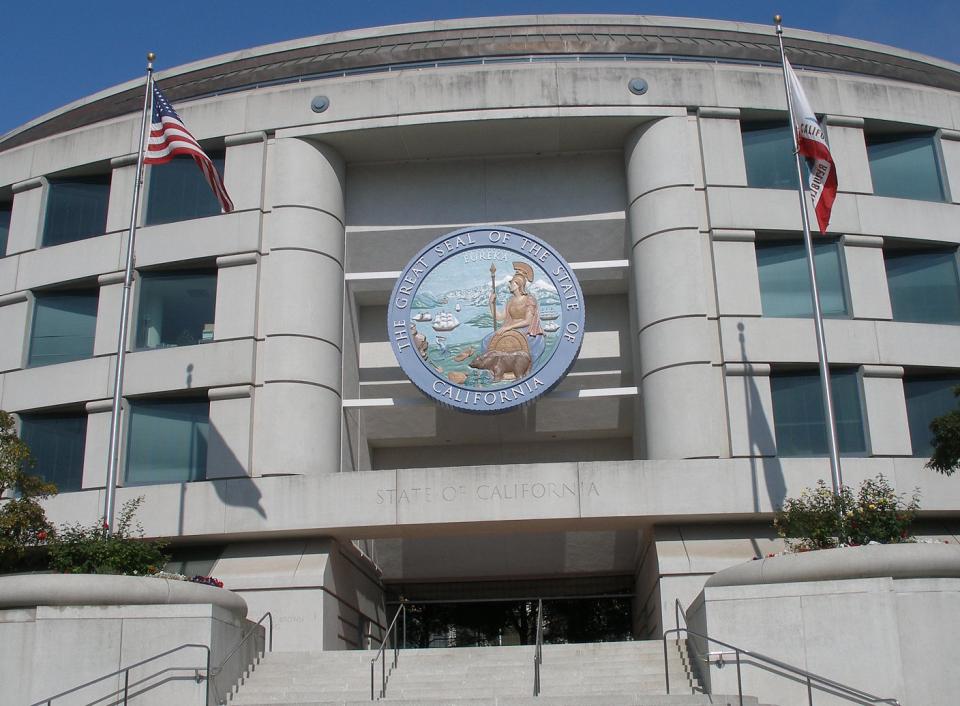
CPUC office building with state seal above doorway

The biggest grant, $1.19 million, will be used to help fund eight Golden Bridge Program digital literacy projects serving seniors, low-income residents, justice-involved youth, and high school students in the Sacramento region.

Digital Equity and the Way We Build Networks - Episode 5 of Unbuffered

Unbuffered Logo - Two text bubbles

In this episode of the podcast, Chris is joined again by Jade Piros De Carvalho and Sean Gonsalves for a conversation about Internet access, digital equity, and how we organize society.

They begin with an article by Stefan Schüller that compares the United States, Switzerland, and Germany and tries to draw lessons about how networks are built and governed. The discussion looks at how you can “do it way wrong” in different ways, from privatizing everything to gold plating systems, and what those choices mean for competition and outcomes.  

From there, the conversation turns to a central question: how do you go back from where we are now in the United States? Working within a privatized model, they explore whether it is possible to move toward something different, and what it would take to create more competition and better results for communities.

They also talk about digital equity, including how training and local investment can change people’s lives and why those investments matter. Sean highlights the benefits of these investments in his latest story on Belinda Parker-Mendoza from San Antonio. You can find that story on our main page here

Along the way, they reflect on the role of federal and state policy, the limits of simply “removing barriers to competition,” and the challenges of solving problems in places with existing infrastructure.

The episode also introduces a new recurring segment, “What the Tech!?!,” and closes with a look ahead to our first Unbuffered live show on April 28th at 2:00 PM ET. For more information, check out our story here.

This show is 48 minutes long and can be played on this page or via Apple Podcasts or the tool of your choice using this feed

You can also check out the video version via YouTube.

Transcript below.

We want your feedback and suggestions for the show-please e-mail us or leave a comment below.

Listen to other episodes (formerly Community Broadband Bits) or view all episodes in our index. See other podcasts from the Institute for Local Self-Reliance.

Thanks to Riverside for the music. The song is Caveman and is licensed under a Creative Commons Attribution (3.0) license

A Cap, Gown, and Connection

The first time Belinda Parker-Mendoza set foot on the campus of San Antonio College was to get her cap and gown for graduation, having earned her Associate’s Degree in Business Administration.

It was not only a first for her. She was the first person in her entire family to earn a diploma of any kind.

The gateway to that moment, the 45-year-old mother says, came in 2022, when she signed up for a digital skills training course offered through AmeriCorps VISTA at one of the city’s Opportunity Home apartment complexes where she lives on San Antonio’s cultural and historic East Side.

“If I didn’t have a laptop and the Internet, none of that would’ve happened,” she explains, sitting in her fourth-floor apartment before diving into a writing assignment for one of her classes as she works towards her bachelor’s degree.

She does her school work on a laptop – a refurbished Dell computer she earned through the digital skills training program. Before that, she didn’t have a computer or Internet access at home. The class provided her a laptop and through the Americorps program, she was able to enroll in the now-expired Affordable Connectivity Program (ACP), which allowed her to get home Internet service for the first time.

Image
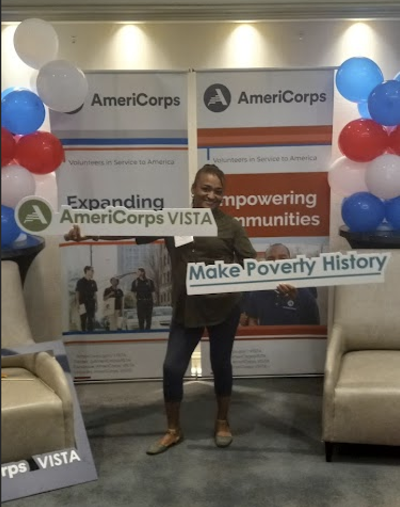
Belinda Parker-Mendoza at digital skills event holding two signs. One says: "Americorps VISTA," the other reads: "Make Poverty History"

“Thank God,” she says. “Because when the ACP ended, I was working in the (Americorps) program – and getting paid – so it worked out.”

For millions of others, it did not.

Court Asked to Pause Digital Equity Act-Related Lawsuit, Pending Key Court Decision

*The following story by Broadband Breakfast Reporter Kelcie Lee was originally published here.

The lawsuit over the Trump administration’s suspension of grants from the $2.75 billion program to close the digital divide may come to a pause. 

The National Digital Inclusion Alliance (NDIA) filed a motion Wednesday to put its lawsuit suing President Donald Trump on hold, because there is a similar case further along that would control the outcome. 

NDIA was a key player in the Digital Equity Act (DEA), having been one of 65 recommended awardees that were blindsided after having spent two years building plans approved by the federal government. 

The DEA was a Biden-era program from the bipartisan Infrastructure Investment and Jobs Act of 2021 (IIJA) that worked to ensure Americans could access, afford and fully participate in the increasingly digital society. 

In May 2025, Trump halted $1.25 billion in DEA competitive grants, explaining that the act was unconstitutional, racist and illegal.