
As states across the nation are poised to begin awarding BEAD grants as part of the single-largest federal investment in U.S. history to build new high-speed Internet networks, a sizable share of the funding is going to the big cable and telecom giants, with hundreds of millions in subsidies slated for Starlink and Amazon Leo.
Yet, eight community and independently-owned networks are in the running for this year’s Broadband Provider of the Year Award – a reminder that bigger does not always mean better and BEAD isn’t the only way to solve the digital divide in local communities.
“From municipal pioneers to digital equity champions and rapidly scaling fiber builders, the 2026 shortlist for the Broadband Communities Broadband Provider of the Year represents the best in high-speed connectivity, customer-first service, and network innovation,” Broadband Communities, one of the nation’s leading digital and broadband technology publications, announced in the run-up to its Broadband Communities Summit 2026.
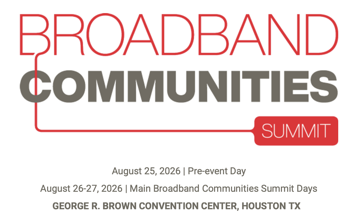
The winners will be revealed live during a special awards ceremony at the end of Day 1 at this year’s summit, which will be held on August 26 at the George R. Brown Convention Center in Houston, Texas.
And Nominees Are…
The shortlist of standouts competing for top honors this year are the following:
Archtop Fiber, an independent ISP, finds itself in the running as it has secured over $100 million in combined state grants and matching funds to expand across New York State, Albany County, and Massachusetts. The company recently launched symmetrical 5 Gig and 8 Gig speeds, “reinforcing its commitment to cutting-edge connectivity and community support.”
Blue Stream Fiber made the shortlist because of its “record-breaking 2025 marked by operational excellence, record growth, and successful AI integration,” having cut its mean time to repair by 25 percent while earning over 1,700 five-star Google reviews. The provider's AI dispatch optimization, METIS, now processes 50,000 monthly transactions, driving a 6,000 percent return on investment.
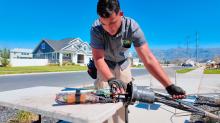
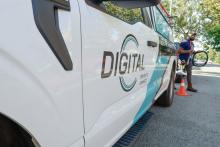
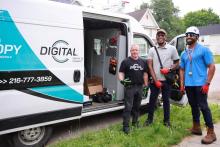
DigitalC, a nonprofit operating as Canopy, has garnered accolades for having deployed a citywide next-generation wireless network in under 18 months, connecting over 8,500 households and 21,000 Cleveland residents. The nonprofit provider delivered “more than 26,000 digital skills training sessions to over 20,000 locals,” earning a 2025 Technology Partner of the Year nomination from Broadband Communities.
Erwin Fiber, operated by the Erwin Utilities Authority in Tennessee, is another top prospect this year for having maintained reliable service and for having reached a 68 percent residential fiber take rate even through extended flood recovery efforts. The public utility conducted “proactive outbound wellness calls to impacted residents” and helped construct a temporary access road for industrial park cleanup.
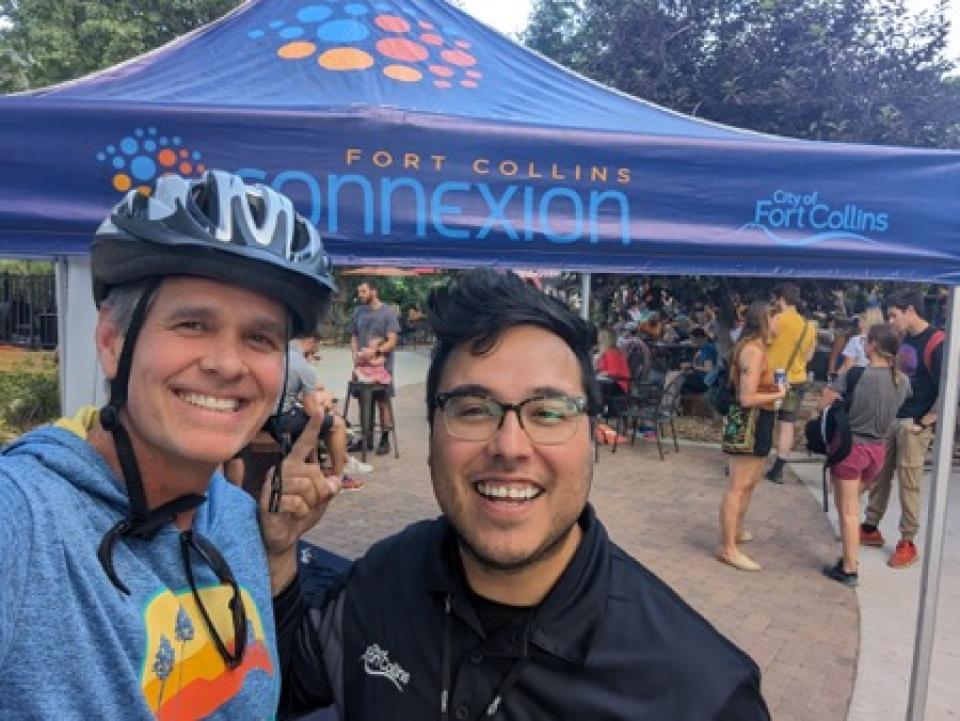
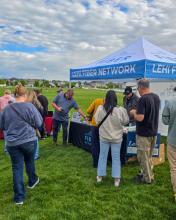
Fort Collins Connexion is a perennial people’s favorite and named by PC Magazine in 2024 as one of the best ISPs anywhere in the country.
It is is among this year’s Broadband Communities' nominees as the city-owned network in the Front Range region of Colorado was found to have the best median upload speeds in the nation, sustaining over 300 Mbps according to Ookla, while surpassing 25,000 subscribers.
The municipal provider offers “gigabit speeds for as low as $20/month to income-qualified families,” which helped earn Fort Collins the NDIA's 2024 Digital Inclusion Trailblazer designation.
Midco is also on this year’s shortlist largely because it delivers reliable connectivity to over 1.2 million homes and businesses across more than 600 communities in five upper Midwest states. The provider maintains “a massive, 21,000-mile owned and operated fiber network” that is supported by 1,900 team members.
Ripple Fiber is another independent provider rising up the recognition ranks having driven rapid expansion across 10 states with a 100 percent fiber network stretching over 3,500 miles and more than 230 municipal partnerships. The provider became “the nation's first to include free built-in Wi-Fi backup via eero with all Gig packages,” positioning it to pass nearly 500,000 homes by the end of 2026.
UTOPIA Fiber, the largest municipally-owned open access network in the nation, rounds out the top eight in the running for this year’s “Broadband Provider of the Year Award,” as it grew 20 percent year-over-year to support over 85,000 subscribers across 21 municipalities while maintaining “a stellar Net Promoter Score in the high 60s.” The open-access network is now expanding beyond its core footprint, targeting rural California across more than 30 counties.
Not A Fluke
The growth of these networks are not an outlier. According to the Fiber Broadband Association, independent ISPs, electric cooperatives, and municipal networks together accounted for about 40 percent of all fiber deployment in 2025 – “a sign that the buildout is increasingly being driven by community-rooted operators, not just national giants.”
That momentum is happening in spite of, not because of, the broader political environment. Even with the continual propaganda, anti-municipal broadband “think tank” pieces, and policy-attacks from lawmakers under the influence of deep-pocketed industry lobbyists, the community broadband model continues to quietly but consistently outperform their heavily-subsidized monopoly competitors.
The big prediction market platforms do not track this, but we do — and will.
Header image of DigitalC crew outside of work van courtesy of DigitalC Facebook page
Inline image of Fort Collins Connexion at community event courtesy of Fort Collins Connexion Facebook page