Starlink

Content tagged with "Starlink"

Related Topics
Displaying 51 - 57 of 57

Wireless Is Essential, But Fiber Remains the Future (For Now)

From the miraculous benefits of WiMax to the hype surrounding 5G, U.S. wireless companies have long promised near-Utopian levels of technological revolution.

Yet time after time these promises have fallen short, reminding a telecom sector all-too-familiar with hype that fiber optics remains, for now, the backbone of bridging the digital divide. 

From Google Fiber to Starry, numerous companies have promised to use wireless technology as a supplement or even replacement for future-proof fiber. But more often than not these promises have failed to have any meaningful impact at scale. Worse, many wireless services often fail to deliver on a routinely neglected aspect of telecom policy: affordability.

That’s not to say that wireless doesn’t have an immense, integral role to play in shoring up the nation’s broadband gaps. 5G, rural and urban small WISPs, satellite, and other wireless options are all essential in bridging the digital divide and extending access to rural communities and tribal nations (see: the FCC Tribal Priority Window and the beneficial wireless options that have emerged). 

But reality continues to demonstrate that there’s simply no substitute for the kind of high capacity, affordable fiber efforts being deployed by a steady parade of municipalities, cooperatives, and city-owned utilities. And as an historic level of federal subsidies wind their way to the states, the distinction is more important than ever. 

A Rich History Of Wishful Thinking

The industry crown for unwarranted wireless industry hype likely belongs to WiMax, a family of wireless broadband communication standards based on the IEEE 802.16 set of standards and introduced in 2001.

From 2001 to 2011, there were no shortage of missives about how the standard would revolutionize connectivity worldwide, ushering forth the golden age of affordable broadband access. There were countless warnings that marketing departments had gotten well ahead of themselves, all widely ignored by the speculative investment set.

Recent Broadband News | Episode 51 of the Connect This! Show

Join us live on Thursday, August 25th, at 5pm ET for the latest episode of the Connect This! Show. Co-hosts Christopher Mitchell (ILSR) and Travis Carter (USI Fiber) will be joined by regular guests Kim McKinley (UTOPIA Fiber) and Doug Dawson (CCG Consulting. They'll dig into recent news - from Starlink announcing uncharacteristic price drops to "to reflect parity in purchasing power across our customers," to big cable companies and telcos going after BEAD grants, to a reflective look on how well (or not) we did with the broadband stimulus.

Email us [email protected] with feedback and ideas for the show.

Subscribe to the show using this feed or find it on the Connect This! page, watch on YouTube Live, on Facebook live, or below.

RDOF, Universal Service Fund, and the Future of Video | Episode 50 of the Connect This! Show

Join us live on Thursday, August 18th, at 3:30pm ET for the latest episode of the Connect This! Show. Co-hosts Christopher Mitchell (ILSR) and Travis Carter (USI Fiber) will be joined by regular guest Kim McKinley (UTOPIA Fiber) and Casey Lide, Partner at Keller and Heckman.

The panel will talk about LTD Broadband and Starlink recently getting removed from the Rural Digital Opportunity Fund (RDOF) by the FCC, the most recent Universal Service Fund report sent to Congress, and whether the new streaming video landscape is materially different from the old cable TV model (and if we should care). 

Subscribe to the show using this feed on YouTube Live or here on Facebook Live, on find it on the Connect This! page.

Email us [email protected] with feedback and ideas for the show.

Watch here on YouTube Live, here on Facebook live, or below.

Grant Challenges in Louisiana, 25 Gbps service in Chattanooga, and the Future of Video | Episode 51 of the Connect This! Show

Join us live on Thursday, August 25th, at 5pm ET for the latest episode of the Connect This! Show. Co-hosts Christopher Mitchell (ILSR) and Travis Carter (USI Fiber) will be joined by regular guests Kim McKinley (UTOPIA Fiber) and Doug Dawson (CCG Consulting). They'll dig into recent news - from big cable companies and telcos going after BEAD grants, to the announcement of 25 Gigabit per second service across the footprint of Chattanooga's municipal network, to the future of streaming video, to a reflective look on how well (or not) we did with the broadband stimulus.

Email us [email protected] with feedback and ideas for the show.

Subscribe to the show using this feed or find it on the Connect This! page, watch on YouTube Live, on Facebook live, or below.

RDOF, Universal Service Fund, and the Future of Video | Episode 50 of the Connect This! Show

Join us live on Thursday, August 18th, at 3:30pm ET for the latest episode of the Connect This! Show. Co-hosts Christopher Mitchell (ILSR) and Travis Carter (USI Fiber) will be joined by regular guest Kim McKinley (UTOPIA Fiber) and Casey Lide, Partner at Keller and Heckman.

The panel will talk about LTD Broadband and Starlink recently getting removed from the Rural Digital Opportunity Fund (RDOF) by the FCC, the most recent Universal Service Fund report sent to Congress, and whether the new streaming video landscape is materially different from the old cable TV model (and if we should care). 

Subscribe to the show using this feed on YouTube Live or here on Facebook Live, on find it on the Connect This! page.

Email us [email protected] with feedback and ideas for the show.

Watch here on YouTube Live, here on Facebook live, or below.

LTD and Starlink Booted from Rural Digital Opportunity Fund by FCC

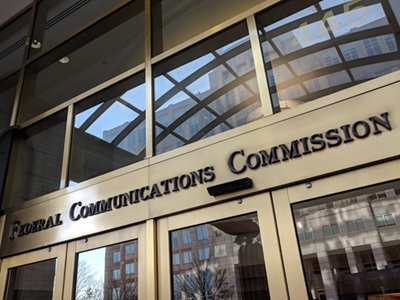
In a release today, the Federal Communications Commission (FCC) announced it was voiding applications by two of the biggest Rural Digital Opportunity Fund (RDOF) bidders from December 2020. This includes more than $885 million for Low-Earth Orbit (LEO) provider Starlink and more than $1.3 billion for LTD Broadband, Inc.

LTD’s original winning bids are spread across 15 states, but there has been speculation brewing since late last year from industry experts as to if funds would be released at all. We’ve seen 12 releases from the FCC since late winter authorizing funds for most of the winning bidders (from the monopoly providers to consortia of rural electric cooperatives), which we’ve collected in our Rural Digital Opportunity Fund Dashboard here. Conversely, there has been relatively little conversation about why Starlink had not yet received any of its winning bids.

Skepticism about Speed, Deployment and Cost

New Resource: Tracking Rural Digital Opportunity Fund Winners

With so much attention on how the Broadband Equity, Access, and Deployment (BEAD) Act is continuing to unfold (including from us), it’s important to remember that the FCC’s Rural Digital Opportunity Fund (RDOF) is still in the process of authorizing bids from its $9.2 billion auction conducted in December of 2020. This is for two reasons: first, because areas for which winning bids are authorized will have a much harder time going after BEAD funding. And second, because after the auction closed there was an array of bids by a variety of Internet Service Providers (ISPs) which looked problematic to us - either because they were for technologies that don’t represent equitable, pragmatic solutions in the long run, or because they were won by ISPs ill-prepared to scale to the level they would need to to fulfill obligations. 

New Resource: RDOF Tracker

The Rural Digital Opportunity Fund was designed to bridge the digital divide in rural America by incenting deployment to households lacking access to basic broadband speeds, defined as 25/3 Megabits per second (Mbps). Phase I was operated as a reverse auction over many rounds in December of 2020, with ISPs bidding on locations throughout the country. The lowest bids won, and committed those providers to completing new connections to those addresses using RDOF support spread out over ten years.

Today we’re releasing a new resource we hope will be helpful in keeping tabs on which providers have gotten money, how much has been authorized, and in which states. The dashboard below is built on the Tableau platform, and shows the real-time results according to the latest authorization spreadsheets released by the FCC.