

Starlink

Content tagged with "Starlink"

Related Topics
Displaying 21 - 30 of 53

BEAD Overhauled | Connect This! Show

Connect This! Show

Catch an emergency episode of the Connect This! Show, with host Christopher Mitchell (ILSR) joined by Lori Adams (Nokia), Heather Mills (Tilson), and Blair Levin (Brookings) to talk about the raft of fundamental changes to the Broadband Equity, Access, and Deployment Act (BEAD) announced by NTIA last Friday. States are required to rebuild and resubmit their proposals to the federal agency on a 90-day sprint after making core changes just as money for construction was about to go out the door.

Join us live on June 9th at 4pm ET, or listen afterwards wherever you get your podcasts.

Email us at [email protected] with feedback and ideas for the show.

Subscribe to the show using this feed or find it on the Connect This! page, and watch on LinkedIn, on YouTube Live, on Facebook live, or below.

Trump Administration Imposed BEAD Changes Introduce Significant New Delays

Trump administration changes to the $42.5 billion Broadband Equity, Access, and Deployment (BEAD) grant program are poised to introduce years of potential new delays to the already slow-moving program, potentially undermining the program’s goal of bringing universal broadband access to mostly rural communities.

Worse, the looming changes would eliminate efforts to ensure taxpayer-funded broadband is affordable for low-income Americans, while driving billions in new subsidies to the world’s richest man and Trump mega donor Elon Musk.

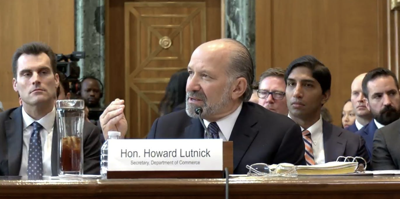
Testifying this week before a Senate Appropriations Committee, Commerce Secretary Howard Lutnick confirmed that the National Telecommunications and Information Administration (NTIA) will "soon" issue a new Notice of Funding Opportunity (NOFO) that states will have 90 days to respond to.

The revisions will ensure that billionaire Elon Musk – and his capacity-constrained satellite broadband network Starlink – will receive significantly more taxpayer money. Such Low-Earth orbit satellite networks were slated to get some funds, but federal changes may result in them dominating grant funding, overruling the mix of technology states had originally preferred.

Other changes being implemented include elimination of provisions ensuring affordable access for low-income Americans.

Pushback Mounts Over Trump Administration ‘Termination’ of Digital Equity Law

The Trump administration’s dismantling of a popular broadband grant program has been greeted with disgust and anger by those doing the heavy lifting to bridge the country’s digital divide, leaving many states' planned broadband expansions in limbo, and affordable broadband advocates contemplating potential legal action.  

The unprecedented choice to destroy digital skills training and broadband adoption programs created by an act of Congress is seeing escalating pushback by a growing coalition of frustrated lawmakers and state broadband offices.

Last week, President Trump announced via a Truth Social post that he was ending the Digital Equity Act, falsely claiming that the program was “unconstitutional” and “racist.”

“No more woke handouts based on race!” the President said. “The Digital Equity Program is a RACIST and ILLEGAL $2.5 BILLION DOLLAR giveaway. I am ending this IMMEDIATELY, and saving Taxpayers BILLIONS OF DOLLARS!"

Image
A black and white hand holds up a cell phone to photograph President Trump

But the popular program was perfectly legal, barely focused on race, and was proving to be of broad benefit to countless Americans – including many of the President’s own supporters in long-neglected rural counties.

The $2.75 billion Digital Equity Act was passed by Congress as part of the 2021 infrastructure bill. It mandated the creation of three different grant programs intended to shore up equitable, widespread access to affordable Internet, while providing the tools and digital literacy education needed to help neglected U.S. communities get online.

A legal challenge to the Trump administration’s unilateral decision to kill a law passed by Congress seems all but certain.

Charter and Cox Merge, Hotspots Under Threat, and the End of the Digital Equity Act | Episode 114 of the Connect This! Show

Connect This! Show

Catch the latest episode of the Connect This! Show, with co-hosts Christopher Mitchell (ILSR) and Travis Carter (USI Fiber) joined by regular guests Kim McKinley (TAK Broadband) and Doug Dawson (CCG Consulting) and special guest Angela Siefer (National Digital Inclusion Alliance) to talk about all the recent broadband news that's fit to print. Topics include:

Join us live on May 16th at 2pm ET, or listen afterwards wherever you get your podcasts.

Email us at [email protected] with feedback and ideas for the show.

Subscribe to the show using this feed or find it on the Connect This! page, and watch on LinkedIn, on YouTube Live, on Facebook live, or below.

Broadband at a Crossroads: Evan Feinman on Getting BEAD Right - Episode 645 of the Community Broadband Bits Podcast
In this episode of the podcast, Chris sits down again with Evan Feinman to reflect on the challenges and lessons learned from launching the country’s largest broadband infrastructure initiative.

Evan shares an insider perspective on what it took to design the BEAD program, why local decision-making and equity are essential, and how political shifts could jeopardize its success. 

From permitting to the risks of relying on satellite technology, this conversation unpacks the real stakes of connecting every American to high-quality Internet.

This show is 52 minutes long and can be played on this page or via Apple Podcasts or the tool of your choice using this feed.

Transcript below.

We want your feedback and suggestions for the show-please e-mail us or leave a comment below.

Listen to other episodes or view all episodes in our index. See other podcasts from the Institute for Local Self-Reliance.

Thanks to Arne Huseby for the music. The song is Warm Duck Shuffle and is licensed under a Creative Commons Attribution (3.0) license
Stringtown, MO Gets Connected: How Local Partnerships Are Closing the Rural Broadband Gap - Episode 644 of the Community Broadband Bits Podcast

In this episode of the podcast, we spotlight Stringtown, Missouri— a rural community that now has fast, reliable Internet thanks to a powerful local partnership. 

Chris talks with Patty Boyers, President and CEO of BOYCOM, and Robbie Myers, Butler County’s Emergency Management Director, about the barriers they faced, the grant that made it possible, and how broadband is transforming everything from public safety and telehealth to economic development. 

This show is 37 minutes long and can be played on this page or via Apple Podcasts or the tool of your choice using this feed.

Transcript below.

We want your feedback and suggestions for the show-please e-mail us or leave a comment below.

Listen to other episodes or view all episodes in our index. See other podcasts from the Institute for Local Self-Reliance.

Thanks to Arne Huseby for the music. The song is Warm Duck Shuffle and is licensed under a Creative Commons Attribution (3.0) license

BEAD Under Threat: Fiber, Satellites, and the Fight for the Future of Rural Internet Access - Episode 643 of the Community Broadband Bits Podcast

In this episode of the podcast, former BEAD Director Evan Feinman joins Christopher Mitchell and Sean Gonsalves to talk about the turmoil brewing inside the BEAD program. 

They break down what’s really behind the push for more satellite connectivity, the threat of sidelining state-led fiber projects, and the political forces stalling progress. 

With billions on the line and rural communities waiting, this episode cuts through the noise and asks: are we about to squander a once-in-a-generation opportunity?

This show is 46 minutes long and can be played on this page or via Apple Podcasts or the tool of your choice using this feed.

Transcript below.

We want your feedback and suggestions for the show-please e-mail us or leave a comment below.

Listen to other episodes or view all episodes in our index. See other podcasts from the Institute for Local Self-Reliance.

Thanks to Arne Huseby for the music. The song is Warm Duck Shuffle and is licensed under a Creative Commons Attribution (3.0) license
BEAD’s Next Steps: Unpacking State Progress and Challenges - Episode 638 of the Community Broadband Bits Podcast

In this episode of the podcast, Chris is joined by Heather Mills, Principal Consultant at Tilson Technology Management, to break down the latest developments in the Broadband Equity, Access, and Deployment (BEAD) program.

They discuss the evolving landscape of state applications, common misconceptions, and the uncertainties surrounding potential program changes. With states already awarding funds and moving forward, what challenges lie ahead?

Tune in for an in-depth conversation on how BEAD is shaping broadband expansion and what’s next for communities nationwide.

This show is 33 minutes long and can be played on this page or via Apple Podcasts or the tool of your choice using this feed.

Transcript below.

We want your feedback and suggestions for the show-please e-mail us or leave a comment below.

Listen to other episodes or view all episodes in our index. See other podcasts from the Institute for Local Self-Reliance.

Thanks to Arne Huseby for the music. The song is Warm Duck Shuffle and is licensed under a Creative Commons Attribution (3.0) license

BEAD: The Metamorphosis | Episode 109 of the Connect This! Show

Connect This! Show

Catch the latest episode of the Connect This! Show, with co-hosts Christopher Mitchell (ILSR) and Travis Carter (USI Fiber) joined by regular guests Kim McKinley (TAK Broadband) and Doug Dawson (CCG Consulting) to talk about major changes coming to the BEAD program and a grab-bag of other topics, including:

Join us live on March 7th at 2pm ET, or listen afterwards wherever you get your podcasts.

Email us at [email protected] with feedback and ideas for the show.

Subscribe to the show using this feed or find it on the Connect This! page, and watch on LinkedIn, on YouTube Live, on Facebook live, or below.

In Our View: States Should Consider Adopting Their Own Affordable Broadband Law in a New York Minute

Now that the lengthy legal beef has been settled and New York’s Affordable Broadband Act (ABA) is set to take effect this month, it marks a potentially pivotal moment in a national effort to address one of the biggest barriers to broadband adoption: 

Affordability.

The first-in-the-nation law requiring large Internet Service Providers (ISPs) operating in New York to offer a $15/month plan for qualifying low-income households stands to benefit the approximately 1.7 million New Yorkers who had been enrolled in the federal Affordable Connectivity Program (ACP) Congress allowed to expire last spring.

With a new administration entering the White House – supported by GOP Congressional leaders who blocked previous ACP renewal efforts – the newly enacted ABA “paints a path that other states will look at,” as New Street Research analyst Blair Levin recently noted.

Image
US Supreme Court building

“In a world where the federal government is subsidizing low-income households for $30 a month, states did not need to take action to address low-income broadband affordability,” Levin added. But now, without the ACP benefit, “states may try to assist low-income households to keep them connected.”