
resource

Content tagged with "resource"

Related Topics
Displaying 31 - 40 of 123

Broadband for America’s Future: A Vision for the 2020s

Image

The Benton Institute for Broadband & Society has a reputation for looking at today’s reality with an eye toward tomorrow’s needs. In their report, Broadband for America’s Future: A Vision for the 2020s, Benton Senior Fellow Johnathan Sallet continues that perspective and offers insightful recommendations for a new National Broadband Agenda.

Download the report, Broadband for America’s Future: A Vision for the 2020s here.

Broadband for All Needs a New Approach

As access to high-quality connectivity becomes more critical each day, those without fast, affordable, reliable Internet access lose ground more quickly as time passes. In addition to the opportunities that come with broadband access, lack of adoption translates into lack of technical skills. Innovation isn’t slowing down for folks who don’t have broadband. 

As Sallet notes, access to and adoption of broadband improves our economy, strengthens communities, and empowers American workers. Obtaining that access and expanding that adoption, however, is proving more challenging than it should be.

In his report, the author reviews in detail the barriers that have prevented the U.S. from achieving its goal of ubiquitous access and adoption of broadband. He’s able to make recommendations based on four key policy areas:

Deployment of networks where adequate broadband does not exist;

Competition to increase choices and spur lower prices and better-quality service to their residents;

Affordability and Adoption for those who wish to have broadband in their homes but lack the means or the skills to acquire it; and

Community Anchor Institutions, such as schools and libraries, that increasingly serve their users wherever they are. 

"The Same Fabric of Truth-Seeking"

Fact Sheet: Frontier Has Failed Rural America

Despite raking in hundreds of millions in government broadband subsidies, Frontier Communications has failed time and time again to bring reliable, high-speed connectivity to the rural communities it serves. Instead of investing in network upgrades, Frontier has neglected its rural infrastructure to the detriment of its subscribers and the company’s own financials, with its worsening service quality paralleling its plummeting stock value.

Our new fact sheet, Frontier Has Failed Rural America, presents evidence of Frontier’s negligence and suggests that rather than continuing to trust Frontier, government officials should look to publicly owned and community-minded providers to connect rural residents, businesses, and institutions.

Download the Frontier Has Failed Rural America fact sheet [pdf].

Subsidies Can’t Fix Frontier

Federal and state government agencies have given Frontier nearly $2 billion to expand and upgrade its rural broadband networks. The company has received approximately $1.7 billion from the Connect America Fund Phase II federal subsidy program and millions more in grants from states like Minnesota and New York.

Even with the subsidies, Frontier ultimately failed to connect rural communities with high-quality broadband. The company has repeatedly chosen not to upgrade rural networks, leaving subscribers with poor, unreliable service that doesn’t fulfill their basic communications needs.

Frontier’s “Systemic Problems”

Our fact sheet, Frontier Has Failed Rural America, features events from the past five years that demonstrate Frontier’s inability to solve the rural broadband problem, including:

Envisioning the Future with Jon Sallet from the Benton Institute for Broadband and Society - Community Broadband Bits Podcast 381

In late October 2019, Christopher travelled to the D.C. area to attend a Broadband Communities Economic Development event and while he was there, he sat down with Executive Director Adrianne Furniss and  Senior Fellow Jon Sallet from the Benton Institute for Broadband & Society. This week, we get to sit in on their conversations about the recent change at Benton from "foundation" to "institute" and about their recent report, Broadband for America's Future: A Vision for the 2020s.

First, Christopher speaks with Adrianne, who discusses the reasons why the organization has recently changed in order to stay current with their mission and with the times. She talks a little about the history of Benton and describes some of the reasons for developing the report.

Christopher spends most of the interview with Jon Sallet, who authored the report and who has a long career in antitrust and communications. After working in D.C. in telecommunications and Internet policy for several decades, he's seen the influence of the Internet grow. In this report, Jon analyzes stories and situations from around the U.S. and establishes a vision that will help us move forward to connect as many people as possible. He and Christopher discuss the four major factors that, if nurtured correctly, can help us integrate broadband into all sectors of society and maximize its usefulness. Christopher and Jon give special time to competition, an issue that arises repeatedly in the work at Benton and in our work at the Institute for Local Self-Reliance.

The interview will spark your interest in the report that provides more depth into the way broadband can be used as a versatile social tool. Broadband for America's Future: A Vision for the 2020s [PDF] is filled with examples in which local communities have been able to expand local connectivity to achieve goals that went beyond better Internet access.

Download the report here.

This show is 41 minutes long and can be played on this page or via Apple Podcasts or the tool of your choice using this feed

Transcript below. 

We want your feedback and suggestions for the show-please e-mail us or leave a comment below.

Listen to other episodes here or view all episodes in our index. See other podcasts from the Institute for Local Self-Reliance here.

Thanks to Arne Huseby for the music. The song is Warm Duck Shuffle and is licensed under a Creative Commons Attribution (3.0) license.

Report: Broadband for America's Future: A Vision for the 2020s

The Benton Institute for Broadband & Society has a reputation for looking at today’s reality with an eye toward tomorrow’s needs. In their report, Broadband for America’s Future: A Vision for the 2020s, Benton Senior Fellow Johnathan Sallet continues that perspective and offers insightful recommendations for a new National Broadband Agenda.

Download the report, Broadband for America’s Future: A Vision for the 2020s here.

Broadband for All Needs a New Approach

As access to high-quality connectivity becomes more critical each day, those without fast, affordable, reliable Internet access lose ground more quickly as time passes. In addition to the opportunities that come with broadband access, lack of adoption translates into lack of technical skills. Innovation isn’t slowing down for folks who don’t have broadband. 

As Sallet notes, access to and adoption of broadband improves our economy, strengthens communities, and empowers American workers. Obtaining that access and expanding that adoption, however, is proving more challenging than it should be.

In his report, the author reviews in detail the barriers that have prevented the U.S. from achieving its goal of ubiquitous access and adoption of broadband. He’s able to make recommendations based on four key policy areas:

Deployment of networks where adequate broadband does not exist;

Competition to increase choices and spur lower prices and better-quality service to their residents;

Affordability and Adoption for those who wish to have broadband in their homes but lack the means or the skills to acquire it; and

Community Anchor Institutions, such as schools and libraries, that increasingly serve their users wherever they are. 

Deploying Better Networks, Creating Choice

Help Us Celebrate Our 10th, Share Your Ideas for MuniNetworks

We recently realized that we’ve been sharing information, resources, and stories about publicly owned broadband networks for more than ten — TEN! — years. Our team has been so occupied helping local communities and working on projects, the anniversary went by without flowers, a cake, or a party. We’re still too busy for any of the typical celebratory activity, which is why we’re reaching out to you.

We want to hear what you need from MuniNetworks.org as we forge ahead.

What Would YOU Like to See/Hear/Download/Share?

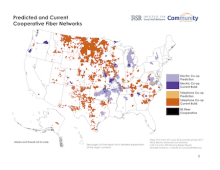
In the past few years, many communities have expressed an interest in publicly owned networks. Innovative approaches to deployment and implementation have taken off. Legislation at the state and federal level has increased and funding opportunities have blossomed. Cooperatives are increasing investments in Fiber-to-the-Home (FTTH) Internet access for members and others in their service areas. In short — there’s so much happening, we don’t have the manpower to do it all.

It’s a wonderful problem to have and we want your help to solve it.

We’d like to know what information you find most helpful and where you think we should focus our efforts. In addition to the types of material that you find most helpful — reports, videos, maps, fact sheets, etc. — we want to know what sort of content you feel provides the most value. 

  • Are you having trouble locating information on funding or RFPs?
  • Do you want to learn more about the technical innovations of deployment?
  • Perhaps you want to learn about state policies and legislation to offer ideas to your own elected officials.
  • Is digital inclusion an issue that deserves more coverage from the community network approach?
  • Do you want to learn more about electric and telephone cooperatives?
  • Are there issues that matter to you that we have yet to investigate?

Education, telehealth, economic development, public savings, ancillary benefits of publicly owned broadband networks — we’re seeking your ideas because you know what you need and there’s probably others who need similar information.

Email us and let us know how you think we should focus our efforts as we move forward. What will help YOU the most? Send your thoughts to: broadband(at)muni networks.org

The Opportunity of Municipal Broadband: Fact Sheet from Next Century Cities

Next Century Cities (NCC) helps communities across the U.S. connect to each other, find resources, and discover ways to improve local Internet access options. The organization has released valuable tools and resources to that aim, including their most recent fact sheet, The Opportunity of Municipal Broadband.

Download the fact sheet from NCC here.

Benefits

NCC’s fact sheet uses examples from municipal network history. Communities have invested in publicly owned fiber optic infrastructure to obtain better connectivity and to reduce telecommunications costs for municipal facilities. In more than a few places, those investments became the foundation for what later became networks to serve local businesses and residences.

NCC’s fact sheet looks at the long-term value of investment versus long-term savings. In addition to faster, more reliable connectivity, residents who chose slight tax increases to fund the investments still came out ahead — overall, paying less for better service from their publicly owned network than they had from poor quality DSL service.

The fact sheet also delves into other benefits, such as economic development, improved efficiency of other utilities, and accountability. NCC uses specific examples from places such as Ammon, Idaho; Longmont, Colorado; and Clarksville, Tennessee. With so many communities served in some fashion by a municipal network — approximately 500 — finding examples isn’t difficult; choosing which to include on a fact sheet is the challenge.

Moving Past the Roadblocks

As NCC notes, some states still prevent local communities from investing in infrastructure to develop municipal networks. Whether de facto or outright bans, these harmful barriers serve no purpose other than to maintain monopolies for the existing national ISPs. The results are detrimental for residents and businesses that need better connectivity and competiton.

New Collection of Resources from NDIA and Brookings Institution: Broadband Research Base

As broadband continues to become integrated into more aspects of life, researchers will find new ways to study and document the effects on modern society. The National Digital Inclusion Alliance (NDIA), in partnership with the Brookings Institution’s Metropolitan Policy Program, recently created a searchable database of resources to help those seeking information on issues related to digital inclusion. The Broadband Research Base is ready to assist researchers, advocates, and community leaders.

Organizing the References

According to the NDIA, the collection went live in mid-August and already contains more than 70 reports, studies, and journal articles that “address the impact of broadband and digital inclusion on community and individual well-being.” The tool is an ever-growing resource and the creators are accepting suggestions to help expand the database.

Users can search the Broadband Research Base to find desired documents by several methods, including title, keyword, broad category, and more specific subcategory. Tags can also help users discover what they’re looking for and each reference has a link to the source.

Check out this excellent tool from the NDIA and the Brookings Institution and help find more excellent resources to add to the Broadband Research Base. Submit your organization's work and grow the database to help share knowledge about broadband and its impact on society.

Pew Puts State Broadband Policy in One Place - Community Broadband Bits Podcast 372

For community leaders, advocates, and researchers who follow broadband policy, trying to stay up-to-date on the many variations of state policy across the U.S. is a daunting task. As approaches change, the work becomes more complicated. Now, the Pew Charitable Trusts has launched a new tool that helps keep all that information sorted and accessible — the State Broadband Policy Explorer. Manager of the Broadband Research Initiative at Pew Charitable Trusts Kathryn de Wit sits down with Christopher to talk about the tool for this week's podcast.

Kathryn describes some of the challenges and discoveries her team encountered while developing the tool. She talks about the wide variations her team documented, especially in definitions, and their determination that those variations rely on who in each state determines which definitions will be used.

While working on the State Broadband Policy Explorer, Kathryn and her team were surprised to learn that, contrary to popular reporting, not as many states have established official offices of broadband deployment as they had expected.  She shares commonalities between states that they found surprising while she and Christopher ponder some of the many ways the tool may be used moving forward.

We've already bookmarked this valuable tool.

Check out the State Broadband Policy Explorer for yourself here.

This show is 27 minutes long and can be played on this page or via Apple Podcasts or the tool of your choice using this feed

Transcript below. 

We want your feedback and suggestions for the show-please e-mail us or leave a comment below.

Listen to other episodes here or view all episodes in our index. See other podcasts from the Institute for Local Self-Reliance here.

Thanks to Arne Huseby for the music. The song is Warm Duck Shuffle and is licensed under a Creative Commons Attribution (3.0) license.

Federal Reserve Bank of Kansas City Releases Report on Digital Divide

In July, the Community Affairs Department of the Federal Reserve Bank of Kansas City released Disconnected: Seven Lessons on Fixing the Digital Divide, a report that touches on Internet access, adoption, and affordability. Overall, this is an insightful primer on the digital divide and how banks can help. 

The CRA and the Digital Divide

Banks have a responsibility to invest in disadvantaged communities under the Community Reinvestment Act. The report broadly outlines the state of high-speed Internet access, including the differences between rural and urban access problems, and explains why the digital divide remains so persistent.

Part of the problem is that our data on Internet access and adoption is woefully lacking. The report includes a section on how FCC data overstates coverage and compares it to the ways Microsoft has attempted to verify actual home Internet connections: 

“The FCC’s data measure availability of broadband while the Microsoft data measure broadband usage. The company shared its analysis with the FCC, which is looking at how it might improve its broadband measurements. While the FCC says 24.7 million Americans lack access to broadband, Microsoft found the actual number was 162.8 million.” (P. 26)

Another related problem that the report identifies is that the technology needed for high-speed Internet access seems to be constantly changing. Companies do not continue to invest consistently in rural or low- and middle- income communities, leaving both with last-generation networks. At the Institute for Local Self-Reliance, we've learned from years of research that fiber connectivity has the ability to meet current and future needs.

Closing the Digital Divide

Expanding high-speed Internet access can expand access to banking. The report notes that:

“Among low-income households, research by the Federal Reserve Bank of Kansas City shows that lacking Internet access has a higher correlation to being unbanked than a variety of other characteristics, including employment status and race.” (P. 11) 

A Pocket Guide to 5G Hype Fact Sheet

It’s difficult to separate 5G fantasy from reality as reported in traditional news sources. Misunderstandings surrounding the demands and capabilities of 5G has snowballed, creating an incorrect assumption that the technology will solve America’s many connectivity problems. It’s true that 5G is an improvement, but it has limitations. In A Pocket Guide to 5G Hype, we address the most repeated errors surrounding 5G and explain why the technology should be considered another tool, not an exclusive remedy.

Download A Pocket Guide to 5G Hype [PDF] here.

Mistakes We Hear Over...and Over...and Over

Regardless of the source, several errors seem to be repeated and we address those in the fact sheet. We provide context to:

  • The fact that 5G still needs fiber optic connections
  • Why it won’t solve the problem of lack of competition
  • Why 5G won’t eliminate the digital divide
  • The myth of the 5G race

Orders, Complements, and More

The fact sheet also provides information about the FCC’s 2018 Order that interferes with local communities’ ability to control negotiations with 5G carriers. By choosing big telecom companies over local governments the FCC is preventing cities and counties from finding efficient paths to digital equity.

Our Pocket Guide to 5G Hype lays out a comparison between 5G and Fiber-to-the-Home (FTTH). Rather than replacing fiber with 5G, the two technologies can have the most impact when they work together; on the fact sheet, we've laid out the reasons in a side-by-side chart.

We want you to delve deeper into the issue of 5G and find out the truth, rather than get lost in the hype and we've offered a few additional resources to get you started on your own research. Share the fact sheet with others who are interested in the truth about 5G and be sure to send it to your local elected officials. As they create local policies affecting 5G deployment in your community, they need to base their decisions on realities, not hype.