
grants

Content tagged with "grants"

Related Topics
Displaying 1 - 10 of 68

‘Not Living in the Cloud’: Hoopa Valley Tribe Builds Digital Sovereignty With New Network Hub

The Hoopa Valley Tribe is celebrating the opening of its new fiber network operations center as the Hoopa Valley Public Utilities District (HVPUD) expands fiber-to-the-home Internet service throughout the Hoopa Valley Reservation and into neighboring communities just outside of its Tribal lands.

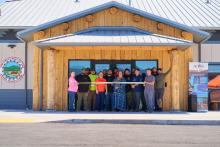
To mark the occasion earlier this summer, more than 50 community members, Tribal leaders, HVPUD staff, and project partners attended the July 17 opening celebration.

At the celebration, Hoopa Valley Tribal Vice Chairman Jordan Hailey hailed the milestone moment:

“This is truly a great day for the Hoopa Valley Tribe, for the department and for the Hoopa people. It makes me proud as a Hoopa Tribal member and a member of this community to see everything that they’ve accomplished.”

Though the new network operations headquarters is a storage and transport data center, General Manager of HVPUD Linnea Jackson made it clear that it is not a hyperscale/compute AI data center that have sparked controversy and protest in numerous local communities across the nation.

“The (data centers) that are sucking up all those resources — water, land, and energy — those are the AI data centers. Ours is a network hub, not a huge footprint,” Jackson tells ILSR. “We’re talking about servers and rack space for (Tribal) government operations and records, not a demand on our water resources — completely different from a large AI data center.”

Image
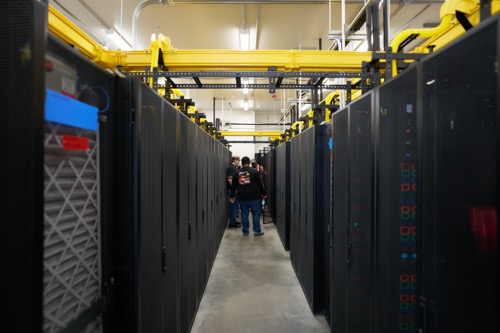
Three Hoopa Valley PUD fiber techs stand at the end of a row of black server racks

Establishing Data Sovereignty

California Greenlights Another $74 Million for Rural Internet Access

The California Public Utilities Commission (CPUC) says it has approved another $74 million in California Advanced Services Fund (CASF) grants to expand affordable high-speed Internet infrastructure to underserved communities across the Golden State.

According to the CPUC’s recent announcement, the funding will support six new Internet access infrastructure projects across Marin, Monterey, San Luis Obispo, Santa Barbara, Santa Clara, Santa Cruz, and Sonoma counties, bringing reliable, high-speed Internet service to nearly 1,800 previously completely unserved homes and businesses.  

Three providers will be spearheading the six expansion projects:

  • Surfnet Communications will receive up to $33.2 million to construct the Santa Barbara Fiber and Central Coast Fiber Broadband projects, serving 1,293 unserved locations across Monterey, San Luis Obispo, Santa Barbara, Santa Clara, and Santa Cruz counties.
  • WiConduit and GigabitNow will receive up to $32.4 million for the Forestville Connect Extension, Graton Connect, and Sonoma Coast Connect Extension projects, bringing fiber broadband service to 341 unserved locations in Sonoma County.
  • Hankins Information Technology will receive up to $8.5 million for the West Marin Project, providing fiber broadband service to 154 unserved locations in Bolinas, Nicasio, Point Reyes Station, Stinson Beach, and surrounding communities in Marin County.

The investments are an ongoing part of California’s landmark $6 billion Broadband for All Initiative, which prioritized closing the digital divide in all of California’s 58 counties, which recently culminated in the launch of the state’s new $3.2 billion Middle-Mile Broadband Initiative (MMBI).

Oregon Picks New BEAD Winners After Four Bidders Retreat

The Oregon Broadband Office (OBO) has announced the preliminary awardees selected to assume Broadband Equity, Access and Deployment (BEAD) projects that were voluntarily declined by their original awardees.  

As ILSR has explored, the unpopular changes and massive delays introduced by the Trump administration to the BEAD program have resulted in not only a large number of states having to retool their plans, but many original project bidders retreating from their original proposals.

In some cases, soaring U.S. costs have resulted in ISPs reconsidering their commitment to original broadband expansion plans. 

In other instances, providers have grown frustrated with additional bureaucratic hurdles affixed to BEAD deployments by the NTIA.

Image
Oregon Broadband Office strategic plan cover sheet

According to an OBO announcement, four of the state’s original BEAD awardees declined a total of 15 projects prior to the state’s June 10 Notice of Intent to Award acceptance deadline. The projects represented 13,381 broadband serviceable locations (BSLs), approximately $122.9 million in requested grant funding, and more than $39.1 million in matching contributions.

Oregon is slated to receive $689 million in total BEAD funding to shore up Internet access to communities trapped on the wrong side of the digital divide.

California Greenlights Another $18.2 Million For Affordable Broadband

California and the California Public Utilities Commission (CPUC) continue to heavily invest in state efforts to expand affordable Internet access, and bolster digital equity, inclusion, and education programs to ensure freshly-connected communities are able to make the most of it.

According to a new announcement by the CPUC, the agency has freshly approved $14.7 million in California Advanced Services Fund (CASF) Broadband Infrastructure Grant Account funding for four fiber-optic broadband projects in rural Northern California.

The agency says it approved another $3.4 million in CASF Rural and Urban Regional Broadband Consortia grants supporting broadband planning and coordination efforts across 16 counties, and nearly $200,000 in Digital Divide Grant Program funding to expand access to technology, devices, and digital literacy training in underserved communities.

The state’s latest $18.2 million in digital literacy and access grants are one small part of California’s landmark $6 billion Broadband for All Initiative, which prioritized closing the digital divide in all of California’s 58 counties, and recently culminated in the launch of the state’s new $3.2 billion Middle-Mile Broadband Initiative (MMBI).

The CPUC states that its $14.7 million in CASF broadband infrastructure grants will be doled out to Plumas-Sierra Telecommunications – a wholly owned subsidiary of Plumas-Sierra Rural Electric Cooperative (PSREC) for four projects around the Golden State. Plumas-Sierra Telecommunications will own the finished networks across all four projects:

Beyond the Fiber: Vermont's Community Network Model Aims to Improve Lives One Hub at a Time

The ​​soundproofed privacy pod tucked inside the first floor of the Rural Edge affordable housing development may be one of the most consequential pieces of infrastructure built in Vermont since the state’s Communications Union Districts (CUDs) first began deploying fiber networks.

With a population of just over 500 Vermonters living in the small town of Groton — where the nearest hospital is a 30-minute drive away and not every conversation can or should be overheard at home — the fiber-connected privacy pods are small enough to fit just two people, but private enough for life-enhancing online conversations to be had.

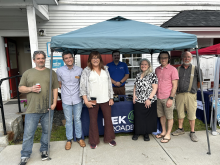
“Groton is where the largest percent of folks are without high speed Internet access. It’s highly unserved, except for downtown,” explained Christa Shute, Executive Director of NEK Broadband, which recently combined with the CVFiber CUD to form a 72-town telecommunication utility district now providing fiber Internet service across some of the most rural parts of the most rural state in the U.S.

Thanks to the commitment of Groton volunteers and town leaders and their intimate knowledge of their community – backed with the resources of the Vermont Community Broadband Board (VCCB) — “we knew what addresses didn’t have service,” Shute tells ILSR, fresh off the weekend’s grand opening celebration of the Groton Connectivity Hub, which also featured a live fiber splicing demo, online safety presentations, and drop-in tech help for the public.

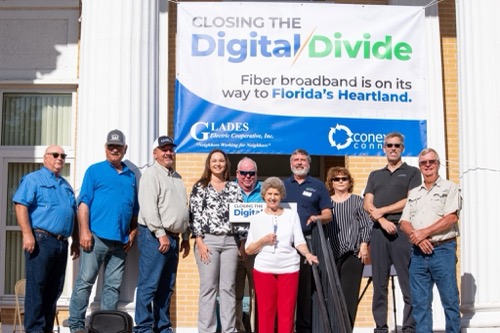
Glades Electric Cooperative Completes New Fiber Network

Moore Haven, Florida-based Glades Electric Cooperative has completed a long-planned fiber broadband network into largely unserved parts of the Sunshine State. The 1,600-mile network, built in conjunction with Conexon Connect, now spans Glades, Hendry, Highlands and Okeechobee counties, and the vast majority of the cooperative’s electrical footprint.

Like so many U.S. cooperatives, Glades Electric, founded in 1945, is leveraging a long history with rural electrification to inform its fiber broadband expansion plans and bring connectivity to those long-stranded by market failure and a lack of Internet access competition.

Also like most U.S cooperatives, the upgrades not only bring affordable Internet access, they aid in monitoring and repairing the existing electrical network.

“In addition to closing the digital divide for our cooperative members, we are pleased to update and expand our communications to our substations, corporate offices, grid connected devices and beyond, as a result of our project and long-term partnership with Conexon Connect,” said Michael Roberge, Glades Electric Cooperative CEO

For many rural Florida subscribers getting fiber for the first time, the speeds and pricing are better than what’s seen in many urban markets.

Image
Nearly a dozen Glades Electric Cooperative and Conexon officials stand in front of a sign that says "Closing the Digital Divide"

Conexon offers locals four fiber pricing tiers: an “Essentials” plan offering 200 megabits per second (Mbps) symmetrical for $59.95 per month; a “Premier” plan delivers up to 1 gigabit per second (Gbps) symmetrical for $79.95 per month; an “Ultimate” plan offering symmetrical 2 Gbps for $99.95 per month; and the top-tier “Elite” symmetrical 5 Gbps plan with variable pricing.

Okanogan County Public Utility District Lights Up Fiber In Rural WA

The Okanogan County Electric Cooperative (OCEC) and the Okanogan County Public Utility District (PUD) say they’re making steady progress on bringing affordable fiber broadband access to Okanogan County, a highly rural stretch of rugged land in Washington state on the border of Canada.

According to the organizations, the coalition is poised to bring next-generation fiber to as many as 1,366 peppered along the upper Methow Valley this year starting near Chewuch River and ending at Lost River. Many of these areas will be seeing fiber upgrades for the first time ever after years stuck on the wrong side of the digital divide.

According to a presentation at a town hall last month, officials stated that the project will include 98 miles of underground fiber deployment and 88 miles of new aerial fiber deployment. A mainline backbone fiber between Twisp and Winthrop is completed and functional, providing a redundant loop feed of fiber between the two areas, they stated.

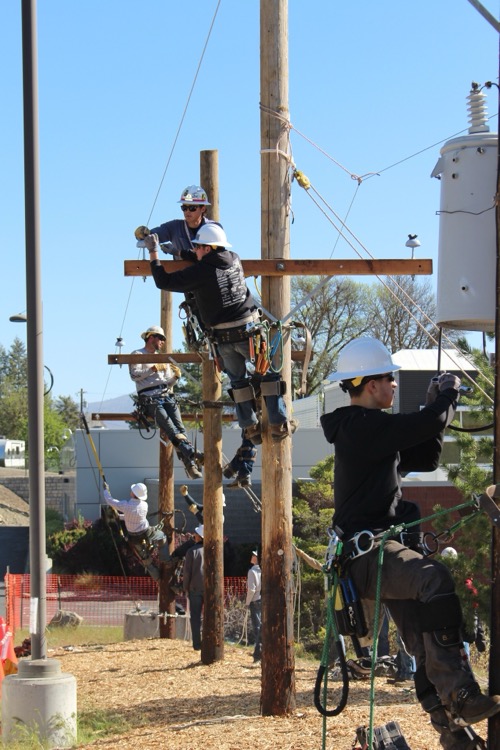
Image
students at the Okanogan PUD bootcamp are being trained on how to properly climb a utility pole and work on the equipment

Construction on the project started back in March, and should be completed by the end of the year, OCEC’s contractor, Shawn VanGeystel of Cannon Construction, recently told the Methow Valley News.

The electrical cooperative’s fiber arm is named MethowNet. It offers three tiers of fiber service, though pricing varies slightly between the North and South Valley.

Bois Forte Band Begins Construction on $20 Million Tribal Fiber Project

The Bois Forte Band of Chippewa (also referred to as Ojibwe) has officially begun construction on a foundational fiber optic broadband expansion project in northern Minnesota that is poised to bridge the digital divide for thousands of Tribal residents.

The ambitious undertaking is supported by a significant $20 million grant awarded under the 2021 Tribal Broadband Connectivity Program, marking a major step forward in modernizing infrastructure for the sovereign nation.

The massive project aims to overhaul the existing connectivity landscape across the Bois Forte Reservation.

Image
A graphic illustrates the status of the tribe's fiber network construction

Once completed, the new network will deliver a high-speed, future-proof up to 10 gigabit per second (Gbps) fiber-to-the-home network to over 2,097 largely-underserved Native American households, businesses, and community anchor institutions.

Many Tribal nations were skipped over by past fiber deployments either due to outright hostility to Tribal interests, or a disinterest in the work required to align for-profit deployments with the needs and wishes of what is often multiple Tribal territories.

For Bois Forte, this new fiber network is expected to have a transformative impact across several key sectors, fundamentally improving community access to vital services:

Bill Would Reauthorize And Expand ReConnect To Include Communications Union Districts

U.S. Senators Peter Welch (D-Vt.) and Roger Marshall (R-Kan.) have introduced a bill that would not only reauthorize the USDA’s ReConnect Loan and Grant program.

As part of the reauthorization, the proposed legislation aims to improve and expand the program so that Communications Union Districts (CUDs) would be eligible for federal broadband subsidies.

According to the announcement, the reauthorization would set a baseline of symmetrical 100 megabits per second (Mbps) connections for broadband grants, up from the program’s dated current standard of 25/3 Mbps.

The bill also clarifies that the USDA can make grants, loans, or grant-loan combinations under ReConnect, and claims to “improve coordination and communication among stakeholders at the federal level.”

“The last few years have shown all of us how important high-speed broadband is to our communities. From online school and remote work to telemedicine, a good connection is essential,” Senator Welch said of the reauthorization. 

“Many rural communities don’t have access to broadband at all, let alone the higher speeds needed to participate in today’s digital economy.”

The duo are quick to point out that over a third of Americans lack access to one or no broadband provider, and more than 45 million Americans lack fixed terrestrial 100 megabit per second (Mbps) downstream broadband, the Federal Communications Commission’s (FCC) minimum standard for broadband access.

Superior, Wisconsin’s ‘Game Changing’ Open Access Fiber Network Goes Live

Superior, Wisconsin’s community-owned open access fiber network has gone live in its first two deployment neighborhoods, as the city works toward providing affordable next-generation fiber access to the city’s long under-served community of 26,000.

When we last checked in with Superior back in April, the city was working with Nokia for final configuration and testing before launch. Now, the municipal broadband network says its ConnectSuperior fiber network is live in its first two target neighborhoods in the northern part of the city (see the city’s latest deployment map).

The city’s open access network means that multiple broadband providers can compete over the same shared infrastructure. Historically such a model helps boost competition and drive down costs for both consumers and competitors. That’s already the case in Superior, where the city’s website lists two providers – Advanced Stream and Superion Networks – with more on the way.

Image
Superior Wisconsin UW Superior entrance

Advanced Stream is offering locals three tiers of service: a symmetrical 300 megabit per second (Mbps) tier for $63 a month; a symmetrical 650 Mbps tier for $75 a month; and a symmetrical one gigabit per second (Gbps) tier for $83 a month.

Superion is offering three tiers of service as well: a symmetrical 300 Mbps tier for $63 a month; a symmetrical 650 Mbps tier for $75 a month; and a symmetrical 1 Gbps tier for $85 a month. Both companies offer phone bundles for a modest additional surcharge.