
grants

Content tagged with "grants"

Related Topics
Displaying 41 - 50 of 65

Predictions for 2024 - Episode 585 of the Community Broadband Bits Podcast

The fading sound of holiday bells and soft stillness that comes with plunging temps can only mean one thing; it's January again, which means it's time to break out the crystal ball and have a conversation about the year to come. Joining Christopher in the recording booth are a slew of CBN staffers new and veteran to join in the collective task of putting words to feelings both foreboding and optimistic about the year to come.

Will we see the first BEAD-connected home this year? Will the Affordabel Connectivity Program get re-funded? How will the maps look in 11 more months, with slews of challenge data? How many new municipal ftth networks will we see founded in 2024? State preemption laws rolled back, or re-introduced? Tune in for answers to all these and more.

This show is 48 minutes long and can be played on this page or via Apple Podcasts or the tool of your choice using this feed.

Transcript below.

We want your feedback and suggestions for the show-please e-mail us or leave a comment below.

Listen to other episodes or view all episodes in our index. See other podcasts from the Institute for Local Self-Reliance.

Thanks to Arne Huseby for the music. The song is Warm Duck Shuffle and is licensed under a Creative Commons Attribution (3.0) license.

Cullman Electric Cooperative Launches Next Phase Of Fiber Expansion

Cullman, Alabama-based Cullman Electric Cooperative says it is launching a new phase of fiber deployment after receiving a $7 million grant to bring affordable fiber access to long-neglected Cullman and Winston counties.

The financing was made possible by the Alabama Broadband Accessibility Fund (ABAF), funded by the 2021 American Rescue Plan Act (ARPA). The state has already dedicated more than $82 million in funding for Alabama broadband deployments, bringing broadband access to 72,000 currently unserved residents.

Image
Cullman Sprout Fiber Internet logo

Cullman’s $7 million portion will bring affordable fiber access to 1,300 families. Known as Sprout Fiber Internet, Cullman currently offers residential customers symmetrical 300 Mbps (megabit per second) service for $60 a month; symmetrical 1 Gbps (gigabit per second) service for $80 a month, and symmetrical 2 Gbps service for $120 a month.

That’s significantly faster and cheaper service than is currently offered by any of the dominant private telecom monopolies in Cullman (predominantly AT&T or Charter/Spectrum), without usage caps, hidden fees, or long-term contracts.

Old Data Woes Could Hinder Round Two of Tribal Broadband Connectivity Program

The Tribal Broadband Connectivity Program (TBCP) is in the midst of accepting applications for a second round of funding, with nearly $1 billion in grants available. A significant program with important limitations, TBCP has made some changes in round two – including one that could mean the resurgence of old barriers for Tribes.

TBCP launched in 2021 with a total $3 billion in allocations, an unprecedented federal investment in Tribal broadband. The TBCP also requires no minimum match from Tribal governments, easing a long-time barrier to grant participation.

Interest in the program’s first round of funding was pronounced. After more than 300 applications requesting nearly $6 billion, NTIA selected 226 projects for award, to the tune of $1.9 billion. At least 70 of these were “equitable distribution” awards – a system that guaranteed any of the 574 federally recognized tribes with a satisfactory application up to $500,000. All together, these grants expect to reach more than 170,000 Tribal households.

Initial BEAD Proposals and Five Year Action Plans Come Into Focus

The key for states to unlock their portion of the $42.5 billion in federal BEAD funds is the submission and approval of their Five Year Action Plans and Final Proposal. The infrastructure law requires states to first file an action plan, and then prepare more detailed Initial Proposals, allowing residents and stakeholders to submit public comments.

So far, 14 states have filed their Five Year Action Plans with the National Telecommunications and Information Administration (NTIA), the Treasury Department agency in charge of allocating the funds to each state and U.S. territory. According to the NTIA’s website, Maine, Louisiana, Delaware, Georgia, Hawaii, Idaho, Kansas, Montana, North Carolina, Ohio, Oregon, Pennsylvania, Utah, and Vermont have all filed their draft Five Year Action Plans.

Image
NTIA logo

The states that are now in the process of completing their Initial Proposals include: Delaware, Kansas, Louisiana, Montana, Ohio, Tennessee, Vermont, Virginia and Wyoming.

Today, we will look at two states (Maine and Louisiana) and follow up with the others as we are getting a clearer picture of how each state intends to put this historic infusion of federal funds to use.

Maine

CBN’s Signal to Noise Ratios Week of July 24

In this week’s round-up of broadband news, we culled three stories we think are worth reading.

How Much is Fast Enough?

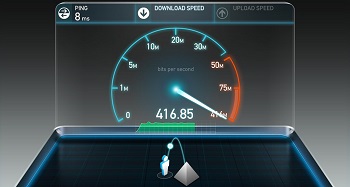
The first is a story from Ars Technica – FCC chair: Speed standard of 25Mbps down, 3Mbps up isn’t good enough anymore – written by veteran IT reporter Jon Brodkin.

For years now, broadband-for-all advocates have lamented the FCC’s minimum broadband speed standard of 25 Megabits per second (Mbps) download and 3 Mbps upload as being laughably antiquated. Indeed, it’s been almost three years since we made the case for Why 25/3 Broadband Is Not Sufficient, though it was outdated long before then.

Image
Speed Test

But as Brodkin reported this week, the FCC’s minimum speed standard “could finally change under Chairwoman Jessica Rosenworcel, who is proposing a fixed broadband standard of 100Mbps downloads and 20Mbps uploads along with a goal of bringing affordable service at those speeds to all Americans.”

Under Rosenworcel’s plan, the FCC would look at availability, speeds, and prices to determine whether the agency should take regulatory actions under Section 706 of the Telecommunications Act, which requires the FCC to determine if high-speed Internet access is being deployed "on a reasonable and timely basis" to all Americans.

CBN’s Signal To Noise Ratios

Now that there’s broad consensus high-speed Internet connectivity should be universally accessible, there’s no shortage of broadband news/content floating around out there.

There’s the wheat (more truthful, useful, and informative stuff); the chafe (a mundane grain of truth buried under a steaming pile of bs), and a vast spectrum of perspectives in between.

In this new space we will highlight insightful news stories, blog posts, podcasts, or videos we’ve come across over the past week or so – with an eye to separate the signal from the noise.

Downloading now …

What Happened to Gigi?

While the FCC has been defanged in many ways, the agency is still at the center of our shared telecommunication ecosystem. So when President Biden nominated Gigi Sohn to serve as the fifth and final commissioner to break the 2-2 partisan deadlock at the agency, numerous consumer and public interest groups were ecstatic. The nation’s telecommunication workers backed her nomination. She even had the respect and quiet support of a number of conservative lawmakers.

Image
Gigi Sohn AAPB press conference

But her nomination was sunk by a vicious smear campaign, which led her to withdraw herself from consideration in March.

At the Broadband Communities Summit in May she described the process both like being put in a “washing machine full of rocks” and going through “a 16 month proctology exam.”

ECFiber in Vermont Marches Toward Completion

It was a big week for ECFiber as Vermont’s first – and oldest – Communication Union District (CUD) celebrated lighting up the last hub of its 1,500 mile-network in White River Junction.

To mark the occasion of connecting the “golden patch cord” that will extend high-speed Internet service to eight more communities in the Upper Valley region, White River Junction’s VFW Hall was packed this past Tuesday with CUD officials, local and state leaders, enthusiastic residents, and U.S. Sen. Peter Welch. They were there to celebrate what ECFiber officials liken to “the Golden Spike moment tying the first transcontinental railroad together.”

Image
ECFiber logo

After a 30-piece band played marching tunes, ECFiber Chairman F.X. Flinn marched to the podium to describe the meaning of the moment.

"It’s come to fruition today with a lighting of the White River Junction hub," he said. "This is the last piece of the puzzle for the network we originally envisioned that would bring world-class broadband to every home and business in the 23 member towns that originally voted town meeting day 2008 to create ECFiber."

Sen. Welch, an ECFiber subscriber who also spoke at the event, credited the state’s community broadband approach as the linchpin to solving the state’s digital divide:

“If we in rural Vermont were going to depend on the big telecommunication companies to wire our homes and get us Internet, we’d be waiting until our grandchildren had grandchildren. It wasn’t going to happen.”

Eight More Towns Join CUD 

Suwannee Valley Electric Cooperative Should Light Up First Fiber Users By August

Suwannee Valley Electric Cooperative (SVEC) has begun construction on an ambitious new fiber deployment that will soon bring affordable, multi-gigabit fiber access to all of the cooperative’s existing electrical customers in rural Northern Florida.

Cooperative officials tell ILSR its three-phase build out is well underway, with a beta anticipated this summer and the first commercial customers connected by August. SVEC Communications Director Jon Little says the cooperative’s goal remains to deliver affordable fiber to all 20,000 of the cooperative's current electric customers by the end of 2026.

“We’ve broken our territory into three phases based partly on population or possible customers,” Little said.

The cooperative’s recently created subsidiary, Rapid Fiber Internet, will interface directly with subscribers, while Conexon manages deployment of more than 4,100 miles of fiber. Electrical users won’t see price hikes; the projected $93 million deployment cost will be funded by a combination of grants and loans paid back exclusively through user subscriptions.

Image
Suwannee Valley Electric Cooperative Rapid Fire Internet logo

Little told ISLR that make ready (preparing utility poles for fiber attachments) prep and engineering for phase one are complete, and make ready construction for phase one is roughly 40 percent complete. He added that primary fiber construction for phase one is roughly twenty percent complete.

“We’re hoping that we will have a group of beta customers starting next month,” Little said. “We want to go about a month to get their feedback, and so we’re still hoping sometime in August to offer hookups to our members on that first feeder.”

Let’s Get Going Broadband Bootcamps Continue To Roll

ILSR’s Community Broadband Networks (CBN) Initiative continues to host Let’s Get Going Broadband Bootcamps across the country.

The next two upcoming bootcamps are being sponsored by the New Mexico Office of Broadband Access and Expansion and will be held at Doña Ana Community College in Anthony, New Mexico on June 28 from 9:30 a.m. to 4:30 p.m. Another will be held the following day, June 29, at the Tribal Administration Building on the Pueblo of Tesuque in New Mexico.

Image
Let's Get Going Bootcamp flyer

The bootcamp agenda includes:

  • What is broadband and how is it deployed?
  • The basics of wireless and fiber optics
  • What funding is available to improve broadband in local communities?
  • Coalition-building to improve local broadband networks

The in-person, hands-on bootcamps are aimed at helping participants understand broadband and digital equity basics, identify local needs, evaluate options, and chart a path forward. From leveraging existing assets, to financing, to partnerships, to evaluating models for success, this program is designed to demystify every step of the process.

If you are in New Mexico or nearby, there is still time to register here.

Attendance is free, but submission and acceptance of an application is required prior to the event. Space is limited and priority will be given to local community members and small local teams eager to learn together and mobilize locally to improve connectivity.


NEK Broadband Gets $17.5 Million Boost as Vermont CUDs Continue Charge Toward Statewide Broadband Access

The United States Department of Agriculture (USDA) has awarded a $17.5 million grant to NEK Community Broadband (NEK Broadband), providing another shot in the arm for Vermont’s fast-growing collection of Communications Union Districts (CUDs). Such CUDs continue to play a starring role in Vermont’s efforts to finally conquer the digital divide.

NEK Broadband’s latest grant comes from the USDA’s ReConnect Loan & Grant Program, which helps defray the costs of network hardware and broadband deployment to rural and traditionally underserved U.S. markets.

The program this week doled out an additional $714 million in grants and loans to projects across 19 states.

NEK Broadband officials say its $17.5 million award will be combined with a $5.8 million investment to deliver affordable fiber access to 3,295 homes, 94 businesses, 183 farms and 11 educational facilities across 22 towns in Orleans, Caledonia, and Essex counties in Vermont.

Image
NEK Broadband logo

“For too long, large pockets of our state have been denied this critical resource because companies haven’t found it profitable enough to invest,” Vermont Senator Bernie Sanders said in an announcement of NEK’s latest grant. “This federal funding is transformative, because the money is going directly to the very communities who will benefit, instead of having to go through those who care more about profits than delivering service.”