
FTTH

Content tagged with "FTTH"

Fiber to the Home
Displaying 51 - 60 of 1290

Google’s Hometown Of Mountain View, CA Eyes Potential Muni Fiber Build

Home to one of the wealthiest and most successful companies in America, you wouldn’t expect residents of Mountain View, California to find themselves on the wrong side of the digital divide.

Yet the city of nearly 82,000 – frustrated with spotty and expensive service by AT&T and Comcast – is considering a municipal broadband network to deal with the deficiencies of the duopoly.

Last year, Mountain View officials hired the consulting firm, Entrust Solutions, to take a closer look at the city’s broadband availability metrics and device potential options for the city.

The finished report and accompanying technical memorandum note that Comcast enjoys a monopoly over vast swaths of the city, resulting in expensive, slow, and spotty access.

“Although most of the City is considered ‘well-served’ by federal and California state standards, most residents have only a single option for Internet service and are essentially subject to a cable monopoly,” the authors wrote. “When it comes to modern gigabit Internet services, only 42% of the serviceable addresses have fiber access.”

The study similarly found that despite ongoing taxpayer subsidization, AT&T has historically failed to upgrade its older DSL customers to fiber across large swaths of the city.

“AT&T provides legacy copper-based service for most of the city, but that technology is not capable of meeting the State of California’s minimum broadband speeds of 100 Mbps download and 25 Mbps upload,” the consulting firm found.

“And while AT&T also provides fiber-to-the-premises (FTTX) services in limited neighborhoods of the City, this means that much of the City is effectively a Xfinity/Comcast monopoly, leading to an uncompetitive market for City residents seeking broadband service.”

ILSR and AAPB To Host Community Broadband Film Fest

Consider this your invitation to the first Community Broadband Film Fest.

Slated for March 27 from 4 to 4:45pm ET, the livestream event will feature the world premiere of “Building Fiberhoods in Holland” – a mini eight minute documentary on how the city of Holland, Michigan came to build a municipal broadband utility to supercharge its local economy.

The short film tells the story of how – after almost a decade of consideration, education, planning – Holland, Michigan embarked on a mission to build a city-owned fiber network offering fast, affordable, world-class Internet service.

Narrated by key leaders in the city of 33,000, viewers will learn how and why the city established its own municipal broadband utility to solve its local connectivity challenges.

Image
CBN Film Fest flyer

Hosted by ILSR’s Community Broadband Networks team and the American Association for Public Broadband (AAPB), the event will kick-off with virtual red carpet introductions of some of the film’s stars, including Holland Mayor Nathan Bocks.

After the screening, viewers will be able to engage the real life cast in a bit of Q&A.

Vermont Looks To Bring Oasis of Fiber-Connected Telehealth Hubs to ‘Healthcare Deserts’

Many rural healthcare facilities are struggling to keep their doors open. Some have been shuttered. Add to that the looming federal budget crisis threatening to end Medicare payments for telehealth and the urgency of what a coalition of Vermont healthcare leaders, librarians, and state broadband officials are doing comes into view. 

It’s called VITAL VT (Virtual Integration for Telehealth Access through Libraries in Vermont) – an exploratory effort being launched with a $10,000 grant from the Leahy Institute For Rural Partnerships, working in collaboration with the University of Vermont Medical Center and the Vermont Library Association.

The aim is to leverage the state’s unprecedented deployment of community-owned fiber networks and create a scalable, community-centered telehealth model. 

“We’re really looking to find any way to make any of our community members in Vermont get access to care – easier, better, quicker. So we’re wondering if telehealth (hubs) might be the right answer for that, if we’re able to put it right in people’s libraries, right in their own towns,” Roz King, chief of research for emergency medicine at the University of Vermont, told local CBS affiliate WCAX.

Data-mapping ‘Healthcare Deserts’

In speaking with ILSR this week, King said what spurred the initiative was a talk given by one of UVM’s medical students who noted how Vermont was beginning to see “healthcare deserts where in some rural counties PCP’s were aging out and no one was there to provide healthcare (services).”

Oswego County, NY Nabs $26 million ConnectALL Grant To Expand Fiber Access

Oswego County, NY officials are celebrating the award of a new $26 million New York State grant aimed at dramatically expanding affordable fiber access to long-underserved rural communities in the northwestern part of the state, just north of Syracuse.

According to the announcement by New York State Governor Kathy Hochul, Oswego’s latest grant award will help fund the deployment of 345 miles of new fiber infrastructure to largely rural unserved regions, helping to bring affordable broadband access to nearly 11,000 homes, businesses and community institutions across 22 towns and villages.

Oswego County will own the finished open access network and lease the fiber to Internet Service Providers (SPs), including Empire Access, "on a non-discriminatory and non-exclusive basis."

Empire, a family-owned ISP and named the fastest ISP in the nation by PCMag in 2021, currently offers local residents symmetrical 500 Megabit per second (Mbps) service for $50 a month; symmetrical 1 gigabit per second (Gbps) service for $65 a month; and symmetrical 2 Gbps service for $100 a month.

ARPA Boosts Fiber Expansion To Underserved, Unincorporated San Diego County

California ISP Onward, which has increasingly partnered with California cities to expand affordable fiber access, is leveraging $4.7 million in American Rescue Plan Act (ARPA) broadband grants to further expand its footprint into long-unserved areas of San Diego County.

According to a recent announcement, San Diego county’s Broadband Committee has approved nearly $9 million in ARPA broadband grants to help expand fiber access to 1,000 residents in three unincorporated areas:

  • $4.7M awarded to Onward to deliver high-speed internet service to 281 households in Warner Springs.
  • $2.7M awarded to AT&T to deliver high-speed service to 101 households in San Dieguito.
  • $1.5M awarded to AT&T to deliver service to 53 households in Ramona.

The county says a Notice of Funding Availability was shared with all known Internet Service Providers in the County back in July of 2024. The County requested grant proposals through public outreach and engagement based on findings from its Comprehensive Broadband Plan.

Image
San Diego County map focus area

The effort is running parallel with the San Diego County Library Tech Connect Program that has provided 7,000 Google Chromebooks and MiFi hotspots with unlimited data plans to residents and students to the internet for free.

The Onward website states that the planned $4.7 million expansion into Warner Springs is still in the planning stage, but that once completed the fiber options will be between 10 to 100 times faster than existing offerings. Onward has also partnered with Rancho Cucamonga to dramatically boost access elsewhere in San Diego County.

Longmont Colorado’s Nextlight Network Hits 28,000 Subscriber Milestone

Since it first broke ground in 2014, Longmont, Colorado’s city-owned NextLight fiber network has won numerous awards and inspired countless communities nationwide.

Now the popular community provider has reached another milestone: it now delivers next-generation affordable fiber access to 28,000 area residents.

The municipal broadband provider also announced that ongoing community support means the city is on track to repay its construction bond by the 2029 due date.

Image
Longmont Nextlight Truck

“NextLight currently passes about 90 percent of the 47,000 premises in Longmont,” NextLight’s Scott Rochat told ILSR. “So at present, we serve about two-thirds of those homes and businesses. We’re delighted to see that so many in the community have chosen to make NextLight their choice for internet service, and we keep welcoming more.”

Last year, Rochat told ILSR the network passed 42,000 premises and was seeing a 64 percent take rate in Longmont.

The network has been so popular locally that officials have pushed the fiber network into neighboring areas, funded exclusively by subscriber revenues and money set aside for capital projects, with no bonding or other supplementary funds involved.

Cooperatives Playing Major Role In Arkansas’ ARPA-Fueled Fiber Expansion

The Arkansas State Broadband Office – ARConnect – continues to leverage American Rescue Plan Act (ARPA) funds to drive affordable fiber access into underserved parts of the Natural State.

Three funding rounds are winding their way to completion, as fiber connectivity is being made available to rural markets for the first time, with a heavy reliance on local cooperatives.

ARConnect officials say they’ve now awarded more than $534 million in grants that will expand access to 130,000 locations in total, with most of the projects completed by 2030. Including matching funds, $1 billion is expected to be invested in total, bringing notable improvements to an estimated 875,000 Arkansas residents.

The Arkansas ARC Grant Program began in February 2021, using federal Coronavirus State and Local Fiscal Recovery Funds (SLFRF) Program funding propped up by ARPA, which both Republican Arkansas state senators voted against.

Image
American Rescue Plan Act pic

As of last December, state officials have committed all but $4,832 of its $1.57 billion in ARPA funds to active projects in the state.

ARC Round 1 doled out $118 million in grants to 76 projects, expanding access to approximately 55,700 homes, businesses, and community anchor institutions.

ARC Round 2 awarded $274.4 million in grants to 87 different projects, impacting approximately 54,000 homes, businesses, and community anchor institutions.

Volunteer Energy Cooperative Expands Fiber In Tennessee On Back Of ARPA Grant

The Volunteer Energy Cooperative (VEC) in Birchwood Tennessee says it’s leveraging American Rescue Plan Act (ARPA) funding to expand affordable fiber access into long underserved parts of The Volunteer State.

Roughly 10 percent of residents in the unincorporated areas of Hamilton County, Tennessee lack access to broadband. A problem that’s probably worse given the notorious unreliability of FCC broadband mapping data. Tennessee is currently ranked 24th in the nation in terms of broadband availability, affordability, and speed.

Enter VEC, which has begun construction on a new fiber expansion plan that will bring affordable fiber access to nearly 300 homes in Birchwood thanks to a $615,617 ARPA grant.

Image
Volunteer Energy Coop lineman reaching for wire

“Whether it’s educational, or if it’s business, even this community center that we’re in today, if you’re going to have opportunities for the youth, you have to connect to the internet,” VEC CEO Dion Cooper tells local CBS affiliate WDEF 12.

VEC’s fiber expansion will extend fiber-optic lines along Birchwood Pike from Highway 60 to David Hill Road, later expanding westward toward the Tennessee River and eastward along Grasshopper Road to Pierce Road. In addition to the fiber expansion, Hamilton County recently secured a state grant to develop a modern computer lab at the Birchwood Community Center.

Construction Begins On Fidium’s Lincoln County, Maine Fiber Expansion

The Maine Connectivity Authority (MCA) continues to make steady inroads bridging the state’s long standing digital divide on the back of federal grants and a public private-partnership between Lincoln County and Consolidated Communications (Fidum Fiber).

In January, Fidium announced it was beginning construction on the project, which should bring fiber connectivity to 8,300 homes and businesses.

The first phase of the project aims to expand fiber to the towns of Wiscasset, Whitefield, and Edgecomb, as well as parts of Alna and Westport Island. Partial Route 1 closures were required due to fiber installs.

Ultimately, the partnership is also intended to bring fiber access for the first time to Alna, Boothbay, Boothbay Harbor, Dresden, Nobleboro, Southport, Waldoboro, and Woolwich, in neighboring Sagadahoc County.

Image
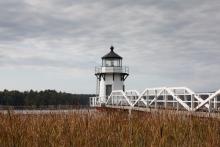
lincoln county ME map

This project is being paid for by American Rescue Plan Act (ARPA) funds, an MCA grant, and Consolidated Communications (Fidium Fiber). The funding was part of a broader $9.6 million in grant awards announced by the MCA last August, intended to bring fiber to 15,561 homes and businesses across 12 widely underserved communities in the Pine Tree state.

Lincoln County in particular saw a grant award of $6 million matched by $24.3 million in private and public investment – including county ARPA funds – which the MCA notes was the “highest percentage of financial commitment from any public-private partnership awarded through an MCA program to date.”

“We're thrilled to partner with Fidium to expand their fiber broadband network to our community,” Wiscasset Town Manager Dennis Simmons said of the opportunity.

The Potential of Fiber: Smart Cities, BEAD, and Municipal Broadband Financing - Episode 636 of the Community Broadband Bits Podcast

In this episode of the podcast, Chris and Sean dive into the latest developments in broadband policy and fiber technology. They discuss California’s investment in tribal broadband, the exciting capabilities of fiber optic sensing for smart cities, and the ongoing debate around BEAD funding and fiber prioritization. 

The conversation highlights how fiber can revolutionize municipal infrastructure by detecting traffic, preventing water leaks, and improving urban planning.  

They also preview an upcoming webinar co-hosted by Sean and Gigi Sohn of the American Association for Public Broadband, focused on financing municipal broadband projects. 

Featuring insights from industry experts, the webinar aims to help local governments navigate funding options for community-owned networks.  

Tune in for a thought-provoking discussion on broadband’s future, policy challenges, and the innovative potential of fiber infrastructure. 

This show is 27 minutes long and can be played on this page or via Apple Podcasts or the tool of your choice using this feed.

Transcript below.

We want your feedback and suggestions for the show-please e-mail us or leave a comment below.

Listen to other episodes or view all episodes in our index. See other podcasts from the Institute for Local Self-Reliance.

Thanks to Arne Huseby for the music. The song is Warm Duck Shuffle and is licensed under a Creative Commons Attribution (3.0) license