
digital equity

Content tagged with "digital equity"

Related Topics
Displaying 1 - 10 of 129

A California Democrat Is Trying to Gut the State’s Broadband Watchdog

Today, the American Prospect published an analysis – “A California Democrat Is Trying to Gut the State’s Broadband Watchdog” – authored by our own Sean Gonsalves that examines a recently filed bill in California which aims to “strip telecommunications oversight authority away from the California Public Utilities Commission (CPUC) and shift it to a more easily lobbied state legislature and a hypothetical state broadband office that doesn’t yet exist.”

The piece details how the CPUC has become a national model for broadband consumer protection, extracting landmark affordability commitments from the proposed Charter-Cox merger, launching a state-funded broadband subsidy program, and administering the only public loan fund in the nation dedicated exclusively to community-owned Internet networks.

Here's a few excerpts:

“Given what the CPUC has done over the past several years to ensure that every family in California can afford internet access, Boerner’s characterization of her poison pill is enough to make Orwell blush and MAGA operatives smile.”

“To understand what’s really at stake in Boerner’s proposal, it helps to understand what the CPUC has built, mostly behind the scenes, and what would be lost.”

“On telecom issues, the CPUC is not just a passive regulator. In the words of Ernesto Falcon, branch manager of the Communications and Broadband Policy division of the agency’s Public Advocates Office, the CPUC is something closer to ‘a public defender in the regulatory space.’”

“The office employs 22 public servants—attorneys, researchers, and policy specialists—whose sole job is to advocate for California consumers in a regulatory arena dominated by monopoly telecom companies with virtually unlimited resources to influence lawmakers and set the agenda.”

DigitalC at 10,000 Subscribers - Episode 11 of Unbuffered

Unbuffered Logo - Two text bubbles

In this episode of Unbuffered, Chris is joined again by Joshua Edmonds, CEO of DigitalC, for an ongoing conversation about one of the most ambitious efforts in the country to address the digital divide.

Josh explains how DigitalC evolved into a nonprofit Internet service provider serving Cleveland with next-generation fixed wireless technology. He shares how the organization built a citywide network, why it offers service starting at $18 per month, and what it means to be approaching 10,000 subscriber households serving more than 23,000 people.

Chris and Josh discuss the relationship between digital equity and everyday economics, including affordability, rising household costs, and why low-cost Internet service continues to resonate with residents. They also explore how DigitalC’s approach could influence the broader telecommunications industry, from pricing strategies to customer contracts.

The conversation also looks at the realities of operating a nonprofit ISP, including customer payments, subscriber growth, apartment building deployments, and the challenge of finding the right technology for different situations. Josh explains how DigitalC uses a mix of fixed wireless, existing infrastructure, and other solutions to reach both single-family homes and multi-dwelling units across the city.

Throughout the episode, Chris and Josh reflect on what it takes to build a sustainable model for connecting residents, why local solutions matter, and how communities can move beyond talking about the digital divide to actually closing it.

This show is 53 minutes long and can be played on this page or via Apple Podcasts or the tool of your choice using this feed

You can also check out the video version via YouTube.

Transcript below.

We want your feedback and suggestions for the show-please e-mail us or leave a comment below.

Listen to other episodes (formerly Community Broadband Bits) or view all episodes in our index. See other podcasts from the Institute for Local Self-Reliance.

Thanks to Whitedrift for the song Operator, licensed Creative Commons Attribution (3.0).

The Digital Divide Is a Civil Rights Issue: The Fight for Digital Equity and the Battle Against Dark Money- Episode 9 of Unbuffered

Unbuffered Logo - Two text bubbles

In this episode of Unbuffered, Chris is joined by Sean Gonsalves, Doug Dawson, and Bill Callahan for a conversation about digital discrimination, digital equity, and the growing challenges around Internet access in the United States.

They begin by discussing the “regressive moment” surrounding digital equity, including the cancellation of the Digital Equity Act, the Eighth Circuit ruling, and broader questions about what digital discrimination actually means in practice. The group reflects on how many people still do not have access to “a normal Internet connection,” as well as the barriers created by affordability, devices, skills, and reliability.

Chris, Sean, Doug, and Bill then discuss monopoly power, local organizing, municipal networks, and the role of money in politics. They reflect on local fights over broadband projects, efforts to undermine public options, and why communities often face organized opposition when trying to build their own infrastructure.

The episode also explores BEAD, NTIA guidance, low-income broadband requirements, and the tension between federal policy and state decision making. Along the way, the group discusses New York, Pennsylvania, co-ops, affordability programs, and the limits of relying on large monopoly providers to solve access problems.

This show is 53 minutes long and can be played on this page or via Apple Podcasts or the tool of your choice using this feed

You can also check out the video version via YouTube.

Transcript below.

We want your feedback and suggestions for the show-please e-mail us or leave a comment below.

Listen to other episodes (formerly Community Broadband Bits) or view all episodes in our index. See other podcasts from the Institute for Local Self-Reliance.

Thanks to Whitedrift for the song Operator, licensed Creative Commons Attribution (3.0).

California PUC Issues $3.29 Million In Digital Literacy Grants

As digital inclusion advocates across the nation push for the restoration of Digital Equity Act funding a year after President Trump unilaterally “terminated” the bipartisan Congressional law, the California Public Utilities Commission (CPUC) has approved $3.29 million in grants aimed at dramatically shoring up digital training and public broadband access in communities across the state.

All told, more than 18 new digital literacy projects and three expanded public broadband access projects will be funded, impacting more than 16,000 Californians.

According to the CPUC announcement, the projects, paid for from the California Advanced Services Fund (CASF) Broadband Adoption Account, will provide digital literacy training to 5,345 participants and deliver broadband access to 10,800 additional community members in underserved areas.

The funded CPUC projects run the gamut across all corners of the state, from $180,325 to provide digital literacy and data skills training for veterans in Santa Barbara and Ventura counties, to $751,780 to help fund five different digital literacy projects assisting older Americans in Alameda County, Orange County, Riverside County, San Francisco, and San Jose.

Image
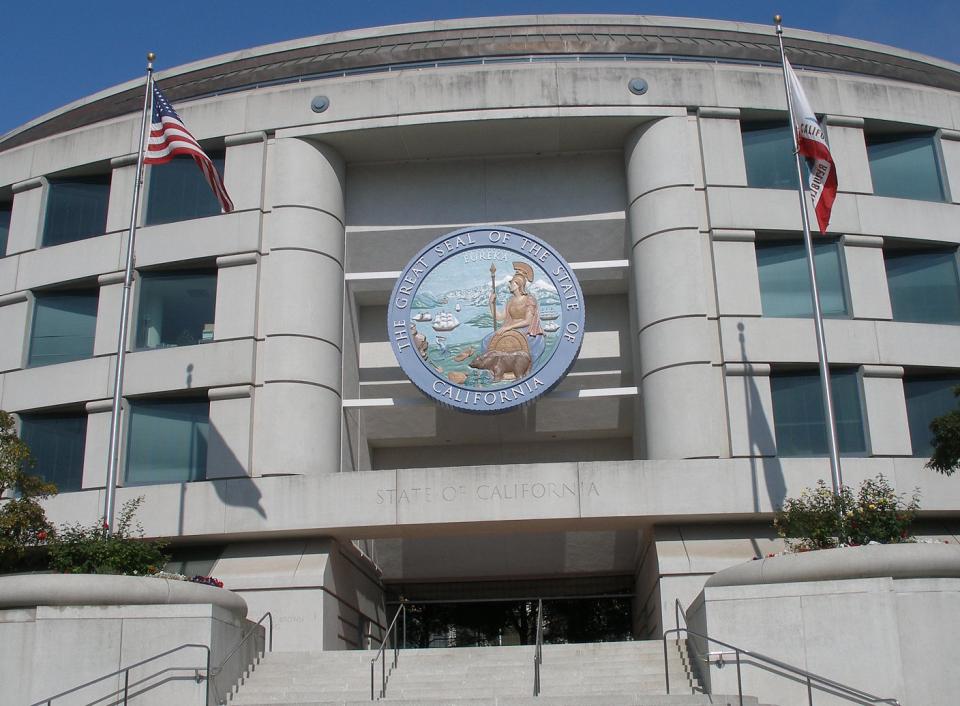
CPUC office building with state seal above doorway

The biggest grant, $1.19 million, will be used to help fund eight Golden Bridge Program digital literacy projects serving seniors, low-income residents, justice-involved youth, and high school students in the Sacramento region.

B4DE Reprise: Following the Money on Digital Equity and AI Data Centers

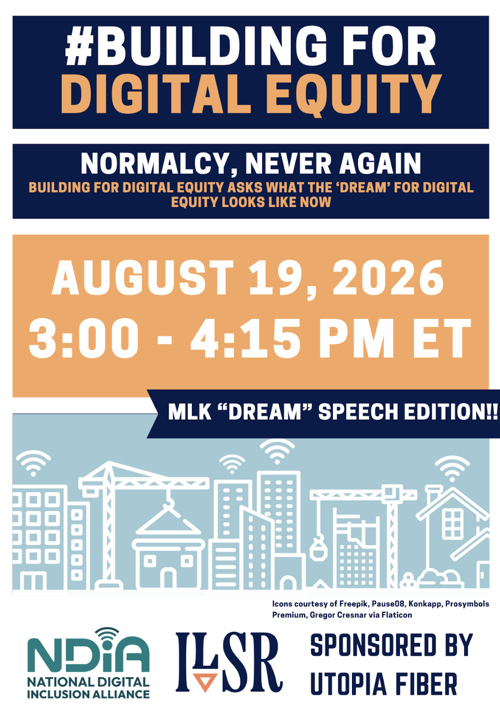
With tax day as a backdrop, the Institute for Local Self-Reliance (ILSR) Community Broadband Networks Initiative and the National Digital Inclusion Alliance (NDIA) convened its quarterly Building for Digital Equity (B4DE) livestream yesterday that shined a light on how public dollars and tax policy intersect with digital equity.

The event – an ongoing series sponsored by UTOPIA Fiber – brought together community organizers, policy experts, and local government leaders on the frontlines of working to expand opportunities for those being left in the digital dust.

What set yesterday's B4DE apart was its featured focus on how the emergence of AI hyperscale data centers are impacting communities and how communities can fight for a better deal.

The Data Center Boom — and Its Costs

MediaJustice Senior Campaign Lead Brandon Forester and Jordana Barton-García, Connect Humanity Director of the Texas Rio Grande Valley Broadband Coalition, heated up the afternoon’s fireside chat with an unflinching look at the rapid expansion of AI infrastructure.

Forester was direct about what's really driving the surge: “The only idea they have left is scale” and warned that data center developers often arrive in communities – particularly in the South –  promising economic benefits that rarely deliver. “They just need your space, they need your resources, and they need you just to let them do what they want to do,” he said.

Forester pushed back on the idea that data centers generate meaningful local tax revenue, noting how in Prince George's County, Maryland, where he lives, the projected annual return from a single data center amounts to roughly $6 million after state tax breaks, which are a fraction of what communities are led to expect.

Barton-García emphasized how communities have more power than they realize – but only if they act early. Her core message: get to the negotiating table before the deal is done.

A Cap, Gown, and Connection

The first time Belinda Parker-Mendoza set foot on the campus of San Antonio College was to get her cap and gown for graduation, having earned her Associate’s Degree in Business Administration.

It was not only a first for her. She was the first person in her entire family to earn a diploma of any kind.

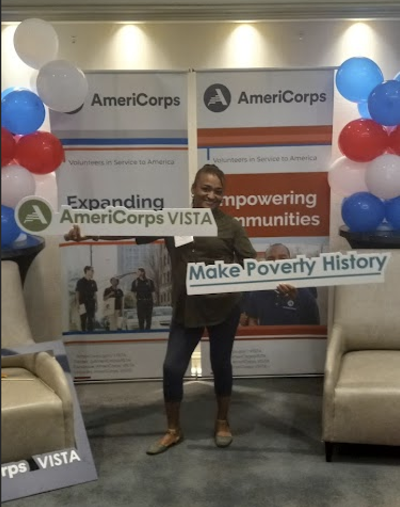
The gateway to that moment, the 45-year-old mother says, came in 2022, when she signed up for a digital skills training course offered through AmeriCorps VISTA at one of the city’s Opportunity Home apartment complexes where she lives on San Antonio’s cultural and historic East Side.

“If I didn’t have a laptop and the Internet, none of that would’ve happened,” she explains, sitting in her fourth-floor apartment before diving into a writing assignment for one of her classes as she works towards her bachelor’s degree.

She does her school work on a laptop – a refurbished Dell computer she earned through the digital skills training program. Before that, she didn’t have a computer or Internet access at home. The class provided her a laptop and through the Americorps program, she was able to enroll in the now-expired Affordable Connectivity Program (ACP), which allowed her to get home Internet service for the first time.

Image
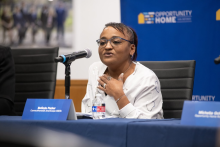
Belinda Parker-Mendoza at digital skills event holding two signs. One says: "Americorps VISTA," the other reads: "Make Poverty History"

“Thank God,” she says. “Because when the ACP ended, I was working in the (Americorps) program – and getting paid – so it worked out.”

For millions of others, it did not.

Court Asked to Pause Digital Equity Act-Related Lawsuit, Pending Key Court Decision

*The following story by Broadband Breakfast Reporter Kelcie Lee was originally published here.

The lawsuit over the Trump administration’s suspension of grants from the $2.75 billion program to close the digital divide may come to a pause. 

The National Digital Inclusion Alliance (NDIA) filed a motion Wednesday to put its lawsuit suing President Donald Trump on hold, because there is a similar case further along that would control the outcome. 

NDIA was a key player in the Digital Equity Act (DEA), having been one of 65 recommended awardees that were blindsided after having spent two years building plans approved by the federal government. 

The DEA was a Biden-era program from the bipartisan Infrastructure Investment and Jobs Act of 2021 (IIJA) that worked to ensure Americans could access, afford and fully participate in the increasingly digital society. 

In May 2025, Trump halted $1.25 billion in DEA competitive grants, explaining that the act was unconstitutional, racist and illegal.

A Constitutional Crisis in Broadband and The Fight to Restore Digital Equity Funding

The Trump administration's illegal “termination” of the 2021 Digital Equity Act continues to have devastating real world impacts on everything from affordable broadband access to protecting Americans from skyrocketing online scams.

The $2.75 billion Digital Equity Act was passed by Congress as part of the 2021 infrastructure law. It mandated the creation of three different major grant programs intended to shore up equitable, widespread access to affordable Internet, while providing the tools and digital literacy education needed to help neglected U.S. communities get online.

But last May the Trump administration unceremoniously demolished the Act, froze all program funding, and left countless states, programs and organizations – many on the cusp of major new efforts – high and dry.

At the time, President Trump and GOP leaders like Sen. Ted Cruz disingenuously attacked the Act’s programs as “racist” and "unconstitutional,” – part of a broader effort to dismantle programs deemed as “DEI,” even in instances where the programs had little to nothing to do with race or gender. Many of the “covered populations” covered by the bill included rural residents, veterans, and elderly Americans from all walks of life.

Funding Freeze Puts Most Vulnerable Americans at Risk

The sudden "termination" of the popular law resulted in dozens of states having to abruptly cancel major broadband expansion plans. But the freeze has also been a massive problem for state programs that were taking aim at a U.S. online fraud epidemic proving particularly harmful to the U.S. elderly and marginalized communities.

B4DE: Moving At The Speed of Trust Reprise

Yesterday, the third Building for Digital Equity livestream of the year brought together policy experts and frontline workers to explore how community-driven connectivity solutions are inextricably tied to building local trust.

If you missed it, the entirety of the hour and 15 minute event can be viewed here.

Hosted by ILSR’s Community Broadband Networks initiative and the National Digital Inclusion Alliance (NDIA), this week’s B4DE served as an unofficial kick-off to Digital Inclusion Week and the variety of events that will mark the occasion in communities across the country.

With each B4DE guest focused on various aspects of the theme, “Moving At The Speed Of Trust,” the event provided attendees a jolt of hope and optimism, even as the world of digital equity has been upended by the demise of the federal Affordable Connectivity Program, the sudden termination of the Digital Equity Act, and numerous other Trump administration policy shifts that will make it harder to bridge the digital divide.

Abundance for Whom? - Episode 656 of the Community Broadband Bits Podcast

In this episode of the podcast, Chris is joined again by Sascha Meinrath, Palmer Chair of Telecommunications at Penn State, for a wide-ranging, discussion about the book Abundance by Derek Thompson and Ezra Klein—and what it gets wrong about broadband and public policy. 

They dive into the historical failures of corporatist infrastructure models, the rise of regulatory complexity that benefits incumbents, and the dangers of framing government as the problem instead of part of the solution. 

From the Kingsbury Commitment to BEAD to trickle-down tech policy, Chris and Sascha explore why bold, community-centered visions of abundance are necessary to deliver real digital equity and structural change.

This show is 39 minutes long and can be played on this page or via Apple Podcasts or the tool of your choice using this feed.

Transcript below.

We want your feedback and suggestions for the show-please e-mail us or leave a comment below.

Listen to other episodes or view all episodes in our index. See other podcasts from the Institute for Local Self-Reliance.

Thanks to Arne Huseby for the music. The song is Warm Duck Shuffle and is licensed under a Creative Commons Attribution (3.0) license