
affordability

Content tagged with "affordability"

Related Topics
Displaying 41 - 50 of 282

Vermont’s ‘Long’ Reach Toward Affordable Broadband

As states struggle to readjust their plans to expand high-speed Internet access in the wake of the Trump administration “termination” of the Digital Equity Act, Vermont is working to address the multi-million dollar shortfall by aligning the state’s Digital Empowerment initiative with its newly established Affordable Long Drop Program.

The Affordable Long Drop Program was established to provide grants to eligible Internet service providers (ISPs) in order to cover the connection costs for Vermonters whose homes are beyond standard drop distances.

Typically, an ISP will pay for a standard drop, which is the final external link that connects a provider's distribution network to the end-user's location – a distance that most often spans a couple hundred feet or less.

In rural areas around the country, community-minded operators like telephone and electric cooperatives will often cover the first quarter of a mile. This has also been the case in Vermont, where many of the state’s Communications Union Districts (CUDs) have been footing the bill to cover as much as the first 2,000 feet of drop distance. But, as with any predominantly rural state, there are a number of homes located just beyond that 2,000 foot range.

The construction costs of extending fiber lines can get pricey the further the home is away from the main fiber routes. Vermont’s Affordable Long Drop Program aims to help pay for the drops costs of the last mile networks that are currently being built across the state to help ensure residents in harder-to-reach locations can still get Internet access.

Vineland, NJ Nabs $3.7 Million Grant To Begin Municipal Fiber Network

Vineland, New Jersey officials say they’ve secured a $3.7 million grant from the state that will help expand fiber and wireless broadband access to the city of 62,000. Local officials are hopeful the grant is just the beginning steps toward dramatic expansion of affordable access.

Vineland’s new grant was made possible by the New Jersey Broadband Infrastructure Deployment Equity (NJBIDE) grant program. NJBIDE will be delivering $40 million in broadband grants via the state’s Capital Projects Fund (CPF), made largely possible by the 2021 federal passage of the American Rescue Plan Act (ARPA).

NJBIDE grants prioritize fiber optic infrastructure of 100 megabytes per second (Mbps) and mandates the provision of at least one low-cost option (not specifically defined by New Jersey) to serve low income communities – something increasingly important in the wake of the federal government’s retreat from efforts to ensure equitable and affordable broadband. (Still early in the process, the city has not yet determined the exact pricing and service tiers the network will offer once construction is complete).

Image
A map outlining proposed network in Vineland NJ

A 2024 city proposal indicates that city leaders want to spend between $35 and $40 million to create a citywide broadband network, starting with a citywide fiber ring. The city paid for a viability study from Bonfire that found that at least 42 percent of the City does not have access to viable, quality, affordable broadband service.

Bountiful, Utah Finishes Muni-Fiber Network A Year Ahead Of Schedule

Officials in Bountiful, Utah say they’ve completed the city’s $48 million open access fiber network a year ahead of schedule, bringing fast, affordable broadband access to the Salt Lake City suburb of 45,000.

“We have completed the Bountiful City fiber project and built out the entire city with an open access network,” Utopia Fiber Executive Director Roger Timmerman recently said at the Fiber Connect Conference in Nashville, Tennessee. “This was a three-year project, and we completed it nearly a full year ahead of schedule.”

In a unanimous city council vote in the summer of 2023, officials approved $48 million in bonds to fund construction of the city-owned open access fiber network. 

Like UTOPIA’s broader network, the city then leases access out to numerous independent ISPs, creating a massive influx of competitive, affordable last mile fiber access.

Image
Bountiful map

The city of Bountiful owns the network while UTOPIA designed, built and manages the network and takes a share of the revenue.

Thanks to the partnership, locals now have access to 14 different competing broadband providers, offering symmetrical and affordable 250 megabit per second (Mbps), 1 gigabit per second (Gbps), 2.5 Gbps, and 10 Gbps tiers – plus a $38 to $44 local network access charge.

UTOPIA officials say the network currently passes around 16,500 addresses, and they’ve been seeing 200 signups per month.

“We need a year to really answer that question,” Timmerman said when asked for specifics on area adoption rates. “In Bountiful we’re confident we’ll get take rates of 40% or higher. There’s a lot of demand there.”

Affordability Law Whodunnit Gets Less Mysterious, But Murkiness Remains

The mystery of who and what killed the California Affordable Home Internet Act is coming into view.

As a California lawmaker hinted when the bill was abruptly withdrawn in June, the evidence seems to be pointing to the new leadership now directing the National Telecommunications and Information Administration (NTIA) – the agency administering the $42.5 billion federal BEAD program to expand Internet access.

In a recently released FAQ published by the NTIA this week, a corroborating clue has emerged.

And what may be the smoking gun is a bullet buried on page 48, under section 3.29, after the question: "May an Eligible Entity (states) require a specific rate for the low-cost service option (LCSO) when required by state law?”

NTIA's answer:

“No. The IIJA prohibits NTIA or the Assistant Secretary from engaging in rate regulation. Because the Assistant Secretary must approve the LCSO in the Final Proposal, the rate contained may not be the result of rate regulation. The RPN (Restructuring Policy Notice) addressed this fundamental flaw in the BEAD NOFO. The RPN eliminated BEAD NOFO requirements dictating price and other terms for the required low-cost service option.”

“Per the RPN, states may not apply state laws to reimpose LCSO requirements removed by the RPN. More specifically, the RPN ‘prohibits Eligible Entities from explicitly or implicitly setting the LCSO rate a subgrantee must offer’ (BEAD Restructuring Policy Notice, p.7). Violation would result in rejection of the Final (BEAD) Proposal (emphasis added).”

Syracuse, NY Community Broadband Network Steadily Expands

Syracuse, NY officials say the city’s community-owned broadband network Surge Link continues to dramatically expand two years after the network first launched, bringing affordable broadband access to the city of 145,000 – with a particular eye on helping the city’s disadvantaged.

A recent update from the city states that the network now serves more than 9,200 households in Syracuse, located in central upstate New York. The latest expansion brought the service into the city’s Valley, Skunk City, Washington Square, Northside, Prospect Hill and Hawley-Green neighborhoods in early July.

The Surge Link initiative is part of a broader $15 million investment into fixed-wireless access broadband infrastructure into a city traditionally left underserved by giant regional telecoms.

A lack of competition between dominant regional monopolies Charter (Spectrum) and Verizon has resulted in spotty access, high prices, and slow speeds.

Image
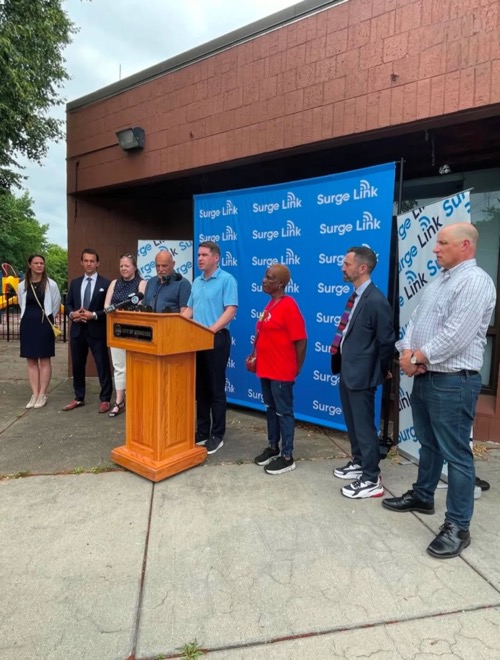
Syracuse Mayor Ben Walsh speaks at podium in front of community center at Surge Link launch party

The lion’s share of Surge Link’s latest expansion was made possible by a $10.8 million grant from the New York State ConnectALL initiative, a multi-layered billion-dollar project to dramatically boost high speed Internet access across the state leveraging a series of new grant programs, education initiatives, broadband mapping improvements, and digital equity proposals.

Sonoma County, CA To Offer Free Broadband To Low-Income Residents

In the wake of a federal abandonment of most meaningful Internet equality efforts, California municipalities continue to take the fight for equitable broadband access into their own hands. 

That includes Sonoma County, California, where county officials have freshly greenlit expanded plans to provide free broadband access to low income residents.

Image
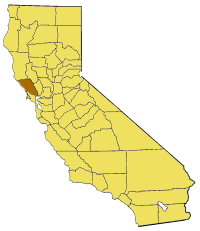
Map of California that shows Sonoma County on Northern California's coastline

Target: Affordable Housing

The Sonoma County Board of Supervisors recently announced that it has approved a list of new affordable housing sites that are eligible to receive free Internet for one year.

According to the county, 556 low-income Sonoma County households across 10 different housing locations should qualify for the free broadband service.

The deployments are being made possible by the 2021 American Rescue Plan Act (ARPA), which continues to result in some fairly transformative fiber deployments countrywide.

“The Board has prioritized finding creative solutions to broadband infrastructure development in Sonoma County,” Board of Supervisors Chair Lynda Hopkins says of the effort.

“This free internet program is a step toward equity as we continue to pursue public funding and strategic partnerships that can finally close the digital divide facing many of our shared communities.”

Whodunit Brewing in California: What Killed California’s Affordable Broadband Law?

Last week, a California Assemblymember who had sponsored legislation for a broadband affordability law abruptly withdrew the legislation. 

But what really killed the broadband affordability bill in California? Was it opposition to the proposed legislation from within the state or pressure from the Trump administration?

The Bill Was Advancing Until…

Modeled on New York’s Affordable Broadband Act (ABA), the California Affordable Home Internet Act was first introduced in January. It aimed to require Internet service providers that operate in the Golden State to offer a $15 per month broadband service plan for income-eligible households.

Image
CA Assembly member Tasha Boerner smiles at camera wearing a light blue sleeveless dress with ruffles

The proposed legislation was introduced as AB 353 by Assemblymember Tasha Boerner and was initially supported by the California Alliance for Digital Equity (CADE).

Over the intervening months, CADE and proponents of the bill offered resources and recommendations on how the bill could be made more effective than the ABA, hoping to avoid the pitfalls that advocates were seeing with the rollout and implementation of New York’s law.

On June 4, the California bill advanced through the state Assembly and moved on to the state senate by a 52-17 margin.

Who Benefits from this Bargain? | Episode 118 of the Connect This! Show

Connect This! Show

Catch the latest episode of the Connect This! Show, with co-hosts Christopher Mitchell (ILSR) and Travis Carter (USI Fiber) joined by regular guests Kim McKinley (TAK Broadband) and Doug Dawson (CCG Consulting) and special guest Heather Mills (Tilson) to talk about the FCC giving out participation trophies to the monopoly providers, how state offices are responding to the BEAD guidance changes, disaster response and resilient Internet networks, and more. The full list of topics includes:

Join us live on July 24th at 2pm ET, or listen afterwards wherever you get your podcasts.

Email us at [email protected] with feedback and ideas for the show.

Subscribe to the show using this feed or find it on the Connect This! page, and watch on LinkedIn, on YouTube Live, on Facebook live, or below.

Hudson, Ohio Accepting Bids For Citywide Fiber Build

Hudson, Ohio officials are now accepting bids on a promising new fiber-to-the-home network that should dramatically improve affordable, next-generation broadband access in the city of 23,000.

It’s just the latest effort by a city that has been exploring the option of municipal broadband infrastructure for more than a decade.

Just 15 miles north of Akron, the city has spent the better part of the last three years preparing to forge a new public-private-partnership (PPP) to expand access.

The city already owns and operates its own broadband network (Velocity Broadband, launched in 2015), but it exclusively serves the city’s businesses with gigabit-capable fiber.

The city’s new partnership would leverage that existing business network and core fiber assets to finally bring fiber optic connectivity to the city’s residents.

“The proposed work includes the installation of new fiber optic infrastructure, including approximately 11,750 lineal feet of 1.5-inch underground HDPE fiber conduit via horizontal directional drilling, 7,900 lineal feet of new aerial fiber, the placement of underground fiber vaults and handholes, and the subsequent fiber optic cable installation and testing,” the city’s proposal states.

The Big Beautiful Bill’s Ugly Choice: Internet or Food?

Today, The American Prospect published some of our original reporting on the One Big Beautiful Bill Act that was signed into law on Independence Day. In it, our Associate Director for Communications Sean Gonsalves writes:

"Sold to voters as a way to cut 'waste, fraud, and abuse,' a more honest assessment of the One Big Beautiful Bill Act (OBBBA) is that it’s just a Big Brazen Bid to shred the social safety net.

Naturally, the looming cuts to Medicaid and what they will mean for rural hospitals in particular has received the most press.

But there are numerous other ways those in need of government assistance will be further pressed into poverty, including through a particularly narrow-minded Sophie’s Choice: internet access or food?

Image
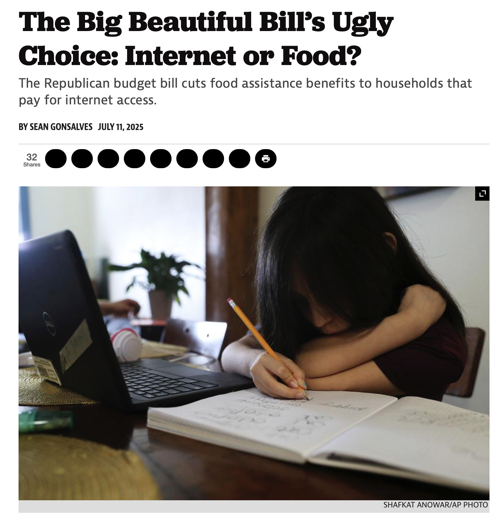
Screenshot of article in the American Prospect

Last year, GOP leaders blocked bipartisan efforts to fund an extension of the Affordable Connectivity Program (ACP), which offered 23 million eligible households a $30-per-month voucher to help pay for internet service. As if letting the ACP die wasn’t a big enough blow, OBBBA not only increases the paperwork burden required to qualify for Supplemental Nutrition Assistance Program (SNAP) benefits, it completely removes internet service costs as an eligible deduction.