
rural

Content tagged with "rural"

Related Topics
Displaying 171 - 180 of 1068

Residents in Washington County, Ohio Form Broadband Cooperative

Fed up with poor speeds and no service, a handful of residents in Washington County, Ohio have teamed up to form a broadband cooperative to pursue better connectivity for themselves and their neighbors. 

The Southeast Ohio Broadband Cooperative (SEOBC), created last May, is the result of work led by David Brown. “Electric cooperatives worked,” he said of the founding impulse. “Why can’t we do the same thing for broadband?”

After organizing, the first step the group took was to set up a speed test and map to both show how poorly connected many residents of Washington County are, and to plan for the future. That test is still ongoing, and the results are not terribly encouraging so far. Out of 4,662 run, almost 800 premises have no service (17%). Suddenlink and Charter are the only providers returning averages above the FCC’s threshold for basic broadband (25/3 Mbps (Megabits per second)), but together they represent just over 10% of those taking tests — though admittedly this is the result of sample bias, the map shows that outside of Marietta, Lovell, Beverly, Vincent, and the few other concentrated areas there are few providers returning adequate speeds. Subscribers to Frontier, Windstream, and ViaSat across the county see average connections of around 8/2 Mbps (Megabits per second). Those on HughesNet even worse off, at 3/2.5 Mbps.

Asa Boring, a Belpre Township trustee, told the Marietta Times

We have people in our area who have sort of Internet, but it’s kind of a hit and miss thing. But when you get a mile out of Little Hocking it’s over with, you just don’t get it . . . unless you sign up with Windstream and sometimes it works and sometimes it doesn’t.

Targeted Solutions

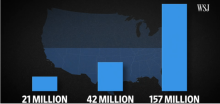
In the Wall Street Journal: Rural Families Struggle With Work and School With No Home Internet Access

Months after work and school went remote for millions of Americans, some communities are still waiting to get online. In the Wall Street Journal in August, members of a rural community in West Virginia discuss the daily toll in their life that this struggle to receive home Internet access takes. ILSR’s Christopher Mitchell also explains the failures of US broadband policy that has kept communities from getting connected:

We see states that are still making policy based on what the cable and telephone companies, the big cable and telephone companies, tell them. But we electrified the country by recognizing that those business models do not work for all of America.

Read more in the article, or watch the video here.

Expanding High-Speed Internet Access in America Through Fiber Condominiums

This afternoon we hosted a YouTube Live event to talk about a model for financing Fiber-to-the-Home (FTTH) networks with the potential to dramatically expand ultrafast Internet access at affordable rates with no large upfront costs to homeowners. Christopher was joined by Deborah Simpier, CEO of Althea Networks, to talk with NetEquity Networks Founder and CEO Isfandiyar Shaheen (Asfi) about how it works, and dig into practical questions about its potential to fiberize rural America. This “fiber condominium” approach pairs collectively owned network infrastructure with the equity boost that comes with bringing symmetrical gigabit access to residential housing. 

Watch the recording below, and read more about the approach.


Starlink’s Beta Program Connects the Remote Hoh Tribe in Washington State

After years of struggling to obtain reliable Internet connectivity, The Hoh Tribe in western Washington has entered a beta trial with SpaceX’s StarLink satellite Internet service, drastically improving the community's Internet access speed and capacity. 

Russ Elliot, Director of the newly formed State Broadband Office, had been working closely with Melvinjohn Ashue, the former Vice-Chairmen of the Hoh Tribe. Russ has a background running an Internet Service Provider (ISP) and is skilled at networking with technology companies to tap into resources and opportunities to help connect reservations, rural communities, and others. 

Notably, Washington state emergency responders had also begun using StarLink in areas decimated by wildfires and since, StarLink has had a positive working relationship with people within the Washington state government. When Starlink’s beta began, Russ caught wind and introduced Starlink’s people to the Hoh tribe, and they shared their ongoing difficulties. Starlink was eager to help and excited that the Hoh tribe reservation was well positioned in relation to the satellites Starlink had in orbit at the time. 

Image

A Plug and Play Broadband Solution

Join Us to Discuss Expanding High-Speed Internet Access in America Through Fiber Condominiums on November 19th

Join us for a special livestream next week on Thursday, November 19th, from 3-4pm (CST). We’ll be talking about a model for financing Fiber-to-the-Home (FTTH) networks with the potential to dramatically expand ultrafast Internet access at affordable rates with no large upfront costs to homeowners. This “fiber condominium” approach pairs collectively owned network infrastructure with the equity boost that comes with bringing symmetrical gigabit access to residential housing. 

In this Community Broadband Networks special livestream from ILSR, Christopher will be joined by Deborah Simpier, CEO of Althea Networks, to talk with NetEquity Networks Founder and CEO Isfandiyar Shaheen about how it works, and dig into practical questions about its potential to fiberize rural America. 

Less than a third of the nation currently enjoys fiber connectivity, with the remainder stuck with cable or DSL. At least 14 million Americans lack wireline connectivity whatsoever. 

We look forward to having you join us for the conversation, and welcome your questions during the stream!  

What: Discussing A New Financing Model for Fiber Expansion on YouTube Live

When: Thursday, November 19th, 3pm CST

Where: YouTube Live: https://www.youtube.com/watch?v=J37pWLLHEnM 

Who: Christopher Mitchell (ILSR), Deborah Simpier (Althea Networks), and Isfandiyar Shaheen (NetEquity Networks)

Don't miss interviews and other video content from ILSR; subscribe on YouTube!


Sacred Wind Goes Technology Agnostic To Serve the Navajo Nation — Episode 435 of the Community Broadband Bits Podcast
This week on the podcast Christopher talks with Catherine Nicolaou, External Affairs and Marketing Manager for Sacred Wind Communications, a rural local exchange carrier in NW New Mexico that has been focused on serving the Navajo Nation communities there. She shares the history of Sacred Wind, from buying copper infrastructure from Century Link 13 years ago in a region where just 26% of the households had Internet access to its 400 miles of fiber infrastructure today, allowing it to bring broadband to more than 92% of those living there.

Catherine tells Christopher how the company has had to rely on the full array of technologies to bring broadband access to families in a large area with particular geographic and topographic challenges, from Citizens Broadband Radio Service (CBRS) to TV White Space (TVWS) to infrared to fixed wireless and, of course, Fiber-to-the-Home (FTTH). They talk about what it means to Sacred Wind’s subscribers that the provider has never raised prices, and the work it’s been doing during the pandemic to make sure everyone gets and stays connected.

Don’t forget to check out our new show, Connect This!, where Chris brings together a collection broadband veterans and industry experts live on Youtube to talk about recent events and dig into the policy news of the day. 

This show is 30 minutes long and can be played on this page or via Apple Podcasts or the tool of your choice using this feed

Transcript below. 

We want your feedback and suggestions for the show-please e-mail us or leave a comment below.

Listen to other episodes here or view all episodes in our index. See other podcasts from the Institute for Local Self-Reliance here.

Thanks to Arne Huseby for the music. The song is Warm Duck Shuffle and is licensed under a Creative Commons Attribution (3.0) license.


U.S. Mayors Face Uphill Battle to Preserve Local Control Of 5G Deployment

As Mayors must concern themselves with everything from public safety and health to the development of the local economy and the provision of essential municipal services, they tend to have a particular focus on the infrastructure necessary to support it all, amid a cacophony of competing interests.

Over the summer, having reached consensus on the fundamental importance of “the digital infrastructure of tomorrow,” a particular focus of the United States Conference of Mayors 88th National Annual Meeting was to issue a resolution declaring the necessity of “Preserving Local Public Rights-of-Way and Regulatory Authority to Most Effectively Deploy 5G Broadband Access and Bridge the Digital Divide during the COVID-19 Pandemic.”

Image

The Mayors’ resolution comes in response to the Federal Communications Commission’s (FCC's) 2018 preemption of local governments’ authority to regulate 5G infrastructure in their cities. 

At the heart of the regulatory debate: local governments’ ability to determine the amount of fees to charge mobile carriers that want to place 5G equipment in Rights-of-Way. In addition to putting limits on those fees, the FCC Order also sets strict timelines by which cities and towns must respond to carrier applications. The FCC decision, issued over the objections of industry observers and policy experts, essentially eliminates local communities’ ability to negotiate in order to protect their own Rights-of-Way and the poles, traffic lights, and other potential structures within those Rights-of-Way.

Preempting Local Authority

Satellite Internet Access, the Future of Cable, and Small Fiber ISPs – Episode 1 of Connect This!

This week Christopher brings together Doug Dawson (Owner and President, CCG Consulting), Monica Webb (Head of Marketing Development and Strategic Partnerships, Ting) and returning guest Travis Carter (CEO, US Internet). 

The group first discusses Low-Earth Orbit satellite Internet access in the context of SpaceX’s Starlink public beta launch, and what it means for connecting unserved Americans in both urban and rural areas. Then, they dig into the future of cable as a wireline broadband technology, with frank talk about its longevity in the face of fiber as the industry begins talking about the penetration of DOCSIS 3.1 and future moves to DOCSIS 4.0. Finally, Christopher, Doug, Monica, and Travis spend time tackling the question of why we don’t see more small, private Internet Service Providers (ISPs) doing fiber projects in urban areas. They debate, for instance, Right-of-Way issues and the problem of access to capital.

Subscribe to the show using this feed

Email us [email protected] with feedback and ideas for the show. 

A Grassroots Effort Pushed the New Hampshire Electric Cooperative to Add Broadband to Its Charter — Episode 434 of the Community Broadband Bits Podcast

This week on the podcast Christopher talks with the city of Sandwich, New Hampshire’s Broadband Advisory Committee Chair Julie Dolan and member Richard Knox. The join us to discuss the New Hampshire Electric Cooperative’s recent vote to add broadband to its charter.

Sandwich is particularly poorly served in NH and they have been seeking solutions for a long time. In organizing around the electric cooperative (which covers 115 towns and includes 85,000 members), in less than a year local stakeholders have organizing two votes around the importance of quality Internet access which, at the beginning of October, pushed the co-op into the business. Julie and Richard share with Chris how it all unfolded and what it means moving forward.

Don’t forget to check out our new show, Connect This!, where Chris brings together a collection broadband veterans and industry experts live on Youtube to talk about recent events and dig into the policy news of the day. 

This show is 38 minutes long and can be played on this page or via Apple Podcasts or the tool of your choice using this feed

Transcript below. 

We want your feedback and suggestions for the show-please e-mail us or leave a comment below.

Listen to other episodes here or view all episodes in our index. See other podcasts from the Institute for Local Self-Reliance here.

Thanks to Arne Huseby for the music. The song is Warm Duck Shuffle and is licensed under a Creative Commons Attribution (3.0) license.

Nunavut Infrastructure Gap Report Highlights Startling Lack of Connectivity Options

News stories highlighting the breadth and depth of the digital divide and its impacts in the midst of the Covid-19 pandemic have dominated the headlines in recent months, but a new report emphasizes the degree to which dozens of communities in one Canadian province have struggled with connectivity issues for years. The recently released Nunavut Infrastructure Gap Report [pdf] shows what broadband access looks like for the 35,000 or so mostly Inuit residents of the nation’s youngest province, and what solutions exist for closing the gap for tens of thousands who struggle to get online.

Nunavut is the northernmost of Canada’s provinces, made up of two interlocking geographies: the landmass immediately north of Manitoba and east of the Northwest Territories, and the large collection of islands curled around Baffin Bay to the west of Greenland. It has a population barely 1/20th the size of Wyoming (the U.S.’s smallest by population) despite being the second-largest political subdivision by area in North America, and a population density of just 0.05 persons/square mile.

Image

A Host of Infrastructure Gaps