
mapping

Content tagged with "mapping"

Related Topics

Old /tags-176

Displaying 1 - 10 of 158

Data, Drones, and Digital Mascots – Episode 32 of Unbuffered

Unbuffered Logo - Two text bubbles

In this episode of Unbuffered, Chris is joined by Sean Gonsalves and Sascha Meinrath (X-Lab and Penn State University) for a wide-ranging conversation on broadband data, satellite security, and the creeping influence of AI on everyday life.

Together, they start with Vermont’s new VT Speed Check, a partnership with Ookla that asks residents to test early and often as fiber reaches more of the state. Sascha praises the effort but makes the case for open data and open methodologies over proprietary platforms, whose licensing terms can bar researchers from asking hard questions about individual ISPs. 

The group also takes on the federal government’s failure to collect pricing data, the more than $500 million spent on broadband mapping, and an FCC challenge process that lets inaccurate provider claims stand. Chris then argues that today’s higher interest rates are normal rather than extreme, and the panel weighs what that means for municipal fiber and the costs of not building.

Moving to satellite, they discuss reports that Starlink service was cut off for Ukrainian drones and the troubling question of whether one person can degrade military communications. They also cover research linking an ad-tech firm to spyware affecting Starlink devices worldwide, and how big tech scales by eliminating customer service.

Concluding with a What the Tech!? segment, Sean explains “baby schema,” the psychology behind the adorable mascots AI companies use to win trust for agents that need access to your email, calendar, and contacts. 

Sascha describes how mainstream AI tools increasingly restrict access to legal information, why some open-weight models are less restrictive, and how AI customer service has become a war of attrition against users.

This show is 56 minutes long and can be played on this page or via Apple Podcasts or the tool of your choice using this feed. 

You can also check out the video version via YouTube.

Transcript below.

We want your feedback and suggestions for the show-please e-mail us or leave a comment below.

Listen to other episodes in our index. See other podcasts from the Institute for Local Self-Reliance.

Thanks to Whitedrift for the song Operator, licensed Creative Commons Attribution (3.0).

Test Your Speed, and Test It Often: Vermont Launches Statewide Internet Speed Check

Vermonters with a need for speed now have a way to find out exactly how much they are getting.

Earlier this month, the Vermont Community Broadband Board (VCBB) launched VT Speed Check, a new website where Vermont residents and businesses can check their Internet speed and follow the progression of where high-speed Internet access is available across the state as the state’s CUD’s build out new networks.

The site will also help residents fix problems they may be experiencing with their Internet connections.

In partnership with Ookla — a leading connectivity intelligence and performance metrics company — the new website includes a speed test to determine just how fast (or not) household Internet connections are, a map that anonymously aggregates speed test results, tools to help residents learn how their Internet connection working, and troubleshooting tips to fix problems.

“Taking speed tests is so important,” VCBB Executive Director Christine Hallquist said in announcing the launch. “It’s about transparency and accountability for the individual and the state.”

“Vermonters can run a speed test and troubleshoot problems they’re having with their Internet, and we’ll be able to see results on a bigger scale to help us pinpoint areas that are having challenges and need more focus from us. We are asking all Vermonters to visit VT Speed Check, test your speed, and test it often.”

How It Works

To run the test, residents first have to go to the VT Speed Check website and download the speed test app on their computer.

Federal Agencies Still Can't Get Their Broadband Data Straight, GAO Finds

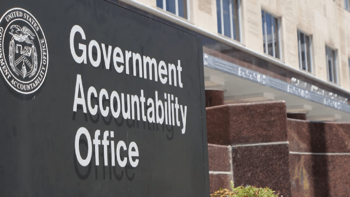
A recent Government Accountability Office (GAO) report reveals what’s been obvious to broadband deployment experts for years now: the federal government’s multi-agency approach to closing the digital divide is undermined by a lack of coordination and data-management among agencies.

The result is an FCC broadband coverage map with an amalgamation of inaccuracies that misrepresents where high-speed Internet service does or does not exist, a flaw that can steer taxpayer dollars away from communities that actually need them.

Since 2020, four federal agencies — the FCC, NTIA, USDA and Treasury — have been administering nine different grant programs to build-out new Internet networks in unserved and underserved areas across the nation, including the $42.5 billion federal flagship BEAD (Broadband Equity Access and Deployment) program.

As ILSR’s Senior GIS Analyst Christine Parker notes, the report devotes considerable attention to “de-duplication” — the process of cross-referencing which locations have already received funding or service commitments from one program so that other programs don't waste money doubling up, or worse, leave locations out entirely because it was wrongly assumed to be covered elsewhere.

Image
GAO sign and building in background

“But there’s no documented process or timeline for actually doing this,” Parker says.

Garbage In, Garbage Out

Part of the problem, the report notes, is that agencies track and report funding data in different formats, with some programs collecting far more granular location-level detail than others so that it is much harder to reconcile the datasets and match them up. GAO indicates the agencies are aware of the issue and are working to reconcile it, but as of the report’s release, no consistent process was in place.

ILSR Launches Broadband Data and Policy Forum

From the moment the FCC announced in 2022 that its new and improved Broadband Data Collection was ready for Internet Service Providers to submit information about where and how they could deliver broadband service to American households, policy analysts and researchers around the country knew we would be in for a rough ride. 

The federal government is capable of collecting good, useful data — just not, it seems, when it comes to Internet service. 

For the 22 years prior, the FCC's Form 477 existed only as a vague gesture towards what could be done if only we cared.

But, it was mostly a reminder instead of the regulatory capture that prevented location-level service, pricing, and a host of other — actually useful — data to inform better policy.

Four years later, it's become clear that the new federal broadband data collection is slightly better in some ways, still refuses to collect basic metrics that would create a more competitive marketplace for citizens, and as a whole is a complex animal hamstrung by complexity, arbitrary decisions, and operability problems that make this work difficult in manifold of new ways.

FCC’s Carr Eyes Dubious ‘Reforms’ To E-Rate, Broadband Mapping

Trump Federal Communication Commission Chairman Brendan Carr has announced vague potential changes to the FCC’s E-Rate program that could harm program funding, effectiveness, and the overarching goal of bringing affordable Internet access to long-neglected schools and rural communities trapped on the wrong side of the digital divide.

The reforms come as Carr also looks to make changes to the FCC’s broadband mapping efforts, something consumer groups say could harm the government’s ability to measure which communities need improved, affordable access, or suffer from a pronounced lack of broadband competition.

In an announcement to the FCC website, Carr stated the 30-year-old bipartisan E-Rate program, which costs $3 billion annually, was in dire need of reforms. The program is primarily funded by a small surcharge affixed to phone lines. With the steady erosion of copper-based phone lines, debates have arisen about how to best sustain the program.

But instead of focusing on issues like subsidy fraud by large telecoms, Carr’s announcement oddly focuses heavily on concerns about student “screen time” and what content students are allowed to view. It’s a problematic foray for an FCC boss recently under fire for unconstitutional censorship efforts targeting comedians and journalists.

Updated Resource: Community Networks Continue to Win Big in California's Infrastructure Grant Program

Last May, we shared a dashboard we built to track how community networks were doing in California's Last-Mile Federal Funding Account broadband grant program. With a new round of winners recently announced, we've updated our dashboards to show who, where, and how much community networks are getting. In the first round, they were seeing unprecedented success, punching far above their weight in comparison to the monopolies (which have a long track record of success in landing the bulk of state broadband grant dollars across the country). 

We're happy to say that the latest round shows community networks doing equally well. In late 2025 and early 2026, California announced an additional nine grants. Every county in California has now received grant funding for last-mile broadband expansion. Two of the awards were multi-county projects, stretching to include counties that were also served through the first round of funding.

Hoopa Valley Utility Authority was a big winner again, selected for a nearly $40 million award to serve areas of Trinity and Humboldt Counties. The project, called Hoopa TRAIL for Hoopa Trinity Rural Access Initiative Linkup, will serve nearly two thousand locations with gigabit symmetrical speeds. Taken together, community networks secured half of the awards and funding announced in this round. Other awards went to the Contra Costa Transportation Authority, for a planned public-private partnership, Comcast, AT&T, a regional Internet service provider, and a unique nonprofit-private partnership. Altogether, over $110 million was awarded in this round of grants, bringing the running total in the program to $1.23 billion.

To Improve Broadband Deployment, Enhanced Data Collection Is Key

Image
Pew Research Center Mapping Report

A new report from Pew Research Center provides a review of available federal sources of broadband data and gaps and issues with those data. Within the report, Pew also examines the implications of these gaps on public policy and offers potential solutions to address them. The literature included in the summary were published from 2008 - 2024 and described shortcomings with broadband data including: limited data granularity; inconsistent geographic reporting; industry-derived availability data; lack of pricing data; inconsistent definitions; and inconsistent evaluations to monitor broadband adoption and determine program efficacy. 

Pew: Bad Broadband Data Means Bad Broadband Outcomes

For decades U.S. broadband policymaking has been plagued by inaccurate and badly-managed data that has significantly harmed efforts to not just track U.S. broadband deployment, but ensure that billions in taxpayer dollars are being wisely spent to address the problem.

From inaccurate broadband mapping data and an over-reliability on industry-provided coverage claims, to inconsistent broadband definitions and patchwork federal oversight, a new study by the Pew Charitable Trusts examined decades of U.S. broadband policy, and data analysis and found plenty of room for improvement.

Image
Pew Charitable Trust logo

According to a 2022 Government Accountability Office (GAO) report, there have been 133 programs across 15 federal agencies supporting and funding U.S. broadband deployment efforts, propped up by more than $44 billion in taxpayer dollars from 2015 to 2020 alone.

ILSR studies have historically shown those funds haven’t always been spent wisely; often being dumped into the laps of the very same regional telecom monopolies whose attacks on competition and government oversight resulted in substandard access in the first place.

There’s billions more waiting in the wings: as part of the 2021 American Rescue Plan Act (ARPA), $25 billion was specifically earmarked for broadband expansion.

New Resource: Community Networks in California’s Federal Funding Account Broadband Grant Program

When California announced in 2021 that it would open a last-mile broadband grant program seeded with $2 billion, it was something of a watershed moment.

The Last-Mile Federal Funding Account (FFA) broadband program,* as it was called, instantly became one of the largest state-administered broadband grant programs ever. Along with other broadband programs overseen by the California Public Utilities Commission (CPUC), the FFA program sought to significantly close the digital divide by ensuring that at least 98 percent of households had broadband access.

Municipalities, cooperatives, Tribal entities and community-based nonprofit networks seized this opportunity to take charge of their digital futures, submitting nearly one hundred applications in more than 40 counties across the state.

As grant announcements began rolling out in June of 2024, the Institute for Local Self-Reliance (ILSR) began tracking where that money was going and, specifically, the kinds of applicants that were successful in the program. What emerged was indisputable: California’s Federal Funding Account broadband program was an unprecedented success for community networks.

At communitynetworks.org, we have published numerous stories highlighting innovative and successful applications, including projects by Plumas-Sierra Telecommunications, the City of Huntington Park, the City of Oakland, Cold Springs Rancheria, and the City of Indio.

Today we are releasing a new two-part dashboard based on the CPUC’s data that helps visualize the success of community-based projects in this transformative state program. (The CPUC also has a very helpful interactive dashboard with more detail on each project, but it does not share our focus on community networks). Hover on each visualization within this dashboard for additional detail.

Broadband Bottlenecks and Bureaucracy: What’s Holding the Internet Back? - Episode 642 of the Community Broadband Bits Podcast

In this episode of the podcast, Chris is joined again by telecom policy expert Sascha Meinrath for a wide-ranging discussion on why billions in broadband funding still haven’t reached communities. 

They unpack the dysfunction behind the BEAD program rollout, federal stalling on digital equity grants, and the maddening reality of broken broadband maps. 

The conversation tackles political gridlock, regulatory capture, and the very real consequences for underserved communities still waiting for high-speed Internet.

You can find the article that Chris and Sascha reference during their conversation about Ezra Klein here.

This show is 41 minutes long and can be played on this page or via Apple Podcasts or the tool of your choice using this feed.

Transcript below.

We want your feedback and suggestions for the show-please e-mail us or leave a comment below.

Listen to other episodes or view all episodes in our index. See other podcasts from the Institute for Local Self-Reliance.

Thanks to Arne Huseby for the music. The song is Warm Duck Shuffle and is licensed under a Creative Commons Attribution (3.0) license