FCC

Content tagged with "FCC"

Displaying 1 - 10 of 663

California Tells NTIA: We’ll Take the BEAD Money, Not the Strings

California has agreed to accept its $1.86 billion in federal BEAD funds, but is putting the NTIA on notice that the new conditions being imposed by the Trump administration will not amount to giving up its power to regulate Internet service in the Golden State.

In a Nov. 2 letter accepting the Notice of Award under the BEAD (Broadband Equity, Access, and Deployment) program established by the 2021 infrastructure law, California Public Utilities Commission (CPUC) President John Reynolds said the agency does not read the new federal grant conditions as requiring California to forfeit its legal rights or to stop enforcing state law, and that the CPUC will sign BEAD grant recipient agreements only if and when the state and NTIA resolve its disagreements.

Image
Lady Justice and gavel on a table in a classic law library setting.

At issue is Section 50 of NTIA’s updated grant terms, which would require states to commit not to enforce laws that regulate broadband rates, impose net neutrality, require open access, “or other utility-style rules on broadband internet.”

Data, Drones, and Digital Mascots – Episode 32 of Unbuffered

Unbuffered Logo - Two text bubbles

In this episode of Unbuffered, Chris is joined by Sean Gonsalves and Sascha Meinrath (X-Lab and Penn State University) for a wide-ranging conversation on broadband data, satellite security, and the creeping influence of AI on everyday life.

Together, they start with Vermont’s new VT Speed Check, a partnership with Ookla that asks residents to test early and often as fiber reaches more of the state. Sascha praises the effort but makes the case for open data and open methodologies over proprietary platforms, whose licensing terms can bar researchers from asking hard questions about individual ISPs. 

The group also takes on the federal government’s failure to collect pricing data, the more than $500 million spent on broadband mapping, and an FCC challenge process that lets inaccurate provider claims stand. Chris then argues that today’s higher interest rates are normal rather than extreme, and the panel weighs what that means for municipal fiber and the costs of not building.

Moving to satellite, they discuss reports that Starlink service was cut off for Ukrainian drones and the troubling question of whether one person can degrade military communications. They also cover research linking an ad-tech firm to spyware affecting Starlink devices worldwide, and how big tech scales by eliminating customer service.

Concluding with a What the Tech!? segment, Sean explains “baby schema,” the psychology behind the adorable mascots AI companies use to win trust for agents that need access to your email, calendar, and contacts. 

Sascha describes how mainstream AI tools increasingly restrict access to legal information, why some open-weight models are less restrictive, and how AI customer service has become a war of attrition against users.

This show is 56 minutes long and can be played on this page or via Apple Podcasts or the tool of your choice using this feed. 

You can also check out the video version via YouTube.

Transcript below.

We want your feedback and suggestions for the show-please e-mail us or leave a comment below.

Listen to other episodes in our index. See other podcasts from the Institute for Local Self-Reliance.

Thanks to Whitedrift for the song Operator, licensed Creative Commons Attribution (3.0).

FCC Circulating Order to Preempt California Copper Retirement Rules

*The following story by Broadband Breakfast Reporter Jake Neenan was originally published here.

The head of the Federal Communications Commission has prepared an order that would preempt California’s copper retirement rules, the agency said Thursday.

AT&T asked for the move in May, following a March FCC order that invited companies to ask the agency to set aside state regulations that hindered their copper retirement efforts. The request has been supported by the wireless industry and opposed by state regulators and consumer advocates.

The FCC has already granted AT&T’s request to turn off copper telephone service at more than 184,000 locations in California. The California Public Utilities Commission has more stringent rules about what qualifies as an adequate replacement service — FCC Chairman Brendan Carr has been happy to accept reported wireless coverage — which has prevented the company from acting on the FCC approval.

ISPs are eager to decommission their old copper networks, which are costly to maintain and no longer provide competitive broadband speeds. The FCC and state agencies regulate the process to avoid rural areas being stranded without essential 911 services.

In a release, the FCC said its proposed order would preempt California regulations that prevented companies from moving forward with discontinuances approved by the FCC.

Test Your Speed, and Test It Often: Vermont Launches Statewide Internet Speed Check

Vermonters with a need for speed now have a way to find out exactly how much they are getting.

Earlier this month, the Vermont Community Broadband Board (VCBB) launched VT Speed Check, a new website where Vermont residents and businesses can check their Internet speed and follow the progression of where high-speed Internet access is available across the state as the state’s CUD’s build out new networks.

The site will also help residents fix problems they may be experiencing with their Internet connections.

In partnership with Ookla — a leading connectivity intelligence and performance metrics company — the new website includes a speed test to determine just how fast (or not) household Internet connections are, a map that anonymously aggregates speed test results, tools to help residents learn how their Internet connection working, and troubleshooting tips to fix problems.

“Taking speed tests is so important,” VCBB Executive Director Christine Hallquist said in announcing the launch. “It’s about transparency and accountability for the individual and the state.”

“Vermonters can run a speed test and troubleshoot problems they’re having with their Internet, and we’ll be able to see results on a bigger scale to help us pinpoint areas that are having challenges and need more focus from us. We are asking all Vermonters to visit VT Speed Check, test your speed, and test it often.”

How It Works

To run the test, residents first have to go to the VT Speed Check website and download the speed test app on their computer.

Who Controls the Megaphone? - Episode 28 of Unbuffered

Unbuffered Logo - Two text bubbles

In this episode of Unbuffered, Chris is joined by Matt Wood (Vice President of Policy and General Counsel at Free Press) and freelance reporter Karl Bode to confront the rapid acceleration of media consolidation and its toll on independent journalism. 

The discussion centers on two major industry developments: the FCC's recent decision under Chairman Brendan Carr to effectively eliminate national broadcast ownership caps, and the massive $110 billion merger between Paramount, CBS, and Warner Brothers/Discovery led by the Ellison family.

Together, they break down how these massive deals create information "choke points," drive newsroom layoffs, replace substantive local reporting with "pseudo-journalism" and top-down propaganda, and cater to corporate or authoritarian interests. 

Concluding with a look at solutions, Wood and Bode explore practical paths toward a healthier media ecosystem—from public and non-commercial funding models to improved media literacy and basic editorial standards designed to combat viral disinformation.

This show is 49 minutes long and can be played on this page or via Apple Podcasts or the tool of your choice using this feed. 

You can also check out the video version via YouTube.

Transcript below.

We want your feedback and suggestions for the show-please e-mail us or leave a comment below.

Listen to other episodes (formerly Community Broadband Bits) or view all episodes in our index. See other podcasts from the Institute for Local Self-Reliance.

Thanks to Whitedrift for the song Operator, licensed Creative Commons Attribution (3.0).

The FCC on Trial: Defense of Free Speech and the Future of Media Regulation - Episode 27 of Unbuffered

Unbuffered Logo - Two text bubbles

In this episode of Unbuffered, Chris sits down with TechFreedom President Berin Szóka and Benton Institute Senior Fellow Gigi Sohn to analyze the growing threats to free speech and broadcast licenses under FCC Chairman Brendan Carr and the Trump administration. 

They break down Disney's landmark First Amendment lawsuit against the FCC, discussing how political pressure, "jawboning," and implicit threats to license renewals are creating a dangerous culture of anticipatory obedience among media organizations and journalists.

The conversation delves into the erosion of regulatory norms, the limits of current administrative structures, and the chilling effect on newsroom independence. Concluding on a constructive note, Szóka and Sohn outline crucial paths forward, calling for robust congressional oversight, structural legislative safeguards, and reform of the administrative state to restore accountability and protect the First Amendment.

For more information from TechFreedom, see "FCC Can't Use ABC's License Renewal Process to Punish Its Editorial Choices." 

This show is 48 minutes long and can be played on this page or via Apple Podcasts or the tool of your choice using this feed. 

You can also check out the video version via YouTube.

Transcript below.

We want your feedback and suggestions for the show-please e-mail us or leave a comment below.

Listen to other episodes (formerly Community Broadband Bits) or view all episodes in our index. See other podcasts from the Institute for Local Self-Reliance.

Thanks to Whitedrift for the song Operator, licensed Creative Commons Attribution (3.0).
Tree Canopies, Broken Data, and DOGE Math - Episode 26 of Unbuffered

Unbuffered Logo - Two text bubbles

In this episode of Unbuffered, Chris and Sean break down the flawed realities behind national broadband data and policy. They dive into the Federal Communications Commission’s latest 706 report, calling out its questionable citations and reliance on unchecked ISP claims. 

The conversation moves to the BEAD program, exploring why one-third of rural electric co-ops are pulling out of fiber awards, and examines new research from Ohio revealing how tree canopy issues and tall tower costs challenge Starlink’s promises.

Later in the show, Chris and Sean highlight a municipal fiber effort moving forward in Southwick, Massachusetts, discuss what a massive airport ground stop says about the fragility of fiber infrastructure, and tackle the risks of introducing AI into air traffic control in the What the Tech!? segment. 

Finally, they wrap up with a look at a Government Accountability Office report detailing the missteps and misleading figures surrounding DOGE.

This show is 42 minutes long and can be played on this page or via Apple Podcasts or the tool of your choice using this feed. 

You can also check out the video version via YouTube.

Transcript below.

We want your feedback and suggestions for the show-please e-mail us or leave a comment below.

Listen to other episodes (formerly Community Broadband Bits) or view all episodes in our index. See other podcasts from the Institute for Local Self-Reliance.

Thanks to Whitedrift for the song Operator, licensed Creative Commons Attribution (3.0).

The FWA Reality Check and the BEAD Final Numbers - Episode 25 of Unbuffered

Unbuffered Logo - Two text bubbles

In this episode of Unbuffered, Chris is joined again by Doug Dawson of CCG Consulting for a wide-ranging conversation about fixed wireless access performance, federal broadband definitions, the BEAD program's true-up process, and the potential impact of artificial intelligence on network infrastructure.

Chris and Doug begin by diving into a recent Ookla report on Fixed Wireless Access (FWA) from AT&T, Verizon, and T-Mobile. They break down how FWA operates on de-prioritized cellular capacity, why seasonal foliage can slow down speeds, and how the limitations of upload performance highlight the stark difference between cellular home broadband and wireline fiber connections.

From there, the conversation turns to federal policy and mapping challenges. Chris and Doug critique potential shifts at the FCC regarding broadband speed definitions and discuss a GAO report highlighting the hurdles local governments and Tribal nations faced during the bulk broadband collection challenge process. They also examine the NTIA’s plan for truing up unserved locations under the BEAD program, as well as the final funding distributions across fiber, Low Earth Orbit satellites, and fixed wireless networks.

Finally, Chris and Doug tackle the popular debate around AI and network congestion. They unpack why data center traffic differs from residential internet usage, address the security and infrastructural risks of rapid AI development, and discuss the long-term economic viability of major AI models.

Throughout the episode, Chris and Doug connect these technical and policy developments to broader questions about network reliability, federal oversight, market competition, and who will ultimately build and control the future of telecommunications.

This show is 46 minutes long and can be played on this page or via Apple Podcasts or the tool of your choice using this feed. 

You can also check out the video version via YouTube.

Transcript below.

We want your feedback and suggestions for the show-please e-mail us or leave a comment below.

Listen to other episodes (formerly Community Broadband Bits) or view all episodes in our index. See other podcasts from the Institute for Local Self-Reliance.

Thanks to Whitedrift for the song Operator, licensed Creative Commons Attribution (3.0).

Federal Agencies Still Can't Get Their Broadband Data Straight, GAO Finds

A recent Government Accountability Office (GAO) report reveals what’s been obvious to broadband deployment experts for years now: the federal government’s multi-agency approach to closing the digital divide is undermined by a lack of coordination and data-management among agencies.

The result is an FCC broadband coverage map with an amalgamation of inaccuracies that misrepresents where high-speed Internet service does or does not exist, a flaw that can steer taxpayer dollars away from communities that actually need them.

Since 2020, four federal agencies — the FCC, NTIA, USDA and Treasury — have been administering nine different grant programs to build-out new Internet networks in unserved and underserved areas across the nation, including the $42.5 billion federal flagship BEAD (Broadband Equity Access and Deployment) program.

As ILSR’s Senior GIS Analyst Christine Parker notes, the report devotes considerable attention to “de-duplication” — the process of cross-referencing which locations have already received funding or service commitments from one program so that other programs don't waste money doubling up, or worse, leave locations out entirely because it was wrongly assumed to be covered elsewhere.

Image
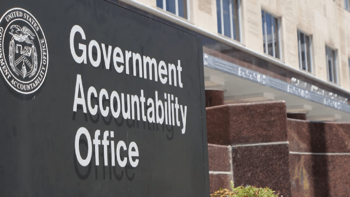
GAO sign and building in background

“But there’s no documented process or timeline for actually doing this,” Parker says.

Garbage In, Garbage Out

Part of the problem, the report notes, is that agencies track and report funding data in different formats, with some programs collecting far more granular location-level detail than others so that it is much harder to reconcile the datasets and match them up. GAO indicates the agencies are aware of the issue and are working to reconcile it, but as of the report’s release, no consistent process was in place.

Researchers Say Federal Policy Is Pricing Low-Income Pennsylvanians Off the Internet

Persistent attacks by the federal government on Internet affordability protections and social safety nets are directly resulting in a drop in overall broadband adoption, with large numbers of low-income Americans unable to afford modern connectivity — and the vast benefits it provides.

That was the message sent by local and national broadband researchers attending an informational meeting last month in Indiana, Pennsylvania before the Pennsylvania House Communications & Technology Committee.

Researchers noted that sustained efforts by the federal government across numerous fronts — from attacks on the social safety net to the Republican destruction of the FCC Affordable Connectivity Program (which provided $30 broadband discounts to more than 23 million households) are directly driving vulnerable populations away from Internet adoption.

Attendees noted that the One Big Beautiful Bill (OBBB) alone — which dramatically lowered taxes for U.S. corporations and the wealthy — is projected to reduce broadband connections by approximately 233,000 in Pennsylvania's lowest income quintile.

One attendee, Indiana County Commissioner Sherene Hess, pointed to 2024 data from public-benefit corporation Ready.net showing that Indiana County is among the least-connected counties in Pennsylvania, with 22 percent of county locations without broadband access.

According to notoriously unreliable FCC data (coverage and speed gaps are usually worse than the federal government claims), of the 103,986 “serviceable locations” in Indiana County, 23,049 locations are unserved and 3,927 locations are underserved — meaning they fail to meet FCC minimum broadband speed standards.

Hess combined data from the U.S. census and a 2022 United Way ALICE (Asset Limited Income Constrained, Employed) report to conclude that 46 percent of Indiana County was facing financial hardship, suggesting that $80 to $200 monthly Internet bills “create a choice between Internet service and other basic needs.”