
AI

Content tagged with "AI "

Related Topics
Displaying 1 - 3 of 3

National Fiber Buildout Goes Local as Co-ops, Munis, and Independent ISPs Drive 40 Percent of the Fiber Boom

Leading members of the fiber industry descended on Orlando, Fla. this week for the Fiber Broadband Association's annual Fiber Connect conference to take stock of a national inflection point fueled by the federal BEAD program and the all-consuming rise of AI.

Themed “Light Years Ahead,” the underlying take-away was that the buildout boom is far from over and the easy part is mostly behind us, according to multiple reports from those in attendance.

FBA President and CEO Gary Bolton opened the conference with a state-of-the-industry address.

In doing so, he framed both public and private fiber investments as not being merely about broadband infrastructure, but as the backbone of an exploding AI-driven economy.

Underscoring the central role and growing importance of fiber optic networks, Bolton told attendees:

“We are entering a thinking economy. Value is created by turning information into intelligence and acting on it instantly.”

He set out to quantify the expansive nature of fiber connectivity, noting that across the U.S. more than 100 million homes now have access to fiber Internet – with 11.8 million households connected in 2025 alone.

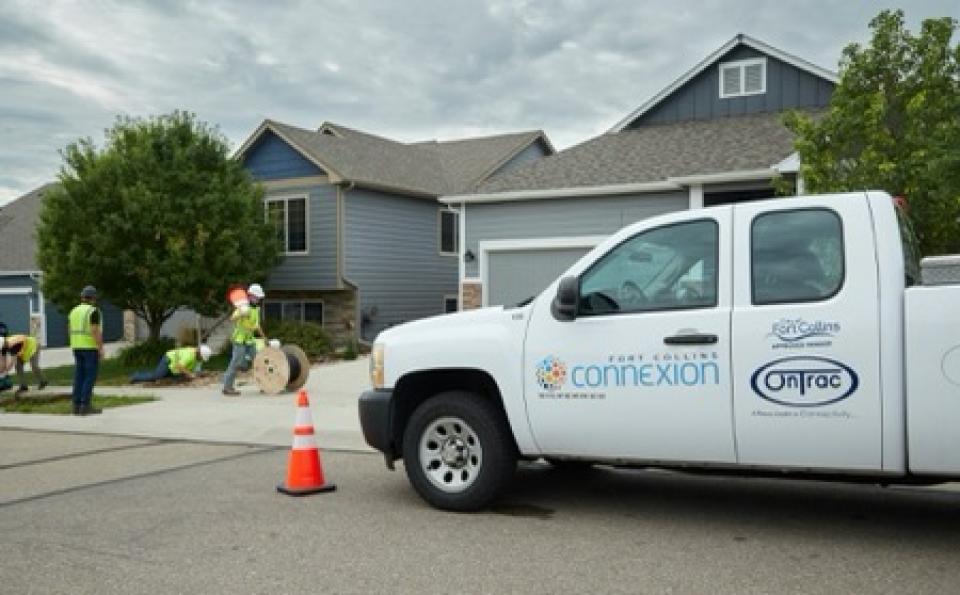
Image
A Fort Collins Connexion truck is parked in front of home as three city employees install fiber near the driveway

As reported by Telecompetitor, Bolton said, there are now over 1,500 active fiber providers operating nationally, with 42 new market entrants and 715 providers that doubled their footprints in just the past six months. 

More Than the Sum of the Parts - Episode 7 of Unbuffered

Unbuffered Logo - Two text bubbles

In this episode of Unbuffered, Chris is joined by Neil Chilson, head of AI policy at the Abundance Institute and author of Getting Out of Control: Emergent Leadership in a Complex World, for a conversation about AI policy, technology, systems, and complexity.

Chris and Neil begin by discussing technology, law, and policy, and how people who work in tech policy often reach very different conclusions while still trying to grapple with the same underlying issues. From there, the conversation turns to “bottom-up complex systems,” emergent order, and the idea that systems are often “more than the sum of the parts.”

They also explore the role of markets, manufacturing, and distributed knowledge, including the idea that “nobody controls that process,” even as systems continue adjusting to changing conditions and choices. Along the way, they discuss Hayek, metis, ant colonies, “I, Pencil,” and why the things that are easiest to measure “might not be the right things to measure.”

The episode closes with a broader conversation about education policy, tax policy, AI, and what it means to build systems that can respond to complexity rather than pretend it does not exist.

This show is 54 minutes long and can be played on this page or via Apple Podcasts or the tool of your choice using this feed

You can also check out the video version via YouTube.

Transcript below.

We want your feedback and suggestions for the show-please e-mail us or leave a comment below.

Listen to other episodes (formerly Community Broadband Bits) or view all episodes in our index. See other podcasts from the Institute for Local Self-Reliance.

Thanks to Riverside for the music. The song is Caveman and is licensed under a Creative Commons Attribution (3.0) license

B4DE Reprise: Following the Money on Digital Equity and AI Data Centers

With tax day as a backdrop, the Institute for Local Self-Reliance (ILSR) Community Broadband Networks Initiative and the National Digital Inclusion Alliance (NDIA) convened its quarterly Building for Digital Equity (B4DE) livestream yesterday that shined a light on how public dollars and tax policy intersect with digital equity.

The event – an ongoing series sponsored by UTOPIA Fiber – brought together community organizers, policy experts, and local government leaders on the frontlines of working to expand opportunities for those being left in the digital dust.

What set yesterday's B4DE apart was its featured focus on how the emergence of AI hyperscale data centers are impacting communities and how communities can fight for a better deal.

The Data Center Boom — and Its Costs

MediaJustice Senior Campaign Lead Brandon Forester and Jordana Barton-García, Connect Humanity Director of the Texas Rio Grande Valley Broadband Coalition, heated up the afternoon’s fireside chat with an unflinching look at the rapid expansion of AI infrastructure.

Forester was direct about what's really driving the surge: “The only idea they have left is scale” and warned that data center developers often arrive in communities – particularly in the South –  promising economic benefits that rarely deliver. “They just need your space, they need your resources, and they need you just to let them do what they want to do,” he said.

Forester pushed back on the idea that data centers generate meaningful local tax revenue, noting how in Prince George's County, Maryland, where he lives, the projected annual return from a single data center amounts to roughly $6 million after state tax breaks, which are a fraction of what communities are led to expect.

Barton-García emphasized how communities have more power than they realize – but only if they act early. Her core message: get to the negotiating table before the deal is done.