
Fast, affordable Internet access for all.
Wireless
Content tagged with "Wireless"
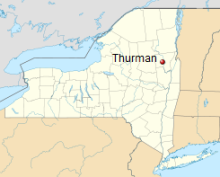
Thurman, New York - White Space Test Case
Thurman, New York, like many other rural communities, has little or no access to broadband. Many of the 1,219 residents still use dial-up. According to a recent town survey, less than 25% of the population has connections that could be described as high-speed. Thurman, however, will soon be tapping into an uncommon source for connectivity - so called White Spaces.
In a recent PostStar.com article, Jon Alexander reports that the community is now moving forward with a plan based on using the unused radio spaces between television networks to provide access. It was only recently that the FCC approved the method. The Town Board just approved a resolution to dedicate $20,000.00 in state economic development grants. The funds, about two-thirds of grant funding, will be used to test out the technology in the northern and western sections of town. If the experiment proves successful, additional funding for a build out will need to be allocated.
Thurman, which lies entirely in the Adirondack Park, has been largely ignored by private telecom investment. With such a sparse population, the Town is used to being overlooked. In fact, Federal surveys often show Thurman as uninhabited. Town Board Member Leon Galusha told Alexander, “Believe it or not, people do live here.”
Because the geography of Thurman is hilly and tree-covered and the town's population is spread out, the town is a perfect place to test the White Spaces technology. White Spaces do not require line-of-sight, as in some wireless technology, and vegetation or walls do not interfere with the signal. The technology is becoming more popular in Europe, but has only been used sparingly in the U.S. In order to use the White Space, the town will need access to Frontier Wireless' fiber optic lines, which run through town.
More Information about Community Wireless Approach in Mount Pleasant, DC
We previously noted a grassroots wireless initiative in Mount Pleasant that the Open Technology Institute is assisting and we are now cross-posting more details that they recently published. Thanks to Preston Rhea, who published this interview with one of the first volunteers to install a node.
Open Technology Institute Explores Gig.U Model for Community Networks
Moreover, communities deploying wireless mesh technology can incorporate additional service offerings into their networks.
Good-Bye to Seattle's Free Wi-Fi
In 2005, Seattle started offering free Wi-Fi to several neighborhoods, hoping to increase usage among businesses, residents, and passers-by. While the effort was hailed by some, and criticized by others, it was an experiment in community broadband. An experiment that ended on April 29th.
The City still considered the free Wi-Fi a pilot project, even though it had been in operation since 2005. Areas served were the University District and Columbia City neighborhoods, and four downtown parks. There will still be free Wi-Fi in public libraries and in a few hotspots around town as well as in some city facilities, including City Hall and the Seattle Center.
The theory was that municipal WiFi was a workable and cheaper way to get more people online. But Wi-Fi is only cheaper in the short run -- something fiber critics tend to ignore. As Seattle has found, most of the network has to be replaced every 5-7 years.
Technical issues and geography also create unique problems for citywide Wi-Fi. Where to put transmitters, interference from buildings, foilage and water, are all barriers to offering a service that is worthwhile to potential users. David Keyes, Chief Information Technology Officer for the City of Seattle noted these problems where there have been complaints of spotty and unreliable reception. Keyes talked to Brian Heaton of Government Technology:
Seattle would be open to someone taking over the system, but Keyes felt that anyone coming in to do a fresh deployment of Wi-Fi might install it a little differently in regard to wireless access point placement. The actual equipment would also need to be replaced.
Seattle's plan for municipal WiFi has been debated from the beginning. In 2008, Government Technology reporter, Chandler Harris, spoke with Bill Schrier, who was Seattle's Chief Technology Officer at the time. Schrier was also one of the harshest critics of the plan to spread Wi-Fi all over Seattle, saying:
Newton, North Carolina Is One Big Hotspot
North Carolina infamously became the 19th state to enact barriers to community broadband, but we wrote about a loophole to it last year - communities can provide services for free without interference from the state capital. And starting last year, Newton, with 12,968 residents, began offering free Wi-Fi among 48 blocks and has plans to expand.
The city leaders were looking for ways to revitalize downtown. Jason Clay, the City IS Director, wanted to provide free outdoor WiFi as a way to get residents out and into the heart of the city. He had explored the possibility in the past, but the high cost was always a barrier. Initial estimates were between $50,000 and $150,000 to install free Wifi.
Clay put in time researching the products that would work for their situation. Rather than pay a consultant to do radio frequency and engineering studies, he did the work himself. By shopping directly with Meraki and Ubiquiti, Clay found significant savings. He even enlisted the help of the city's electrical crew and Information Services staff to install the needed devices. Where did they put the equipment? On city poles and water towers. Free WiFi in Newton is truly an initiative fueled by ingenuity, determiniation, and some elbow grease. From Joe DePriest's Charlotte Observer article written when the network went live:
"I knew the equipment was out there and that we had to find out which one fit our needs," Clay said. "So I kept digging and researching, trying to take the mystery out of it. When you take the mystery out of anything, it's usually just a lot of smoke and mirrors anyway. I kept at it. And we came up [with] some pretty cool stuff."
In a September city press release:
OTI Helps Build a Wireless Network in DC Neighborhood
If you are not yet familiar with Mount Pleasant, here’s a chance to learn about one of DC’s most vibrant neighborhoods. It’s a diverse area not far from downtown DC, featuring a main street lined with locally-owned businesses. Many of these shops and restaurants are owned and run by the area’s large Latino community, which has long been central to shaping the neighborhood’s character. However, over the past decade rising housing prices have pushed many in the Latino community east towards Georgia Avenue.
In May, I moved to Mount Pleasant and started to learn about the area. In order to encourage community-building and local empowerment and to increase local information-sharing and opportunities for civic engagement, I decided to use skills and ideas garnered from my work at the Open Technology Initiative to organize a community wireless network. Despite my excitement to get started, I didn’t want to rush in without first connecting with the people, the histories, networks, skill sets, and local knowledge already present in the community.
My first step was technical: with the help of my OTI colleagues, I specified the hardware for the network and prepared the technology for installation. The first-stage plan was to install a few “nodes” (wireless access points) in order to establish the form and structure of the mesh network - open, interoperable, unfiltered, and decentralized. Then, at the Mount Pleasant Farmers Market, I handed out fliers directing people to an online survey gauging their interest in organizing a community wireless network in the neighborhood. I also posted a few of the fliers in local businesses on Mount Pleasant Street. But I needed to go deeper in order to really connect with the existing social networks of people and projects.
San Jose Hopes 3rd Time is the Charm for Muni Wi-Fi
In an attempt to regain some of its Silicon Valley shine, San Jose, California is taking another run at municipal Wi-Fi. The city hopes that by covering a 1.5 square mile block of downtown with fast, robust wireless Internet access, it will become more attractive to the technology entrepreneurs who have, in recent years, been more likely to set up shop in other parts of the valley.
San Jose has twice attempted to offer free public Wi-Fi through privately owned and operated networks. In 2004, Global Netoptex deployed hotspots that never really worked. In 2006, MetroFi tried offering advertising-supported wireless, but was unable to generate enough revenue to cover costs. Just two years later, after failed attempts to sell its networks to the cities in which they operated (including Santa Clara, Cupertino, and Portland, Oregon) MetroFi went out of business.
This time, the City is investing its own funds in a network that will both serve the City’s own communications needs and offer free public access. San Jose is paying approximately $100,000 in start-up costs, and is committing to $22,000 in annual operating expenses. The City’s CIO, Vijay Sammeta, says the City is getting “a sweetheart deal” in exchange for its willingness to be a testing ground for software and firmware updates. Applications will include wireless parking meters and digital pay-to-park signs. The City expects cost savings from moving from other wireless connections to the Wi-Fi network will balance out the annual operating expense.
Pay Attention to the Man Behind the Curtain: Listen to AT&T's CEO, not Lobbyists
The other is rural access lines; we have been apprehensive on moving, doing anything on rural access lines because the issue here is, do you have a broadband product for rural America? We’ve all been trying to find a broadband solution that was economically viable to get out to rural America, and we’re not finding one to be quite candid. The best opportunity we have is LTE.Whoa! LTE is what you more commonly hear called 4G in mobile phone commercials. The best they can do is eventually build a wireless network that allows a user to transfer just 2GB/month. That is fine for hand-held devices but it does nothing to encourage economic development or allow residents to take advantage of remote education opportunities. But even the CEO admits they are not bullish on LTE as the solution:
[W]e’re looking at rural America and asking, what’s the broadband solution? We don’t have one right now.Some may be wondering about "U-Verse" -- AT&T's super DSL that competes with cable in the wealthy neighborhoods of bigger cities. U-Verse cannot match the capacity or quality of modern cable networks but is better than older DSL technologies. But U-Verse is not coming to a rural community near you. For those who missed the fanfare last year, AT&T's U-Verse build is done. AT&T's lobbyists have probably forgotten to tell Georgia and South Carolina Legislators that the over 20 million AT&T customers without access to U-Verse are not going to get it.
North Carolina County Turns on First White Spaces Wireless Network in Nation
New Hanover County and The City of Wilmington do not plan to charge people to use the WiFi capability made possible by the new network. As long as the service is free neither they nor other municipalities deploying the technology are likely to run afoul of anti-municipal network legislation that has been adopted in some areas.Recall that North Carolina passed a law last year to limit local authority to build networks that could threaten Time Warner Cable or CenturyLink's divine right to be the only service providers in the state (even as they refuse to invest in modern networks). These white spaces are sometimes called "Super Wi-Fi" because the public knows that Wi-Fi is wireless and therefore anyone can quickly grasp that "Super Wi-Fi" is newer, better, and perhaps even wireless(er). GovTech also covered the announcement:
According to the FCC, these vacant airwaves between channels are ideal for supporting wireless mobile devices. The FCC named the network “super Wi-Fi” because white spaces are lower frequency than regular Wi-Fi and, therefore, can travel longer distances. New Hanover County is deploying the super Wi-Fi in three public parks, starting with a playground area at Hugh MacRae Park on Jan. 26, followed by Veterans Park and Airlie Gardens. Other locations in Wilmington, N.C. — located in the county — will also have access to the new network.