
Wireless

Content tagged with "Wireless"

Displaying 1 - 10 of 276

Dialing Back Protections: The Battle for California's Lifelines - Episode 18 of Unbuffered

Unbuffered Logo - Two text bubbles

In this episode of Unbuffered, Chris is joined by Harold Feld, Senior Vice President at Public Knowledge, and Arturo Juarez from NextGen Policy for a conversation about the high-stakes battle over California's Carrier of Last Resort (COLR) rules and what it means for the future of universal service.

Chris, Harold, and Arturo discuss AT&T's aggressive push to end its long-standing obligations to provide basic phone service across the state as telecommunications providers transition away from legacy copper networks. 

They examine AT&T's multi-front strategy—spanning state legislation, regulatory proceedings, FCC petitions, and federal lawsuits—and explore the potential fallout for vulnerable residents who rely on these lines for affordable, daily communication.

Along the way, they reflect on the critical role landlines continue to play during public safety emergencies like wildfires, when cellular networks frequently fail or overload. 

They also dive into the national context of telecom deregulation, how corporate pressures like stock market performance drive decisions to abandon less profitable areas, and why alternative solutions like satellite internet or chat apps cannot yet replace universal, highly reliable phone networks.

Throughout the episode, Chris, Harold, and Arturo emphasize that network modernization shouldn't come at the cost of public safety or consumer protection. It’s about ensuring that as technology evolves, no community is left behind or forced to accept lower standards of connection.

This show is 54 minutes long and can be played on this page or via Apple Podcasts or the tool of your choice using this feed

You can also check out the video version via YouTube.

Transcript below.

We want your feedback and suggestions for the show-please e-mail us or leave a comment below.

Listen to other episodes (formerly Community Broadband Bits) or view all episodes in our index. See other podcasts from the Institute for Local Self-Reliance.

Thanks to Whitedrift for the song Operator, licensed Creative Commons Attribution (3.0).

Protecting Tribal Access to Spectrum - Episode 17 of Unbuffered

Unbuffered Logo - Two text bubbles

In this episode of Unbuffered, Chris is joined again by Matthew Rantanen for a conversation about the future of Tribal spectrum policy and why access to wireless spectrum remains essential for Tribal self-determination.

Chris and Matt discuss the Federal Communications Commission's proposed changes to the Tribal Licensing Window, exploring why the policy has been an important tool for Tribal Nations seeking to build and operate their own broadband networks. 

They examine the concerns surrounding the current proceeding and what the changes could mean for future Tribal access to spectrum.

Along the way, they reflect on the history of Tribal spectrum policy, the unique legal and sovereign status of Tribal Nations, and the work that has gone into expanding broadband access across Indian Country. They also discuss why continued advocacy, education, and engagement are critical as new spectrum decisions are made.

Throughout the episode, Chris and Matt emphasize that Tribal broadband is about more than technology. It's about ensuring Tribal communities have the opportunity to shape their own digital future and continue building the networks their communities need.

This show is 32 minutes long and can be played on this page or via Apple Podcasts or the tool of your choice using this feed

You can also check out the video version via YouTube.

Transcript below.

We want your feedback and suggestions for the show-please e-mail us or leave a comment below.

Listen to other episodes (formerly Community Broadband Bits) or view all episodes in our index. See other podcasts from the Institute for Local Self-Reliance.

Thanks to Whitedrift for the song Operator, licensed Creative Commons Attribution (3.0).

Fresno, California Celebrates Launch of Free Internet Initiative on Back of Community-Owned Network

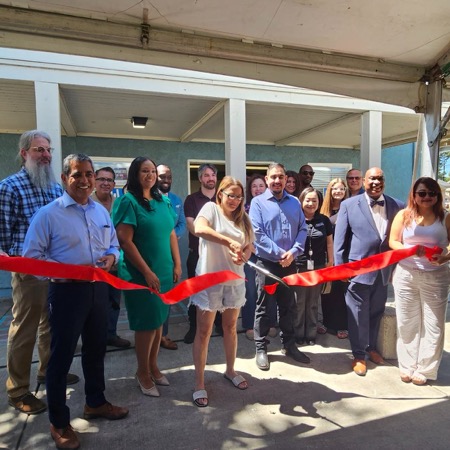
California community leaders, activists, and a coalition of partners gathered earlier this month to celebrate the launch of a new broadband infrastructure project at Sequoia Courts and Sequoia Courts Terrace in Fresno, bringing free high-speed Internet access to more than 350 residents.

The plan to bring broadband access to residents at no cost was made possible through a partnership with Fresno Housing, Fresno Coalition for Digital Inclusion (FCDI), United Way Fresno & Madera Counties, and Central Valley Community Foundation (CVCF). The Fresno Housing Authority will own and maintain the finished network.

The expansion, which leverages a hybrid fiber-wireless approach, was directly funded by California’s ambitious Broadband For All initiative, a $6 billion effort aimed at dramatically boosting broadband competition and access across the Golden State. Much of that effort was funded, in part, by the 2021 American Rescue Plan Act (ARPA).

Image
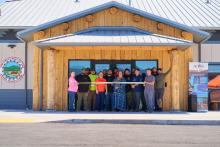
A group of community leaders and housing resident cut red ribbon in front of building

The Fresno grant was for $471,000, with $1,000 or less per unit cost to build, according to details on the project included in a California Public Utilities Commission (CPUC) filing, which notes that the enterprise-grade wireless mesh network used in the project was more costly, but provided “flexibility and scalability for future expansion.”

DigitalC at 10,000 Subscribers - Episode 11 of Unbuffered

Unbuffered Logo - Two text bubbles

In this episode of Unbuffered, Chris is joined again by Joshua Edmonds, CEO of DigitalC, for an ongoing conversation about one of the most ambitious efforts in the country to address the digital divide.

Josh explains how DigitalC evolved into a nonprofit Internet service provider serving Cleveland with next-generation fixed wireless technology. He shares how the organization built a citywide network, why it offers service starting at $18 per month, and what it means to be approaching 10,000 subscriber households serving more than 23,000 people.

Chris and Josh discuss the relationship between digital equity and everyday economics, including affordability, rising household costs, and why low-cost Internet service continues to resonate with residents. They also explore how DigitalC’s approach could influence the broader telecommunications industry, from pricing strategies to customer contracts.

The conversation also looks at the realities of operating a nonprofit ISP, including customer payments, subscriber growth, apartment building deployments, and the challenge of finding the right technology for different situations. Josh explains how DigitalC uses a mix of fixed wireless, existing infrastructure, and other solutions to reach both single-family homes and multi-dwelling units across the city.

Throughout the episode, Chris and Josh reflect on what it takes to build a sustainable model for connecting residents, why local solutions matter, and how communities can move beyond talking about the digital divide to actually closing it.

This show is 53 minutes long and can be played on this page or via Apple Podcasts or the tool of your choice using this feed

You can also check out the video version via YouTube.

Transcript below.

We want your feedback and suggestions for the show-please e-mail us or leave a comment below.

Listen to other episodes (formerly Community Broadband Bits) or view all episodes in our index. See other podcasts from the Institute for Local Self-Reliance.

Thanks to Whitedrift for the song Operator, licensed Creative Commons Attribution (3.0).

Unbuffered Live! - Episode 6 of Unbuffered

Unbuffered Logo - Two text bubbles

In the first live episode of Unbuffered, Chris is joined by Heather Mills, Doug Dawson, and Drew Garner for a wide-ranging conversation about BEAD, permitting, mobile wireless, and the latest debates around broadband policy and infrastructure.

They begin with a discussion about Amazon’s Leo service, efforts to preempt local government “to encourage more investments in Internet access,” and the realities of mobile wireless performance after Chris spent weeks traveling around the country.

From there, the conversation turns to BEAD and where things currently stand. Drew explains that most states and territories have finally signed their award agreements and are getting closer to construction, while also warning that the process remains “interminable” because there are so many seeming final steps. Chris, Heather, Doug, and Drew discuss delays, permitting, workforce challenges, NTIA guidance, and concerns that states may face a very narrow list of eligible uses for remaining funds.

The group also talks about affordability, quality, and value in broadband infrastructure, including whether LEO satellite service is truly an acceptable alternative to fiber-based networks. Heather reflects on the risks of creating “a class system of who gets what,” while emphasizing that affordability programs and local capacity still matter for communities trying to get connected.

The episode closes with a conversation about mobile networks, fixed wireless capacity, and why networks may feel like they are “running hotter” than they used to.

This show is 64 minutes long and can be played on this page or via Apple Podcasts or the tool of your choice using this feed

You can also check out the video version via YouTube.

Transcript below.

We want your feedback and suggestions for the show-please e-mail us or leave a comment below.

Listen to other episodes (formerly Community Broadband Bits) or view all episodes in our index. See other podcasts from the Institute for Local Self-Reliance.

Thanks to Riverside for the music. The song is Caveman and is licensed under a Creative Commons Attribution (3.0) license

Telecom Then, AI Now — Rethinking the FCC’s Role - Episode 2 of Unbuffered

Unbuffered Logo - Two text bubbles

In this episode of Unbuffered, Chris is joined again by longtime guest Blair Levin for a conversation that spans decades, from the origins of modern Internet policy to the uncertain future shaped by artificial intelligence.

They begin by revisiting the legacy of the Telecommunications Act of 1996 and the lesser-known policy decisions that helped shape today’s communications landscape, including spectrum auctions, number portability, and the push to make wireless a mass-market service. 

Along the way, Blair offers a candid look at what policymakers got right, what they got wrong, and how technocratic decisions quietly transformed competition and access.

From there, the conversation turns toward the future. As AI rapidly reshapes the economy, Chris and Blair explore what role the Federal Communications Commission should play in an AI-driven world and whether it is equipped to do so. 

They discuss the need for better data, long-term thinking, and a renewed focus on the public good in policymaking.

But this episode goes beyond infrastructure and regulation. In the closing segment, the discussion shifts to trust, power, and civic responsibility, reflecting on recent community actions in Minneapolis as an example of collective courage and local solidarity. 

It’s a reminder that while technology and policy matter, the choices people make for one another may matter even more.

This show is 70 minutes long and can be played on this page or via Apple Podcasts or the tool of your choice using this feed

You can also check out the video version via YouTube.

Transcript below.

We want your feedback and suggestions for the show-please e-mail us or leave a comment below.

Listen to other episodes (formerly Community Broadband Bits) or view all episodes in our index. See other podcasts from the Institute for Local Self-Reliance.

Thanks to Riverside for the music. The song is Caveman and is licensed under a Creative Commons Attribution (3.0) license

Broadband Reality Check: BEAD, Competition, and What Comes Next - Episode 672 of the Community Broadband Bits Podcast

In this episode of the podcast, Chris is joined again by Doug Dawson for a candid conversation about where U.S. broadband policy stands as 2026 begins—and where it’s falling short.

The discussion takes a hard look at BEAD implementation delays, how uncertainty at the federal level is reshaping ISP behavior, and why many communities still struggle to plan amid shifting rules and political pressure. 

Doug explains what he’s hearing directly from providers on the ground, including concerns about overbuilding, affordability gaps, and the long-term sustainability of different network models.

Chris and Doug also explore the limits of satellite and fixed wireless solutions, the continuing importance of fiber infrastructure, and why policy debates often miss the practical realities of deployment and operations. 

The episode offers a grounded, experience-driven perspective on what communities should realistically expect in the coming years—and what questions they should be asking now.

This show is 41 minutes long and can be played on this page or via Apple Podcasts or the tool of your choice using this feed.

You can also check out the video version via YouTube.

Transcript below.

We want your feedback and suggestions for the show-please e-mail us or leave a comment below.

Listen to other episodes or view all episodes in our index. See other podcasts from the Institute for Local Self-Reliance.

Thanks to Arne Huseby for the music. The song is Warm Duck Shuffle and is licensed under a Creative Commons Attribution (3.0) license

Baltimore Close To Issuing RFP For Major Fiber Expansion

Baltimore activists and leaders say the city is making steady progress in efforts to bridge the digital divide in the city of 565,000. The efforts have culminated in several grant-fueled initiatives to deliver fiber and wireless to city apartment complexes, a city middle-mile network, and a looming partnership with regional providers to further expand affordable access.

When we last checked in with Baltimore, the city had just doled out $2 million of its American Rescue Plan Act (ARPA) funding to bring fiber to 12 new city apartment buildings. The deployment is in partnership with Waves, a nonprofit formerly known as Project Waves.

Waves was first launched in 2018 in direct response to the Trump FCC’s repeal of net neutrality and the general failures of federal telecom policy to address digital inequity. Project Waves (profiled by ILSR in 2023) initially used Point-to-Multipoint wireless connectivity to deliver free wireless broadband service to about 300 multi-dwelling unit (MDU) residents.

Image
Project Waves sign

Now Baltimore Director of Broadband and Digital Equity Kenya Asli tells Government Technology the city is putting the finishing touches on a Request for Proposal (RFP) to strike a new public-private-partnership with an as-yet-unselected broadband provider. The deal should further expand fiber access to unserved and underserved parts of the city.

“Folks want more options, and so we are bringing in more options,” Asli said.

New York City Expands Free Wireless, But Missed Opportunities Loom Large

New York City Mayor Eric Adams recently unveiled plans to improve public safety, housing, and the overall livability of the Big Apple.

Among them is $6 million in new funding to expand the New York Public Library’s (NYPL) “Neighborhood Internet” network, providing free Internet to an additional 2,000 households receiving Section 8 rental assistance.

The city hopes that the program, which is first focused on expanding Internet access to low-income households in Upper Manhattan and the Bronx, will ultimately be expanded to reach as many low income NYC residents as possible. But the effort still remains a far cry from the bolder, bigger, “master plan” initiative scrapped by the Adams administration in 2022.

Image
Brick facade front of NYPL Bronx Parkchester library

Low income city residents simply need a library card to connect to the NYPL network in the limited parts of the city where access is currently being offered. The NYPL has experimented with Citizens Broadband Radio Service (CBRS), fixed wireless, and some fiber for connectivity. The program also provides low income users with a Chromebook with Wi-Fi access.

New York Awards $13.1 Million In New Low Income Housing Broadband Grants

New York State officials have unveiled the first round of broadband deployment grants made possible by the state’s $100 million Affordable Housing Connectivity Program (AHCP), which aims to drive affordable fiber and Wi-Fi to low-income state residents trapped on the wrong side of the digital divide.

As part of the program, the state recently announced it will be spending $13.1 million to connect 14,167 lower income residents across Buffalo, Rochester, upper Manhattan and the Bronx with both affordable gigabit-capable fiber – and low cost Wi-Fi.

Flume, the partner ISP chosen by the state, will offer residents the choice of three broadband tiers: 100/20 megabit per second (Mbps) fiber for $10 per month, symmetrical 200 Mbps fiber for $15 per month, and symmetrical 1 gigabit per second (Gbps) fiber for $30 per month. All three subsidized fiber options will be locked at that price point until 2034, according to the state.

Image
Fox Hall affordable and senior living housing complex in Manhattan

“In today's digital age, access to reliable, affordable high-speed Internet isn't just about convenience – it's about ensuring every New Yorker can participate fully in our modern economy and society,” New York Governor Kathy Hochul said of the new grants. “Through these strategic investments, we're not only installing fiber and infrastructure, we're opening doors to education, healthcare and economic opportunity.”

Faster, Better, Cheaper