resource

Content tagged with "resource"

Related Topics
Displaying 111 - 120 of 123

Wired West Launches Pre-Subscription Cards

Wired West, an initiative in rural western Massachusetts to build a modern network in a broadband desert, has launched a pre-subscription campaign to demonstrate local demand for broadband service and support for the project. The online form is available here. The official WiredWest Communications Cooperative Corporation is just now celebrating its first anniversary, noting that 37 towns have officially joined it. Back in June, we talked with Linda Kramer, who explained how Sibley County in rural Minnesota used a pre-subscription campaign to document the massive local support for their initiative. Google is using a similar strategy in Kansas City to identify which neighborhoods are most interested in services. Wired West also recently issued an RFP for network design:
WiredWest has issued a Request for Proposal for high level network design and cost estimates for the WiredWest fiber-to-the-premise network. The results will be used as the basis for WiredWest’s pro-forma and financing. “The work generated by this RFP will provide critical information to take the project to the next step,” said Monica Webb, Chair of WiredWest, “which is imperative, as the digital divide afflicting our region continues to hinder our economic development, educational opportunities and quality of life.”
And that RFP has been issued to Matrix Design Group:
After extensive review and due diligence, Wired West chose the Matrix Design Group of East Hanover, NJ, to complete the contract. They have designed and built fiber networks extensively in the Northeast, including Massachusetts, completing projects for private and public sector interests, in urban, suburban and rural areas. The work by Matrix is scheduled to be completed in early October, and will be used in WiredWest’s business plan and for financing.
Several volunteers have put a tremendous amount of effort into this initiative, recognizing that if they don't act, no one will. This is an inspiring project.

The Economics of the Google Gigabit

In the excitement around Google's unveiling of the $70 gigabit broadband connection in Kansas City, some may be wondering how it is that Google can offer a gigabit for moderately more than what most of us pay for far slower cable broadband connections. On one side of the equation is the fact that big cable companies (Time Warner Cable, Comcast, etc.) have long been ripping off consumers by pricing their services far above cost -- something they can easily do because they face so little competition. But the more interesting side of the equation is how Google can make its gigabit price so low. Recall that Chattanooga made major waves with its gigabit service, priced then at the rock-bottom rate of $350/month. A gigabit is not available in many communities and where it is available, the price is often over $10,000 per month. We published an in-depth case study of their approach a few months ago. But, as Milo Medin -- the head of the Google Fiber project -- is fond of saying, "No one moves bits cheaper than Google." Google has built an incredible worldwide fiber optic network. Let's call this lessons 1 and 2.
Lesson 1: Google built its own network. It isn't leasing connections or services from big telecommunications companies. Building your own network gives you more control -- both of technology and pricing. Lesson 2: Google uses fiber-optics. These connections are reliable and have the highest capacity of any communications medium. The homes in Kansas City are connected via fiber whereas Time Warner Cable, CenturyLink, and others continue to rely on last-generation technologies because they are delaying investment in modern technology to boost their profits.
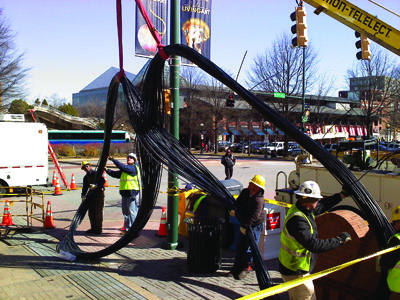
EPB Installs Fiber Cables in Chattanooga Others have already followed these lessons but are not able to offer their gig for such a low prices. To understand why, let's start with some basics. I'm hypothetically starting Anytown Fiber Net in my neighborhood and I want to offer a gig.

Fiber Referendum Fails in Siloam Springs

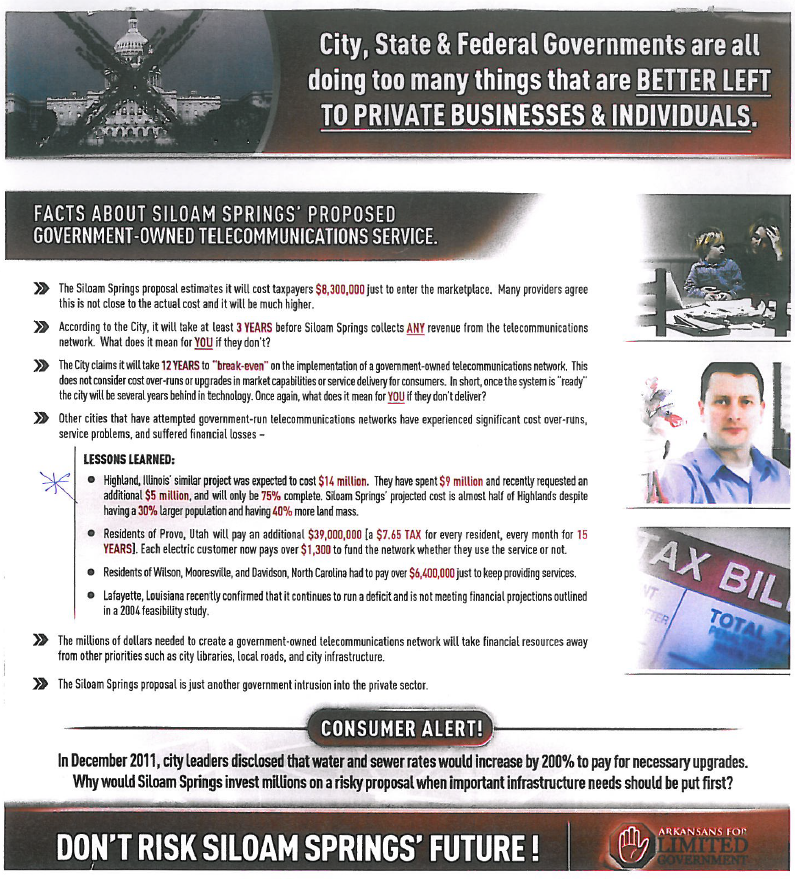
In an unsurprising result, voters in Siloam Springs, Arkansas, chose not to build their own FTTH network. The margin was 58% against, 42% for. According to that article, the opponents (bankrolled largely by national cable company Cox) outspent proponents by 3:1. We previously covered this plan and were concerned that the number one reason identified for proposing the network was to diversify revenue for the local government. Quite frankly, that is a poor reason to go head to head against massive companies like Cox and CenturyLink. The biggest benefits of community networks tend to be the hard to quantify -- aggregate savings to the community from lower prices from all providers in a competitive environment, increased economic development, better customer service from a local provider, etc. These networks are built to be financially self-sufficient, but we caution against expecting them to be a piggy bank for the local government. Unlike the successful Longmont approach, where those advocating for the community network engaged others who had been through similar fights elsewhere, it seemed like Siloam Springs preferred not to ask for help. Meanwhile, Cox tapped its nationwide resources to oppose the network, with misinformation like this: Siloam Springs Opposition Download the full size flyer here. Communities that want to build community networks should engage the wider community of community broadband supporters and be prepared for flyers like this one. And when seeking local support, make sure you find messages that resonate. Make sure you read about the grassroots movement in Lafayette in our recent report or how Chattanooga had hundreds of community meetings to explain its plan. These networks face stiff opposition from entrenched opponents that want to be the sole gatekeepers to the Internet -- ensuring a real choice means doing real organizing.

How Chattanooga, Bristol, and Lafayette Built the Best Broadband in America

Image
We are thrilled to finally unveil our latest white paper: Broadband At the Speed of Light: How Three Communities Built Next-Generation Networks. This report was a joint effort of the Institute for Local Self-Reliance and the Benton Foundation. We have chronicled how Bristol's BVU Authority, Chattanooga's EPB, and Lafayette's LUS built some of the most impressive broadband networks in the nation. The paper presents three case studies and then draws lessons from their common experiences to offer advice to other communities. Here is the press release: The fastest networks in the nation are built by local governments, a new report by the Institute for Local Self-Reliance and Benton Foundation reveals Chattanooga, Tennessee, is well known for being the first community with citywide access to a “gig,” or the fastest residential connections to the Internet available nationally. Less known are Bristol, Virginia, and Lafayette, Louisiana – both of which now also offer a gigabit throughout the community. A new report just released by the Institute for Local Self-Reliance (ILSR) and the Benton Foundation explains how these communities have built some of the best broadband networks in the nation. Broadband At the Speed of Light: How Three Communities Built Next-Generation Networks is available here. “It may surprise people that these cities in Virginia, Tennessee, and Louisiana have faster and lower cost access to the Internet than anyone in San Francisco, Seattle, or any other major city,” says Christopher Mitchell, Director of ILSR’s Telecommunications as Commons Initiative. “These publicly owned networks have each created hundreds of jobs and saved millions of dollars.” “Communities need 21st century telecommunications infrastructure to compete in the global economy,” said Charles Benton, Chairman & CEO of the Benton Foundation. “Hopefully, this report will resonate with local government officials across the country.” Mitchell is a national expert on community broadband networks and was recently named a “Top 25 Doer, Dreamer, and Driver” by Government Technology. He also regularly authors articles at MuniNetworks.org. The new report offers in-depth case studies of BVU Authority’s OptiNet in Bristol, Virginia; EPB Fiber in Chattanooga, Tennessee; and LUS Fiber in Lafayette, Louisiana.


OTI Helps Build a Wireless Network in DC Neighborhood

The Open Technology Initiative's Dispatches from the Digital Frontier blog originally published this story by Preston Rhea about his experience working with some neighbors to build their own wireless network in Mount Pleasant in Washington, DC. We hope it inspires others.

If you are not yet familiar with Mount Pleasant, here’s a chance to learn about one of DC’s most vibrant neighborhoods. It’s a diverse area not far from downtown DC, featuring a main street lined with locally-owned businesses. Many of these shops and restaurants are owned and run by the area’s large Latino community, which has long been central to shaping the neighborhood’s character. However, over the past decade rising housing prices have pushed many in the Latino community east towards Georgia Avenue.

In May, I moved to Mount Pleasant and started to learn about the area. In order to encourage community-building and local empowerment and to increase local information-sharing and opportunities for civic engagement, I decided to use skills and ideas garnered from my work at the Open Technology Initiative to organize a community wireless network. Despite my excitement to get started, I didn’t want to rush in without first connecting with the people, the histories, networks, skill sets, and local knowledge already present in the community.

My first step was technical: with the help of my OTI colleagues, I specified the hardware for the network and prepared the technology for installation. The first-stage plan was to install a few “nodes” (wireless access points) in order to establish the form and structure of the mesh network - open, interoperable, unfiltered, and decentralized. Then, at the Mount Pleasant Farmers Market, I handed out fliers directing people to an online survey gauging their interest in organizing a community wireless network in the neighborhood. I also posted a few of the fliers in local businesses on Mount Pleasant Street. But I needed to go deeper in order to really connect with the existing social networks of people and projects.

Resource: Useful Flyers in Georgia Legislation

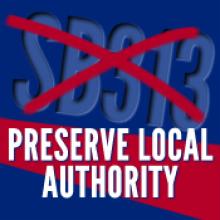
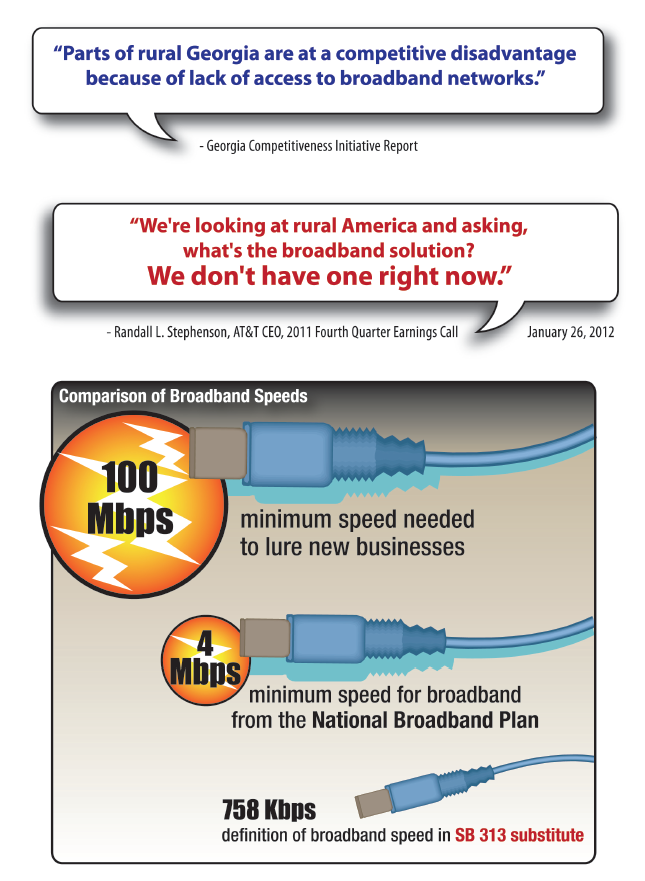
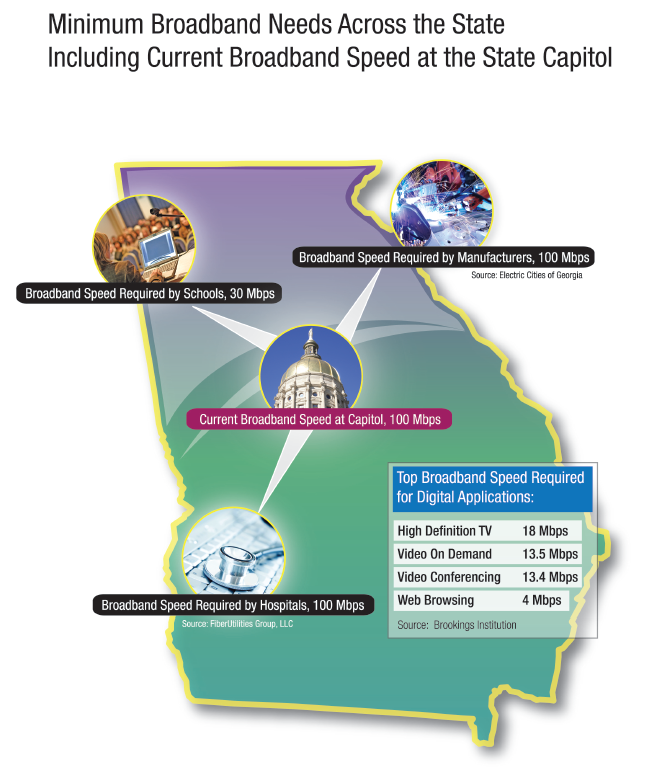
After AT&T began pushing a bill in Georgia to revoke local authority to decide to build a publicly owned broadband network, the Georgia Municipal Assocation (GMA) and the SouthEast Assocation of Telecommunications Officers and Advisors began reaching out to Georgia's legislators to explain how the private sector has left serious gaps in broadband coverage, which stopped the bill. Below are two flyers they report being particularly helpful. GMA, SEATOA, and the Institute for Local Self-Reliance are among the vast majority that believe communities should decide locally if a community network makes sense to bring next-generation connections to local businesses and residents. Georgia is a conservative state and AT&T had enlisted the support of the Senate Majority Leader in pushing their anti-competition broadband bill. Unfortunately for AT&T, their CEO was too candid on calls with Wall Street, contradicting AT&T's lobbyist talking points in Georgia. Georgia Flyer1 Note, that AT&T was originally trying to define broadband at the absurd 200kbps level but a substitute bill would have bumped it up to a still-too-low 768kbps, which is referenced above. The other flyer that apparently made a difference with legislators is here: Georgia Flyer2 Rememeber that elected officials often think of broadband in binary terms. You have it or you don't. In their mind, if you have options aside from dial-up, the problem is solved. These are people that often do not know what is needed to attract economic development, work efficiently from home, or successfully compete remote education courses.
Smart Conduit Considerations for Forward-Looking Communities

Local governments are often looking for low-risk options for expanding broadband access to residents and local businesses. There are not many. Seattle put some extra conduit in the ground as a part of a different project that was tearing up the streets but Comcast was the only provider interested. The problem with a haphazard program of putting conduit in the ground is that while it benefits existing providers, it does very little to help new entrants. And conduit is inherently limited -- only a few providers can benefit from it and when used up, there is no space for more providers. In short, more conduit may slightly improve the status quo but it does little to get us to a future where residents and local businesses have a variety of choices from service providers offering fast, reliable, and affordable access to the Internet. Smart conduit policy can lay the groundwork for lowering the cost of a community network, which can get us where we want to be. It may take time, but will create benefits far more rapidly than private providers will be building next-generation networks in most of our communities. John Brown, a friend from Albuquerque, New Mexico, has offered some tips for communities that want to develop smart conduit policies. Brown runs CityLink Telecommunications, an impressive privately owned, open access, FTTH network that connects residents, businesses, schools, muni buildings, etc. We tend not to support privately owned networks because for all the great work a companiy like CityLink Fiber does, one does not know who will own it in 5, 10, or 20 years. However, we recognize that CityLink Fiber is a far better partner for communities than the vast majority of companies in this space. The following comments are taken from an email he shared with me and is permitting me to republish. Direct quotes are indented and the rest is paraphrased. Not all conduit is created equal. A 2 inch pipe will be sufficient for perhaps 2 providers. If conduit does not have inter-duct, it is much harder for multiple providers to share it. Inter-duct creates channels within the conduit that allows a provider to pull its fiber cables through without disturbing other cables in the conduit.

Community Broadband: Bridging the Digital Divide

Image
In 2005, when Lafayette, Louisiana was considering a community broadband network, it created an excellent report discussing how a publicly owned network can work to improve digital inclusion. Six years later, the report remains well worth reading. Public ownership provides more tools for making sure advances in communications technology benefits everyone. Report Overview
This Digital Divide committee is motivated by the vision of our community creating a future in which everyone is both able to and motivated to seize the full power of a fiber optic network. Such a network has the potential to transform the lives of citizens in ways similar to the deployment of electricity, radio, and television. In building its own fiber-optic based utility, Lafayette creates the opportunity for further unifying the people of this community and, potentially, to help bridge current divides among her citizens. A publicly owned network can lower barriers to full and equal participation by making a new and powerful communication technology available to every citizen at the lowest practical cost. In our times, the keys to participation and productivity lie in these rapidly developing technologies. We recognize that if Lafayette is to experience healthy growth and benefit fully from such new technologies, all her people will need to become equal partners in our endeavor. Lowering the barriers to such a partnership and engaging in vigorous and innovative educational efforts will help us realize our community’s full potential. Barriers preventing entry into the world of computers and the World Wide Web include low income, fear or suspicion of technology, a lack of understanding of how useful technology can be, and absence of instruction concerning computers and the Internet. In addition, transportation to places where computers and Internet access are available to the public and knowledge that such places even exist are barriers for some.

Design Principles from Virginia's nDanville Open Access Network

The nDanville network of rural southern Virginia has long been a favorite of ours (previous coverage is available here). The network has helped Danville go from being notable for having the highest unemployment rate in Virginia to being ranked as the third top digital city in the nation, according to a recent article. Danville's City Manager was honored by the Southern Piedmont Technology Council for developing the nDanville network:
Danville City Manager Joe King received the Chairman's Award for his leadership in advancing the development of a modern telecommunications infrastructure in the region, a key factor in Danville's economic development renaissance.
King had been the director of the city-owned utility when it drew up plans for a fiber-optic network to be built incrementally until it could connect every home, business, and community anchor institution in Danville Utility's territory. At the time, Danville was suffering tremendously from the loss of tobacco and textile industries.
Today, the nDanville net-work connects hundreds of businesses, has sharply re-duced costs for local gov-ernment, health care provid-ers, and local schools, and has introduced more competition into the telecommunications marketplace.
Danville Utilities has 44,000 electric meters, half of which are located in Danville (44 sq miles). The others are scattered across over 450 sq miles surrounding the city. The Southern Piedmont Technology Council serves the technology industry in Danville as well as nearby counties and another city. Even in 2004, many in Danville did not have broadband access to the Internet, as outlined in an early document explaining the network. Verizon barely offered DSL and Adelphia offered limited cable modem service. Andrew Cohill, a consultant assisting the project, has offered more background in a recent article of Broadband Communities.

Sample Community Fiber Promotional Material from Lafayette

Communities with grassroots movements investigating or encouraging community networks should take a look at the many resources the citizens of Lafayette, Louisiana, developed in their referendum fight in establishing LUS Fiber. In order to help educate the community, fiber supporters created a short newsletter (if there was more than one issue, I have not been able to locate it) with articles focusing on how the proposed publicly owned fiber-to-the-home network would create benefits in economic development, health care, and education. The newsletter is has a professional layout and comes complete with a glossary. Fiber for the Future Newsletter The newsletter also has a word from the Mayor (the inimitable Joey Durel) and quotes the Greater Lafayette Chamber of Commerce Broadband Policy. Finally, it also explains why the Lafayette Utilities System should build the network and cites successes from BVU in Bristol, Virginia. Groups that are looking for strategies or a template for a web presence should check out Lafayette Coming Together. This was the organizing site they used in building support for the network, as a complement to Lafayette Pro Fiber. Unfortunately, the Fiber Film Festival web page no longer exists, but the most popular video (Slick Sam Slade) is still around - and embedded below. An old episode examining the arguments around the network is still viewable (for Windows users) via the Louisiana Public Broadcasting archives -- look for episode #2844.