
NTIA

Content tagged with "NTIA"

Displaying 41 - 50 of 139

Four Tribal Communities in Alaska Ready To Come Out Of Connectivity Freeze

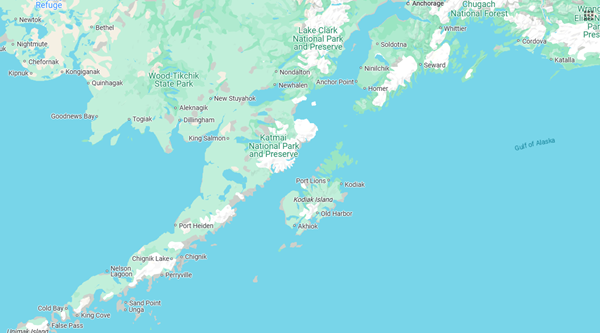
If the cloud of uncertainty suddenly hovering over federal broadband funding programs is lifted, four Tribal communities in Alaska can fully celebrate the announcement last week that state-of-the-art fiber connectivity will soon arrive at their homes on Kodiak Island just off the south coast of Alaska.

On January 16, Old Harbor Native Corporation secured a portion of $162 million in grants in the second round of funding from the Tribal Broadband Connectivity Program (TBCP) administered by NTIA.

Old Harbor Native Corporation will undertake the project, named Project Nunapet for an Alutiiq word meaning “our lands,” in partnership with Alaska Communications.

According to a recent press announcement, a 155-mile subsea cable originating at Alaska Communications’ fiber landing station in Homer will cross the Shelikof Strait to reach Kodiak Island in Ouzinkie before circling the eastern coast of the island with stops in Narrow Cape, Old Harbor, and Akhiok. Project Nunapet will also bring fiber-to-the-home connectivity to Old Harbor, Chiniak, Akhiok, and Womens Bay.

Image
Alaska Kodiak Island map

The two corporations hope that the infrastructure will serve as a foundation for future network expansion in the area.

Frontiers in Fiber Optic Sensing | Episode 107 of the Connect This! Show

Connect This! Show

Catch the latest episode of the Connect This! Show, with co-hosts Christopher Mitchell (ILSR) and Travis Carter (USI Fiber) joined by regular guests Kim McKinley (TAK Broadband) and Doug Dawson (CCG Consulting) along with special guest Paul Dickinson (Dura-line, Fiber Optic Sensing Association, and Aii) to talk about the future of fiber optic sensing to do everything from avoid fiber cuts from construction equipment to monitor traffic to detect pipeline leakages. They also hit a grab-bag of other topics, including:

Join us live on February 7th at 2pm ET, or listen afterwards wherever you get your podcasts.

Email us at [email protected] with feedback and ideas for the show.

Subscribe to the show using this feed or find it on the Connect This! page, and watch on LinkedIn, on YouTube Live, on Facebook live, or below.


This show was more technical than is usual, even for Connect This!. See transcript below. Some additional resources mentioned in the episode include:

Smarter Infrastructure through Distributed Fiber Optic Sensing with Paul Dickinson

Fiber Broadband Association Awards Concepts that Advance Subscriber Experience at Fiber Connect 2024

G.652.D vs G.657.A1 vs G.657.A2 Fiber Optic Cabling: What’s the Difference?

A New Class of Sensing Products for DAS – AcoustiSens® Wideband Vibration Sensor Fibers and Cables

AcoustiSens® Wideband Vibration Sensor Fiber

The Alliance for Innovation and Infrastructure

Common Ground Alliance

Fiber Deployment Cost Annual Report, 2024

Meet the crypto officers: How the internet is controlled by 14 people with seven secret keys

Monopoly ISPs vs. the States | Episode 106 of the Connect This! Show

Connect This! Show

Catch the latest episode of the Connect This! Show, with co-hosts Christopher Mitchell (ILSR) and Travis Carter (USI Fiber) joined by regular guests Kim McKinley (TAK Broadband) and Doug Dawson (CCG Consulting) and special guests Sascha Meinrath (X-Lab) and Robert Boyle (Planet Networks) to talk about all the recent broadband news that's fit to print. On tap:

Join us live on January 24th at 2pm ET, or listen afterwards wherever you get your podcasts.

Join for the next show on February 7th at 2pm ET.

Email us at [email protected] with feedback and ideas for the show.

Subscribe to the show using this feed or find it on the Connect This! page, and watch on LinkedIn, on YouTube Live, on Facebook live, or below.

New Ideas in Competition Policy

Image
VPA report

A new report out from Vanderbilt University's Policy Accelerator re-emphasizes some of the important steps federal government agencies could take to make sure that upcoming Broadband Equity, Access, and Deployment (BEAD) funding is used as efficiently and equitably as possible. 

New Ideas in Competition Policy covers ground beyond the broadband space - including agriculture, commerce, energy, and more - but authors Ramsay Eyre and Ganesh Sitaraman hit again some of the important and well-trod ground. Among them, they argue that:

  1. NTIA should remove the letter of credit (LOC) requirement for participating in BEAD entirely, as it is a barrier for new and smaller entrants.
  2. NTIA should consider all Rural Digital Opportunity Fund (RDOF) areas as eligible for BEAD funding, given the number and level of defaulting the program as seen.
  3. NTIA should effect a rulemaking that takes a strong stance against state municipal preemption laws, either by refusing final proposals from those states or issue a rule preempting these laws itself.

The Vanderbilt Policy Accelerator conducts research and writes about markets of all different shapes around the United States. 

Read New Ideas in Competition Policy.

North Dakota Nearing 100 Percent Fiber Connectivity

With the incoming Trump administration and the ascendance of GOP leaders taking aim at key aspects of broadband expansion initiatives embedded in the Bipartisan Infrastructure Law, industry insiders expect the $42.5 billion Broadband Equity, Access, and Deployment (BEAD) program to likely get a major facelift in the coming months.

GOP Senate leaders have signaled they will push for BEAD to be scaled back or reconfigured.

One way they may do that is to remove the law’s preference for funding fiber network deployments and create a path for subsidizing Musk’s satellite Internet company, arguing that Starlink would be a more cost-effective solution to bring broadband to rural America.

Late last week, in fact, NTIA released its “Final Guidance for BEAD Funding of Alternative Broadband Technology.” And while the updated guidelines still considers fiber deployments as “priority broadband projects,” the agency administering the BEAD program now explicitly says that states can award “LEO Capacity Subgrants.”

B4DE Offers Insights For Navigating Broadband Political Divide In Nation's Capital

Digital inclusion advocates are bracing themselves for an uncertain year ahead.

As the incoming GOP regime takes aim at key aspects of the Digital Equity Act (DEA) and the BEAD (Broadband, Equity, Access, And Deployment) program, those working to bridge the digital divide have more questions than answers just as states are preparing to dole out federal grant money yet to be awarded to grant recipients.

One major question looming over both BEAD and the Digital Equity Act is whether a new Congress can leverage the Congressional Review Act – a tool Congress can use to overturn certain federal agency actions – to undermine the 2021 bipartisan infrastructure law behind the national “Internet For All” initiative.

Image
Building for Digital Equity

“The Congressional Review Act only applies to things that were adopted in the last six months. I know that there were a number of things the FCC did to make sure that they were done and would be non-reviewable under the CRA and I suspect NTIA did that as well (with BEAD),” former FCC Chief of Staff and now New Street Research policy advisor Blair Levin said during our final Building For Digital Equity (B4DE) livestream of 2024.

Minnesota ISPs Say They May Not Participate In BEAD, Citing Restrictions

States are poised to receive $42.5 billion in new Broadband, Equity, Access, And Deployment (BEAD) subsidies in the new year thanks to the 2021 infrastructure bill. But a growing number of ISPs in states like Minnesota say they may not participate in this latest round of federal grants, citing bureaucracy and burdensome restrictions.

While American Rescue Plan Act (ARPA) grants came with significant leeway as to how grant money could be spent, BEAD grants, overseen by the National Telecommunications And Information Administration (NTIA), come with numerous requirements related to lien mandates, low-cost service obligations, and deployment technology.

Those restrictions serve a purpose in the wake of the boondoggle that was the FCC’s Rural Digital Opportunity Fund, which resulted in a massive number of defaulting bids and unfinished projects because companies bidding on projects lacked the competency or financing to finish their awarded projects. It’s a major reason the NTIA was put in charge of BEAD.

But many Minnesota ISPs are still bristling at BEAD’s requirements, according to Brent Christensen, president and CEO of the Minnesota Telecom Alliance, an organization that represents 70 ISPs across the North Star State.

Image
Cost accounting

“My members are telling me they’re not going to participate,” Christensen recently told MinnPost when asked about the $42.45 billion broadband program. “The way that BEAD is structured. I don’t know how anybody’s going to participate.”

LUS Fiber Brings Popular Broadband Service Into Church Point, Louisiana

Lafayette Utilities System’s LUS Fiber subsidiary is taking the show on the road. Louisiana’s only publicly-owned broadband provider says it’s expanding access into nearby Church Point, bringing affordable fiber access to the town of nearly 4,200 residents.

LUS Fiber was awarded a $21 million grant to expand fiber outside of Lafayette as part of the U.S. Department of Commerce’s National Telecommunications and Information Administration’s (NTIA) Broadband Infrastructure Program (BIP).

“This expansion not only improves the lives of our residents but also enhances opportunities for businesses, education, and healthcare in our town,” Church Point Mayor Ryan ‘Spanky’ Meche said in a prepared statement. “LUS Fiber’s work here is a tremendous step forward for our community.”

Image
LUS Fiber comes to church point celebration

The expansion is part of a series of new broadband deployments that should bring more than one million feet of new fiber options to numerous new Louisiana communities, including Ville Platte, Venice, Mamou, and Basile. Church Point residents are currently able to start scheduling installations via the LUS Fiber website.

The deployments technically began earlier this year, starting with Ville Platte, which data indicates, currently has the fifth-slowest average broadband speeds in the continental U.S.

Like most of America, much of Louisiana is dominated by a handful of regional telecom monopolies that see little competitive incentive to compete on speeds, coverage, prices, or quality customer service.

The State of State Preemption: Stalled – But Moving In More Competitive Direction

As the federal government makes unprecedented investments to expand high-speed access to the Internet, unbeknownst to most outside the broadband industry is that nearly a third of the states in the U.S. have preemption laws in place that either prevent or restrict local municipalities from building and operating publicly-owned, locally-controlled networks.

Currently, there are 16 states across the U.S. (listed below) with these monopoly-protecting, anti-competition preemption laws in place.

These states maintain these laws, despite the fact that wherever municipal broadband networks or other forms of community-owned networks operate, the service they deliver residents and businesses almost always offers faster connection speeds, more reliable service, and lower prices.

In numerous cases, municipal broadband networks are able to provide low-cost or free service to low-income households even in the absence of the now expired federal Affordable Connectivity Program (ACP). And for several years in a row now, municipal networks consistently rank higher in terms of consumer satisfaction and performance in comparison to the big monopoly Internet service providers, as PCMag and Consumer Reports have documented time and time again.

Nevertheless, these preemption laws remain in 16 states, enacted at the behest of Big Cable and Telecom lobbyists, many of whom have ghost written the statutes, in an effort to protect ISP monopolies from competition.

The Infrastructure Law Was Supposed to Move the Preemption Needle But …

Nice Knowing You, BEAD, and Building Better Middle Mile Networks | Episode 101 of the Connect This! Show

Connect This! Show

Catch the latest episode of the Connect This! Show, with co-hosts Christopher Mitchell (ILSR) and Travis Carter (USI Fiber) joined by regular guests Kim McKinley (UTOPIA Fiber) and Doug Dawson (CCG Consulting) and special guest Matt Peterson (SFMIX). They talk about some of the sea changes we expect to see with the change in federal administrations with relation to BEAD before a long conversation with California-based IX builder Matt Peterson about whether we need more middle mile in this country and how we might best build it.

Join us live on November 8, at 2pm ET or listen afterwards wherever you get your podcasts.

Email us at [email protected] with feedback and ideas for the show.

Subscribe to the show using this feed or find it on the Connect This! page, and watch on LinkedIn, on YouTube Live, on Facebook live, or below.