
North Georgia Network Brings Gig to Schools, Jobs to Region - Community Broadband Bits Episode #46
DC is the place to be May 1 - 3 to see how broadband and telecommunications policy will affect education, research, and healthcare. The Schools, Health & Libraries Broadband Coalition (SHLB) annual conference will be at the Marriott Wardman Park Hotel.
The conference this year is titled "Getting to a Gigabit" and speakers will address a range of issues that will impact community anchor institutions, including E-Rate, BTOP and BIP funded projects, new programs developed to address the digital divide, state and local government broadband programs, and the Universal Services Fund.
A range of talented speakers will present, including Lawrence Strickling from the NTIA. Sunne McPeak from the California Emerging Technology Fund, Blair Levin, and a long list of other distinguished professionals in telecom.
You can still register to attend and there are also sponsorship opportunities available.
In 2010, the Iowa Communications Network received a $16.2 million Broadband Technology Opportunities Program (BTOP). The project will connect all 99 counties in the state by upgrading an existing 3,000 mile network (PDF of the project summary). The state plans to bring 10 Gbps capacity points of presence to each county and to provide 1 Gbps service to about 1,000 anchor institutions. The project will be managed by the state's Department of Transportation, which will be using fiber primarily for traffic management.
A recent Ames Tribune article reports that the local community will be partnering with the state to capitalize on the existence of the fiber for connectivity. Story County, located in the very center of the state, will soon be using several strands in the Ames area to create a loop between city and county offices. The 20-year arrangement will cost the county $15,000 and provides ample capacity to support the county's work and support future uses. From the article:
“For us this is a huge windfall,” [Story County Information Technology Director Barbara Steinback] said. “If we were to go on to a project like this on our own, it would cost between $250,000 and $300,000.”
The opportunity comes at a good time for Story County. The sheriff’s office recently began using new mobile laptops that Steinback said have been putting a strain on the network and, along with some other projects, has been resulting in some slowness issues.
“So we do need to take advantage of this opportunity,” she said.
After six years in the making, the OpenCape network is soon to be delivering services. According to a Sandwich Wicked Local article, town selectmen were informed on December 6th that the Brockton-to-Plymouth stretch of the network will be activated before the end of 2012 for testing. We brought you detailed news of the $40 million project earlier this year.
Funded with a $32 million Broadband Technology Opportunity Program (BTOP) grant and $8 million from the state, county, and private venture firm CapeNet. According to the article, 200 miles of fiber are installed and 50 are in construction or are being leased. Construction was set back when Hurrican Sandy hit the east coast. Verizon NStar crews, working on the install, were all pulled and sent to New York and New Jersey.
The news from OpenCape Chief Executive Officer Dan Vortherms was welcome. The community has been waiting patiently to tap into the improved access, economic development, and cost savings. From the article:
Selectman Frank Pannorfi said broadband might service several initiatives the town has planned for some time; alluding perhaps to South Sandwich Village and its business potential.
“We’ve been waiting for this a long time,” Pannorfi said.
A much needed data center is just beginning construction. The data center and the network will belong to the non-profit OpenCape. The purpose of the middle-mile network is to "support the economic, educational, public safety and governmental needs of the region.
The nonprofit Merit Network, Inc., of Michigan, started in 1966 as a way to provide networking help to the state's research and educational facilities across the state. Over the years, the organization has kept up with the times and is now spearheading the Rural, Education, Anchor, Community and Healthcare - Michigan Middle Mile Collaborative (REACH-3MC II) project.
The project will bring connectivity to community anchor institutions and underserved rural communities in the Upper and Lower Peninsulas. The exentive fiber project is funded with two Broadband Technologies Opportunities Program (BTOP) grants totaling $103.2 million. When completed, Upper and Lower Michigan will house an additional 2,287 miles of fiber.
Matt Roush recently reported on the project, which is well underway in Monroe County in the southern part of the state. Roush brought news about installation of telecommunications huts, an early step in expanding the network into northern Michigican. From the article:
REACH-3MC will connect 105 community anchor institutions as the network is built and will pass 900 more over time. Led by Merit Network, REACH-3MC includes sub-recipients from the private sector to make broadband readily available to households and businesses that lack adequate service options in the 52 counties that make up the project service area.
For more details on the project, including a map of the proposed routes, follow this link to a PDF of the project overview.
Citywide Internet will soon be available as a monthly service in Port Angeles on Washington's Olympic Peninsula. Mayor Cherie Kidd, Police Chief Terry Gallagher, and Councilwoman Brooke Nelson participated in a ceremonial "cable cutting" event last week. The event was to celebrate the new network, nicknamed "The Mesh." Arwyn Rice, of the Olympic Peninsula Daily News covered the event in a recent article.
According to the Metro-Net website, a $2.6 million Broadband Technology Opportunity Program (BTOP) grant funded part of the $3.7 million Wi-fi system. The network serves a dual purpose, serving public safety first responders and a separate level for public access. From the News article:
The public safety system allows police officers to track each other through the city so that they know where their backup is without having to call radio dispatchers.
They also can do their own searches on driver's licenses and license plates, check recent call histories and access reports, said Officer Erik Smith, who demonstrated the use of the system in his patrol car.
Eventually, the system will be patched into the city's security cameras and police car dashboard cameras — and potentially Port Angeles School District security cameras — so that officers will be able to monitor situations at City Pier from their cars at Lincoln Park, said Police Chief Terry Gallagher.
“The limitation is our imagination,” Gallagher said.
While access is free through October 31, OlyPen MetroNet will start offering a variety of plans on November 1. Mobile and fixed-point service will be available and range from $5.95 (some sources say $4.95) for one day to $37.95 per month. Every user will receive the first hour of Internet access free each day.
As we have often found, the spirit of collaboration and determination on a local level helped realize this possibility:
On September 19th, the Urbana Champaign Independent Media Center (UCIMC) hosted "Models for Building Local Broadband: Public, Private, Coop, Nonprofit." Christopher Mitchell was one of several panelists who discussed local broadband options and challenges.
The presentors live streamed to 138 attendees with 93 watching remotely various locations and 45 at the Media Center. If you were not able to attend or stream the live event, you can now watch the archived version. You can learn a little about the event and watch it at the UCIMC website, or watch the YouTube video here.
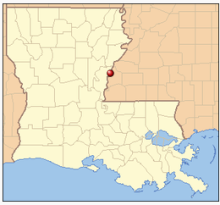
Vidalia, a Louisiana town with 4,300 residents, is a small town with a big idea. Vidalia one of the poorest regions in the country with an unemployment rate hovering around 9.4% so area leaders seek new ways to improve opportunity. The Vidalia Broadband Initiative aims to connect every home with a gig and provide 10 gig capacity for every business connection.
From a June, 2011 Natchez Democrat story:
“We realize the importance of being connected to the Internet,” [City Manager Ken Walker] said. “And the only way to really meet the need to ensure adequate Internet access is through direct fiber optics to each building.”
Along with other communities in the region, Vidalia anticipated using part of a 2010 Broadband Technology Opportunities Program (BTOP) grant for $80 million to build their network, estimated at $9 million. But the entire BTOP grant was revoked when it became apparent that the Governor's Administration intended to violate the rules of the grant by giving the new infrastructure to big carriers that had no intention of adhering to the open access rules.
Vidalia decided to forge ahead and seek funding on their own. The community is seeking out a variety of funding sources, including UDSA Rural Utility grants. In the meantime, Vidalia is taking advantage of any and all opportunities to invest in fiber assets.
The town has its own electrical utility and wants to develop a smart-grid. The City has been actively involved with negotiations with a local telephone and data company to provide service, but is planning on an open access model hoping to encourage competition. The City's long term goal is to provide fiber to each home in Vidalia and give residents a choice of providers. Right now, there are two providers in the community and service is described as "often slow and interrupted."
We have brought you news about DC-Net before and have even highlighted the community network in our report, Breaking the Broadband Monopoly. Now we want to draw your attention to some videos they have produced.
Free WiFi hotspots all over town, secure indoor WiFi for government staff, and hundreds of miles of fiber throughout town are just a few of the advances DC-Net has made toward ubiquitous and reliable connectivity. DC-Net is a tremendous example of a publicly owned network providing the highest levels of performance for its subscribers.
DC-Net has released a video highlighting their advancements in DC and how their work has positively impacted the community.
The second video is from Don Johnson, Director of DC-Net, presenting some info on DC Community Access Network (DC-CAN) to a Ward 5 audience. DC-CAN is an initiative to bring broadband to the underserved areas in DC with middle-mile connections. From the DC-CAN website:
The DC Community Access Network (DC-CAN) will bring affordable, value-added broadband services to over 250 health, educational, public safety, and other community anchor institutions primarily in broadband underserved areas of the District. It also creates a high speed middle mile network for last mile service providers to deliver affordable broadband access to residents and businesses in underserved areas.
DC-CAN already has 67 miles of fiber laid as a backbone and four city MegaPOP sites are now connected to the 100G backbone. From Ciena, one of DC-Net's private sector partners:
With this new infrastructure in place, DC-Net has already connected 49 new Community Anchor Institutions to the network and upgraded 52 existing anchor sites. Community anchors include charter schools, health clinics and other health care providers, community-based training programs, after school and early childhood development programs, libraries, and public safety sites.