
affordability

Content tagged with "affordability"

Related Topics
Displaying 101 - 110 of 276

Indio, California Gets $9 Million Grant For Fiber Network

Indio, California has been awarded a $9 million state grant the city will use to expand affordable broadband access. The grant award was made possible by California’s $2 billion Last Mile Federal Funding Account Grant Program (FFA), part of a broader $6 billion California “Broadband For All” initiative aimed at bridging the digital divide in the Golden State.

According to Indio officials and the now-finalized CPUC award, Indio – an incorporated city located in Riverside County and home to 92,000 residents – will receive $8.9 million to deliver gigabit-capable fiber to 479 unserved locations and an estimated 3,632 unserved local residents.

“We are still in the design phase and should release an RFP within the next couple of months for the actual build,” Indio Director of Information Technology Ian Cozens told ILSR.

Image
Indio CA fiber map

With 75 percent of the project’s initial target area classified as low-income, city leaders say residents can expect static pricing for at least ten years. The city will also ensure there’s a low-cost option for low-income families left adrift after House and Senate Republicans blocked the funding renewal of the federal Affordable Connectivity Program (ACP).

City officials, however, do not intend to stop there. The plan is to build a citywide fiber network, the full cost of which is estimated to be $35.2 million.

Plumas-Sierra Telecom Nabs $67 Million In FFA Grants Across Four California Counties

A California telecom and electrical cooperative says the state’s ongoing last-mile broadband grant program will help deploy affordable fiber to multiple communities across four heavily unserved and underserved California counties.

Back in July, Imperial, Lassen, and Plumas Counties were the latest to receive broadband expansion grants courtesy of California’s $2 billion Last Mile Federal Funding Account Grant Program (FFA). The program, part of a broader $6 billion California “Broadband For All” initiative, is aimed at boosting broadband competition and driving down costs statewide.

Plumas-Sierra Telecommunications (PST), a subsidiary of Plumas-Sierras Rural Electric Cooperative (PSREC) has been a major early winner in ongoing California FFA awards. The cooperative says it’s poised to receive roughly $67 million in FFA grants to expand affordable broadband to roughly 6,600 unserved and underserved locations across Sierra, Plumas, Lassen, and Nevada Counties.

Image
Plumas-Sierra fiber install in Gold Mountain

California Public Utilities Commission (CPUC) recently announced another $86 million in FFA grants that will help fund broadband expansion across 21 different California towns, cities, counties, and tribal communities. One Plumas grant award is for a $14.5 million project to bring fiber to 834 unserved locations and 1,169 unserved residents across Plumas County.

Blueprints for BEAD: What We Can Learn From the Low-Cost Option That Was, Then Wasn’t, Then Was Again

Blueprints for BEAD is a series of short notes and analysis on nuances of BEAD that might otherwise get lost in the volume of material published on this federal funding program. Click the “Blueprints for BEAD” tag at the bottom of this story for other posts.

Few people dispute the vital importance of affordability in closing the digital divide. A 2021 Pew Research Center survey found that nearly half of all people without broadband cited cost as a barrier, with 20 percent listing cost as the primary reason for not subscribing to broadband service.

Research from EducationSuperHighway pegged that number even higher, estimating that lack of affordability explained about two thirds of the remaining digital divide in the country.

As the Broadband Equity, Access, and Deployment (BEAD) program steams ahead, questions about affordability have come to the fore. After all, deploying tens of thousands of miles of new fiber is only half the equation. BEAD will help build the physical networks necessary to connect the millions of households that still lack access to high-speed Internet service, but will it make a difference if they still can’t afford a plan? This possibility is all the more likely in light of the Affordability Connectivity Program’s (ACP) untimely demise.

Image
Empty Wallet

BEAD’s low-cost plan requirement sought to ease such concerns about affordability. To ensure households with limited financial means would actually see the benefits of the program’s massive infrastructure investment, this requirement mandated that all networks built using BEAD funds offer a low-cost plan for eligible subscribers.

North Carolina Telephone Co-op FOCUS Broadband Secures $5.4 Million For Fiber Expansion

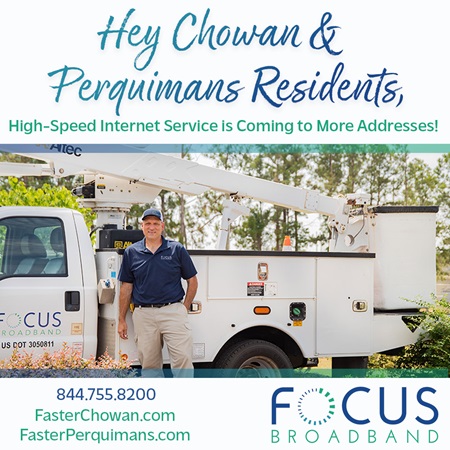
The North Carolina nonprofit telephone cooperative FOCUS Broadband nabbed $5.4 million in grant funding from the state’s Department of Information Technology (NCDIT) to extend its fiber network to 800 additional rural homes and businesses in heavily unserved portions of both Chowan and Perquimans counties.

According to a company announcement, the funding was provided by the North Carolina Completing Access To Broadband (CAB) grant program, made possible, in turn, by the 2021 federal American Rescue Plan Act (ARPA). With an end of the year obligation deadline looming, communities are mobilizing to ensure ARPA-related funds have been fully committed.

Of the total $5.4 million in total state funding, FOCUS says that $1.9 million will be used to expand high-speed Internet service to over 300 addresses in Chowan County, with $3.4 million of the funds being utilized to bring high-speed Internet service to an additional 588 addresses in Perquimans County. Currently, the cooperative provides broadband services to 71,000 residents and businesses.

Image
FOCUS Broadband fiber expansion flyer

FOCUS Broadband CEO Keith Holden indicates the cooperative will contribute approximately $1 million of its own money to the projects, with Chowan and Perquimans counties providing a combined $338,806 in additional funding.

Vermont Establishes ‘Long Drop’ Program to Help Connect Low-Income Households To Fiber Internet

Building fiber networks in sparsely populated rural communities is not cheap. And when it comes to deploying fiber drops to individual homes set back relatively far off the main roads where fiber lines pass by, it can prove to be cost prohibitive to connect those households.

But in Vermont, the push to ensure every household in the Green Mountain State has access to the gold-standard of Internet connectivity, the Vermont Community Broadband Board (VCBB) this week unanimously approved the creation of a new “low-income long and underground drop program.”

“We’re not talking about (connecting) multi-million mansions two miles off the road, but households with a true need,” VCBB Deputy Director Robert Fish tells ILSR, adding:

“What good is a fiber network if households can’t connect? This (program) is one way we can address affordability, whether it’s long aerial drops or underground.”

Re-Investing Leftover Federal Rescue Plan Funds

Approved by the VCBB at their regular meeting on September 9, the new program will use $2.5 million in leftover federal Rescue Plan funds to subsidize the cost of connecting low-income households in high-cost locations.

Image
Vermont Welcome sign

“These are Capital Project Funds (courtesy of the American Rescue Plan Act) from projects that came in under budget,” Fish explained, noting how most of the $245 million the state has received to build out broadband networks has already been awarded to the 10 Communications Union Districts (CUDs) now bringing fiber service to Vermonters long neglected by the big incumbent providers.

Washington DC Earmarks $61.3 Million In Rescue Plan Funds For Broadband, Community Improvements

Washington DC Mayor Muriel Bowser has announced that the District is poised to use $61.3 million in American Rescue Plan Act (ARPA) funds to “support the construction of community facilities” and expand affordable broadband to underserved communities.

Though details are scant, according to the District’s announcement, the funding received from the Treasury Department will be used to drive improvements for the District’s Southeast Library, the Shaw Library, Library Community Business Centers, the Anacostia Recreation Center, and the Ward 8 Senior Wellness Center. District leaders say they’re also eyeing as-yet-undefined improvements to affordable broadband access across the city of 689,000.

Image
Washington DC utility trucks

Rescue Plan recipients are facing an end-of-year deadline to both budget and obligate (contract) the federal funding for use or risk losing the funds entirely.

“The Biden-Harris Administration is making progress across the country to ensure Americans have access to the services and facilities that help them lead healthy lives and access economic opportunity,” U.S. Deputy Secretary of the Treasury Wally Adeyemo said of the funding.

“These resources will deliver critical upgrades at community facilities for residents, particularly students and seniors, that provide essential services like high-speed Internet, financial literacy, and early learning opportunities.”

Paul Bunyan Communications Payout To Members Is Not A Tall Tale

The reasons why municipalities and cooperatives build community-owned broadband networks are numerous, often fueled by years of frustration with the spotty, expensive service offered by the big monopoly incumbents.

In northern Minnesota earlier this month, we came across yet another example of why an increasing number of localities are finding publicly-owned, locally-controlled telecommunication infrastructure so appealing: the “profits” don’t get funneled into the pockets of distant shareholders but are instead reinvested back into the local economy.

Image
Paul Bunyan Communications logo

In the case of Paul Bunyan Communications, the “profits” are shared with its members.

Earlier this month, the Bemidji-based telephone cooperative – which serves 30,000 members spread across its 6,000-square-mile service area – announced it is returning over $3 million to its members this year.

Capital Credit Retirements

As the cooperative explained in a recent press release:

“Paul Bunyan Communications is a not-for-profit company that strives to provide the highest quality service at the most affordable rates. As a cooperative, membership in Paul Bunyan Communications includes the opportunity to share in the financial success of the company.”

Oakland Secures $15 Million Grant To Bring Broadband Into Underserved Neighborhoods

After two years enmeshed in the unglamorous work of coalition-building, speed test data collection, and pushing state leaders to invest in better telecommunication infrastructure across Oakland’s most disadvantaged neighborhoods, digital equity advocates in the East Bay city are finally seeing the fruits of their labor pay off.

The city was recently awarded a $15 million grant from the state’s $2 billion dollar Federal Funding Account, administered by the California Public Utilities Commission (CPUC).

The grant will fund the construction of a city-owned, open-access, hybrid middle mile/last mile fiber network – one of a half-dozen grant awards the CPUC approved in the first round of funding, most of which went to support community broadband initiatives.

Courtesy of federal Rescue Plan dollars, the infusion of cash will allow the city to deploy nearly 13 miles of new middle mile 144-count fiber, upgrade almost 12 miles of existing city-owned fiber, and add 9 miles of new last mile fiber connections. As the city’s network is built, it will be connected to the state’s new massive open access middle mile network now under construction.

The FFA grants are part of California’s larger Broadband For All initiative, a $6 billion effort aimed at seeding competition and expanding broadband access across the Golden State.

The Oakland project not only paves the way for the city to connect 14 community anchor institutions (CAIs) and nine public safety buildings, it will also expand high-speed Internet access to thousands of unserved and underserved addresses in West and East Oakland.

Fort Collins Municipal Network Celebrates 20,000 Subscriber Milestone

Fort Collins, Colorado has repeatedly won awards for being a trailblazer in the municipal fiber space, and local subscribers continue to take notice. The city-owned and operated Connexion network operation just announced it has passed the 20,000 subscriber mark, after nabbing a significant new wave of state and federal funding for expansion earlier this year.

Fort Collins began thinking about a citywide fiber deployment as early as 2012. By 2015, locals had voted to exempt the city from a counterproductive state law restricting communities from building their own broadband networks.

Image
Fort Collins 20K subscriber celebration flyer

Construction of the municipal network began in 2018. Subscribers began to connect to the network in 2019, and by 2023 fiber service was available to every last home and business in the city of 169,000.

Thanks to local leaders, city residents now have access to some of the fastest, most affordable broadband available anywhere, including symmetrical 1 gigabit per second (Gbps) service for $70 a month; symmetrical 2 Gbps service for $100 a month; and symmetrical 10 Gbps service for $200 a month. Connexion service comes with no usage caps or long-term contracts.

As part of its celebration of reaching 20,000 subscribers, Connexion officials say they will give away a year of free Internet access to 20 subscribers chosen at random. 

To mark the occasion, Chad Crager, Executive Director of Fort Collins Connexion, said:

Brownsville, Texas is Lit and Ready To Launch Into The Future

U.S. News & World Report recently ranked Brownsville, Texas as one of best places to live in the Lone Star State and as one of the most affordable places to retire.

Now – as the border city continues to make progress on an ambitious revitalization initiative – it is adding to its “best, most affordable” resume by transforming the digital landscape with a citywide fiber network to bring fast, reliable, and affordable Internet service to its nearly 200,000 residents.

The effort is being launched on the back of a city-owned middle mile fiber backbone and partnership with Lit Fiber to build out last mile service, operating as Lit Fiber BTX.

“We just lit up our first subscriber and will have 10,000 locations-passed by the end of the year,” Rene Gonzalez, Lit Fiber’s Senior Vice President of Policy and Regulatory Affairs, told ILSR this week.

“Brownsville was a place that had been neglected. But now, SpaceX is here. We are here. It’s exciting.”

The excitement was palpable last week at the BTX Demo Center in downtown Brownsville where city and Lit Fiber officials held a “special community social” to celebrate service getting turned on for the first LIT Fiber BTX subscriber and to showcase what the network will offer city residents and businesses moving forward.