
rural

Content tagged with "rural"

Related Topics
Displaying 991 - 1000 of 1068

More Consolidation, Fewer Jobs, No Duh

We watch in frustration as the federal government, dressed as Charlie Brown asks AT&T, wearing Lucy's blue dress and smiling brightly, if she really will hold the football properly this time. "Oh yes, Charlie, this time I really will create all those jobs if you let us buy T-Mobile," says AT&T Lucy. Over at HuffPo, Art Brodsky recently revisited AT&T's promises in California to create jobs, lower broadband prices, and heal the infirm if the state would just deregulate the cable video market -- which it did, 4 years ago. California upheld its end of the bargain -- wanna guess if AT&T did? Hint: Charlie Brown ended up on his back then too. The answer comes from James Weitkamp (via Art's HuffPo post), from the Communications Workers of America, a union that all too often acts in the interests of big companies like AT&T and CenturyLink rather than workers:
"AT&T and Verizon have slashed the frontline workforce, and there simply are not enough technicians available to restore service in a timely manner, nor enough customer service representatives to take customers' calls. Let me share some statistics. Since 2004, AT&T reduced its California landline frontline workforce by 40%, from about 29,900 workers to fewer than 18,000 today. The company will tell you that they need fewer wireline employees because customers have cut the cord going wireless or switched to another provider, but over this same period, AT&T access line loss has been just under nine percent nationally. I would be shocked if line loss in California corresponds to the 40 percent reduction in frontline employees. 
"Similarly, since 2006 Verizon California cut its frontline landline workforce by one-third, from more than 7,000 in 2005 to about 4,700 today. I venture that Verizon has not lost one third of its land lines in the state."
Note that AT&T, Verizon, and other massive incumbents like Comcast have been wildly profitable over this term. The same trend holds in cellular wireless - as noted by the Wall Street Journal:
The U.S. wireless industry is booming as more consumers and businesses snap up smartphones, tablet computers and billions of wireless applications.

Vermont Town First to Get Universal Access to ECFiber Community Network

The East Central Vermont Community Fiber Network has announced it will connect an entire town as its second phase. Barnard, Vermont, will be the first town to have universal access to ECFiber's next-generation network. An update on Phase 1 of this network:
Phase 1, with construction under way (see photo) and scheduled to go live in early August, brings an ultra-high-speed fiber loop from the ECFiber central office near I89 Exit 3, along VT Routes 107 and 12,  to the center of Barnard. ECFiber expects to begin connecting businesses and residents who live on this route in early August and will provide detailed subscriber information closer to that date.
ECFiber has 23 member towns, but Barnard could be the most enthusiastic. This is as grassroots as it gets:
At its June meeting, the ECFiber Governing Board authorized an initiative to extend service to the rest of Barnard town. This requires a second round of capital-raising through a similar "friends and families" offering directed specifically to residents, businesses, and others who wish to support the deployment of universal broadband in Barnard. Loredo Sola, ECF Governing Board Chair commented, "When we first took our plan to Barnard, we were inundated with residents offering to pay the entire cost of extending the Phase 1 trunk to their homes. This enthusiastic response inspired us to authorize a Barnard-only fund drive."  ECFiber will be organizing informational meetings for Barnard residents and businesses to explain the details of the plan. When sufficient funds have been committed to build out the entire town, the Barnard Local Fund will close, and construction of Phase 2 can begin.
Barnard had 94% of the community presubscribe! The success of ECFiber comes without any support of the state, which has continued to pretend wireless connections and out-of-state corporations will provide the networks necessary for the economic development needed by communities.

Rural Todd County Embarks on Fiberband Feasibility in Minnesota

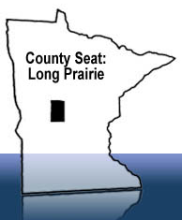
Todd County, a rural community "where the forest meets the prairie" along I-94 in the geographic center of Minnesota, is the latest of many counties to examine local solutions to their lack of affordable, fast, reliable, and certainly universal access to the Internet. This could be a blueprint for how to initiate a process to improve broadband in a rural community. Todd County is quite rural, with about 10,000 households and businesses that could be wired for service. From what I have learned, this initiative originated with a group of beef farmers who are tired of being left behind on the rural world wide wait.

Washington PUD Begins Fiber Network Stimulus Construction

Like many Washington Public Utility Districts, Pend Orielle, has connect small portions of its electric territory with an open access fiber-to-the-home. But these projects have been difficult to finance in remote (and often mountainous) areas. Pend Oreille previously built a pilot project but is now expanding its network with a stimulus grant from the feds. The work has begun and is expected to end by November 30, this year. From a previous press release:
The project will make highspeed Internet available to approximately 3,200 households, 360 business, and 24 community anchor institutions such as schools, libraries, and health care facilities. Residents and business owners will have the opportunity to subscribe to a variety of highspeed Internet services through local internet service providers.

AT&T Stumbles in Purchase of "Grassroots" Support

Public interest advocates in the telecom arena have long been frustrated with a parade of large, powerful non-profit organizations blindly supporting the positions of powerful telecom companies that just happen to make large donations to those non-profits. A story this week confirmed the worst of our suppositions: these groups often have little idea of what they are supporting. The Gay & Lesbian Alliance Against Defamation seemed pretty enthused about the AT&T T-Mobile takeover a few weeks ago. Odd for GLAAD to be excited about its constituency paying higher prices for wireless services, but whatever. Until a few days ago, when we got a look behind the scenes -- AT&T wrote their statement and it was simply signed by the organization's President -- who apparently had no idea what it was about. But he knew that AT&T gives big money to the org. He has since resigned. Around the time that we learned of the GLAAD shenanigans, we learned how super excited Cattle Ranchers are for the AT&T takeover of T-Mobile. There is absolutely no evidence to suggest this merger will do anything for rural residents but increase the prices they pay. There is no shortage of spectrum in rural areas so T-Mobile offers nothing AT&T cannot do on its own. And while the Cattle Ranchers are clamoring for higher monthly prices from AT&T, the single best hope for rapidly expanding wireless broadband access in rural areas - the unlicensed white spaces - is being quietly killed. Ironic, ain't it? I have long supported the efforts of the Media Action Grassroots, which works to organize and educate people about essential issues in telecom and media. They work with real people and represent real people's interests all the time, not just when it doesn't conflict with a big donor.

New Broadband Networks Increase Tension in Vermont

We have previously covered the East Central Vermont Fiber Network and their local frustrations at receiving little state or federal support in building a next-generation network. The feds and state government seem too heavily influenced by those with lobbying clout -- leading to subsidies to build lesser networks that local do not want. They want real Internet, not another wireless promise that fails to deliver. A story from Vermont Public Radio discusses increased tensions as the networks struggle over a few community anchor tenants to help finance the rest of the network. Here, Loredo Sola of EC Fiber explains the problem:
SoverNet will own the infrastructure but is required to provide bandwidth at wholesale cost to providers who extend the service outward. Loredo Sola is skeptical. He says he's already lost one institutional contract to the SoverNet project. He says that's forced E.C. Fiber to scrap its plans to serve smaller users in the area.
Sovernet is building a middle mile network connection community anchor institutions, but is an example of the exact wrong way to do it. Supposedly, the investment (the vast majority of which is funded by a federal stimulus award) will allow more ISPs to build more last mile networks as they have access to better backhaul. But lowering the operating cost of a network does very little to make that network affordable to build. The high up front capital costs are what limit broadband in rural (and urban too!) areas.

nDanville's Quiet Success in Rural Virginia

nDanville, the open access fiber-optic network operated by the City's public power company, has been quietly succeeding in southern Virginia. This network has already connected half of the communities health care facilities, allowing them to improve medical care with 100Mbps and gigabit circuits at affordable prices.
The medical network connects Danville Regional Medical Center and about half of the area’s medical facilities to nDanville, a fiber optic network established by the city. The high performance fiber allows real-time access to patient medical records and allows for the exchange of CT and MRI scans instantly.
Another article notes praise for the city's efforts:
"It enables us to better serve our patients by having their information available across multiple sites," Deaton [CEO of Danville Regional Medical Center] said. "We will continue to support the city's efforts in linking our medical community together, and I want to commend the city for the success of this network and making healthcare a top priority."
The Intelligent Community Forum brought the above success to my attention in awarding Danville a recipient of its 2011 Founders Awards. (Chattanooga is in the running for Intelligent Community of year and really, how could it possibly lose?) But ICF details more impressive details from nDanville: logo-icf.gif
On average, fiber connections for these facilities provide twice the bandwidth of the previous connection but at a 30% savings. More than 90% of the medical facilities (approximately 125 locations) are to be connected by December  2011, said Jason Grey, the Broadband Network Manager of Danville Utilities, who led Danville’s charge to become a recognized intelligent community by ICF. … ICF further noted that the nDanville Network provides a crucial link between the Danville Diagnostic and Imaging Center and the Danville Regional Hospital.

Rural Broadband MountainConnect in Colorado

Folks in Colorado will want to check out the 2011 Rural Broadband MountainConnect conference at Mt Princeton Springs, Nathrop, Colorado from June 12-13. Those who want to go will have to Request an Invitation (see the site for details). Some of the discussion topics include:
  • What exactly is Rural Broadband?
  • What are the real Community Benefits?
  • How do we get to Gigabit Speeds?
  • Success stories: Lessons learned
  • National Trends & Regulation
I have been assured that this is not some vendor-dominated event trying to selling you something, so if you are nearby, consider checking it out.

Satellite Internet Connection for Rural Broadband

Image
We are very fortunate that Stephen Cobb has taken the time to fully explain the realities behind satellite connections in Satellite Internet Connection for Rural Broadband: Is it a viable alternative to wired and wireless connectivity for America's rural communities? The answer is no. The technical problems (e.g. latency) inherent in a satellite connection to the Internet should disqualify it from being called "broadband." Satellite connections do not allow users to take full advantage of modern Internet applications, which is a common sense definition of the term broadband. Download the 2 MB version or the print quality 3.3 MB version (both are PDFs). RuMBA is the Rural Mobile & Broadband Alliance that was inspired by Louisa Handem, who does Rural America Radio. RuMBA published this white paper. irst of all, it isn't broadband (unless one uses the absurd definition occasionally pushed by big companies like AT&T that broadband is simply an always-on connection faster than dial-up).
At the federal government site broadband.gov, run by the FCC, you can see Satellite listed as a type of broadband, despite the fact that the two main providers of such service avoid using the word "broadband" when they are pitching their service. So why include satellite alongside DSL, cable, wireless, and fiber? The answer may lie in pro-satellite lobbying. The logic for such lobbying is simple: If it can be said that satellite is a broadband option for rural communities, as listed by the FCC, then terrestrial telcos can argue there is no compelling need to provide those communities with alternatives. 
Satellite is not a "broadband option" because it does not offer broadband in any meaningful way. Even if it did, it is absurdly expensive for what it does offer:
The HughesNet ProPlus satellite Internet service plan costs $80 per month and comes with a usage cap of 425 megabytes per day.

Satellite Access to the Internet is NOT Broadband

We have long maintained the obvious, that the technical problems (e.g. latency) inherent in a satellite connection to the Internet should disqualify it from being called "broadband." Satellite connections do not allow users to take full advantage of modern Internet applications, which is a common sense definition of the term broadband. We are very fortunate that Stephen Cobb has taken the time to fully explain the realities behind satellite connections in Satellite Internet Connection for Rural Broadband: Is it a viable alternative to wired and wireless connectivity for America's rural communities? The answer is no. Download the 2 MB version or the print quality 3.3 MB version (both are PDFs). RuMBA is the Rural Mobile & Broadband Alliance that was inspired by Louisa Handem, who does Rural America Radio. RuMBA published this white paper. I am going to excerpt a few great pieces of detail from the paper, but I cannot emphasize enough that this is a great reference with which to respond to anyone who suggests satellite should be "good enough" for rural communities. First of all, it isn't broadband (unless one uses the absurd definition occasionally pushed by big companies like AT&T that broadband is simply an always-on connection faster than dial-up).
At the federal government site broadband.gov, run by the FCC, you can see Satellite listed as a type of broadband, despite the fact that the two main providers of such service avoid using the word "broadband" when they are pitching their service. So why include satellite alongside DSL, cable, wireless, and fiber? The answer may lie in pro-satellite lobbying.