
rural

Content tagged with "rural"

Related Topics
Displaying 31 - 40 of 1068

BEAD Under Threat: Fiber, Satellites, and the Fight for the Future of Rural Internet Access - Episode 643 of the Community Broadband Bits Podcast

In this episode of the podcast, former BEAD Director Evan Feinman joins Christopher Mitchell and Sean Gonsalves to talk about the turmoil brewing inside the BEAD program. 

They break down what’s really behind the push for more satellite connectivity, the threat of sidelining state-led fiber projects, and the political forces stalling progress. 

With billions on the line and rural communities waiting, this episode cuts through the noise and asks: are we about to squander a once-in-a-generation opportunity?

This show is 46 minutes long and can be played on this page or via Apple Podcasts or the tool of your choice using this feed.

Transcript below.

We want your feedback and suggestions for the show-please e-mail us or leave a comment below.

Listen to other episodes or view all episodes in our index. See other podcasts from the Institute for Local Self-Reliance.

Thanks to Arne Huseby for the music. The song is Warm Duck Shuffle and is licensed under a Creative Commons Attribution (3.0) license

Chittenden County CUD Will Soon Emerge From The 'Dark Ages' with Fiber Expansion

Vermont’s Communications Union Districts (CUDs), which were the subject of a recently released ILSR report, continue to make steady inroads in delivering high-quality broadband access to long-neglected rural Vermont residents.

In 2021 the Vermont legislature passed Act 71, ensuring CUDs would play a key role in expanding fiber access in the Green Mountain state. In Vermont, municipally-led CUDs – municipal entities created by two or more towns with a goal of building communication infrastructure – can legally fund needed broadband expansions through debt, grants, and donations – but not taxes, though they themselves are tax-exempt nonprofits.

The CUD model allows municipalities to bond together to tackle broadband network deployments that might otherwise prove too costly or logistically difficult if attempted alone.

The results have been transformative for state residents long underserved or completely unserved by the state’s regional incumbent monopoly providers. Locals at times have likened the transformation to moving out of the “dark ages.”

Much of Vermont’s $150 million ARPA-based broadband package went toward assisting CUDs in a state where 85 percent of municipalities and 90 percent of all underserved locations fall under an existing CUD’s jurisdiction.

Consolidated Cooperative and Delaware County, Ohio Unveil $4.9 Million Fiber Expansion

The Delaware County, Ohio Board of Commissioners and Consolidated Cooperative have announced the start of a $4.9 million joint initiative to dramatically expand affordable fiber optic broadband access to large swaths of the heavily underserved county.

According to county officials, the expansion will be funded via American Rescue Plan Act (ARPA) funds, and the deployment will target more rural communities largely in the northwestern and north-central portions of Delaware County.

“We are very pleased to see this project taking tangible form now,” Delaware County Board Of Commissioners President Barb Lewis said of the project.

“So many more families, especially in the rural parts of the county, will finally be able to connect to high-speed Internet from their homes and farms, rather than having to travel someplace else to access it.”

Consolidated Cooperative provides electricity service to 15,900 electric members via 18,000 meters across eight counties in north central Ohio. The cooperative, which won the county contract during a competitive sealed bid process last year, says it has begun network construction and plans to begin offering service to impacted areas as early as this spring.

Consolidated offers four tiers of broadband service: symmetrical 300 megabit per second (Mbps) fiber for $80 a month, symmetrical 500 Mbps fiber for $100 a month, symmetrical 1 gigabit per second (Gbps) fiber for $120 a month, and a specialized symmetrical 1 Gbps “Gamer Gig” service (featuring reduced latency and “prioritized” routing) for $140 a month.

Conexon Finishes 10th Fiber Build In Partnership With The Sac Osage Electric Cooperative

Conexon Connect, the ISP arm of fiber broadband builder Conexon, said it has completed its tenth fiber broadband deployment in four years in collaboration with the Sac Osage Electric Cooperative. The network, Conexon’s second deployment in Missouri, will bring affordable fiber broadband for the first time to the cooperative’s 9,000 mostly rural members.

The 2,100-mile fiber network, located 150 miles from Conexon's Kansas City headquarters, was finished in less than three years, and dramatically improves broadband availability across nine rural Missouri counties.

"The demonstration of what we can achieve together through hard work and partnership keeps us moving forward in our commitment to advancing connectivity across rural America," Conexon Co-CEO Randy Klindt said of the company’s latest deployment.

Image
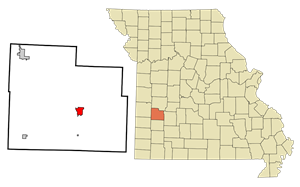
A section in the southwest corner of Missouri is highlighted in orange to show where Cedar County is

Conexon was initially known for rural fiber-optic network design and construction, but launched its own last mile public facing retail ISP, Conexon Connect, in 2021.

It now directly provides last mile access via networks across Arizona, Colorado, Florida, Georgia, Illinois, Kentucky, Louisiana, Mississippi and Missouri, and has seen its business boom thanks to widespread nationwide partnerships with U.S. cooperatives and federal grants.

Jemez Pueblo Tribe Seeks ‘Light,’ Fiber Knowledge To Advance Digital Sovereignty

For Angela Diahkah, what started as a self-described “side hustle” is now her full-time job.

Diahkah – or “Ange,” as she sometimes goes by – is five years into serving as Network Operations Supervisor and Digital Navigator Program Manager for JNET, the Tribally-owned broadband provider for the Pueblo of Jemez.

Just 50 miles northwest of Albuquerque, Angela leads the charge in building a new fiber network, the gold-standard of Internet connectivity, that once complete will serve her community (one of the 19 Pueblos in New Mexico).

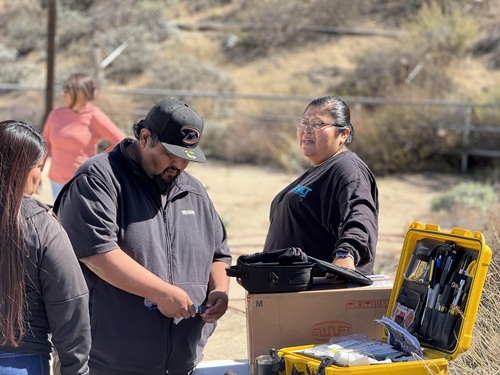
Last week, she was at the 17th Tribal Broadband Bootcamp (TBB) in Aguana, California in the hills above Temecula Valley, along with a half dozen JNET technicians-in-training and JNET Director Kevin Shendo. The 30 or so other TBB participants – representing broadband leaders from several other federally-recognized Tribes – were also there for the three-day immersive learning experience focused on building and operating Tribal Internet networks.

Held in different tribal regions several times a year since the initiative began in 2021, this most recent bootcamp was back at TBB co-founder Matthew Rantanen’s “RantanenTown Ranch.”

Image
Angela looks at her crew explore fiber splicing equipment on a table outdoors on RantenenTown Ranch in the desert-like foothills of Anguana, Califonia

“We're basically trying to find a light in a dark tunnel and just work with what’s best for us,” Angela told ILSR in describing why she and her JNET crew had come, just as they are in the early stages building out their own fiber-to-the-home network.

“We want to expose them to the network,” literally and figuratively, she said.

Cooperatives Playing Major Role In Arkansas’ ARPA-Fueled Fiber Expansion

The Arkansas State Broadband Office – ARConnect – continues to leverage American Rescue Plan Act (ARPA) funds to drive affordable fiber access into underserved parts of the Natural State.

Three funding rounds are winding their way to completion, as fiber connectivity is being made available to rural markets for the first time, with a heavy reliance on local cooperatives.

ARConnect officials say they’ve now awarded more than $534 million in grants that will expand access to 130,000 locations in total, with most of the projects completed by 2030. Including matching funds, $1 billion is expected to be invested in total, bringing notable improvements to an estimated 875,000 Arkansas residents.

The Arkansas ARC Grant Program began in February 2021, using federal Coronavirus State and Local Fiscal Recovery Funds (SLFRF) Program funding propped up by ARPA, which both Republican Arkansas state senators voted against.

Image
American Rescue Plan Act pic

As of last December, state officials have committed all but $4,832 of its $1.57 billion in ARPA funds to active projects in the state.

ARC Round 1 doled out $118 million in grants to 76 projects, expanding access to approximately 55,700 homes, businesses, and community anchor institutions.

ARC Round 2 awarded $274.4 million in grants to 87 different projects, impacting approximately 54,000 homes, businesses, and community anchor institutions.

Volunteer Energy Cooperative Expands Fiber In Tennessee On Back Of ARPA Grant

The Volunteer Energy Cooperative (VEC) in Birchwood Tennessee says it’s leveraging American Rescue Plan Act (ARPA) funding to expand affordable fiber access into long underserved parts of The Volunteer State.

Roughly 10 percent of residents in the unincorporated areas of Hamilton County, Tennessee lack access to broadband. A problem that’s probably worse given the notorious unreliability of FCC broadband mapping data. Tennessee is currently ranked 24th in the nation in terms of broadband availability, affordability, and speed.

Enter VEC, which has begun construction on a new fiber expansion plan that will bring affordable fiber access to nearly 300 homes in Birchwood thanks to a $615,617 ARPA grant.

Image
Volunteer Energy Coop lineman reaching for wire

“Whether it’s educational, or if it’s business, even this community center that we’re in today, if you’re going to have opportunities for the youth, you have to connect to the internet,” VEC CEO Dion Cooper tells local CBS affiliate WDEF 12.

VEC’s fiber expansion will extend fiber-optic lines along Birchwood Pike from Highway 60 to David Hill Road, later expanding westward toward the Tennessee River and eastward along Grasshopper Road to Pierce Road. In addition to the fiber expansion, Hamilton County recently secured a state grant to develop a modern computer lab at the Birchwood Community Center.

Construction Begins On Fidium’s Lincoln County, Maine Fiber Expansion

The Maine Connectivity Authority (MCA) continues to make steady inroads bridging the state’s long standing digital divide on the back of federal grants and a public private-partnership between Lincoln County and Consolidated Communications (Fidum Fiber).

In January, Fidium announced it was beginning construction on the project, which should bring fiber connectivity to 8,300 homes and businesses.

The first phase of the project aims to expand fiber to the towns of Wiscasset, Whitefield, and Edgecomb, as well as parts of Alna and Westport Island. Partial Route 1 closures were required due to fiber installs.

Ultimately, the partnership is also intended to bring fiber access for the first time to Alna, Boothbay, Boothbay Harbor, Dresden, Nobleboro, Southport, Waldoboro, and Woolwich, in neighboring Sagadahoc County.

Image
lincoln county ME map

This project is being paid for by American Rescue Plan Act (ARPA) funds, an MCA grant, and Consolidated Communications (Fidium Fiber). The funding was part of a broader $9.6 million in grant awards announced by the MCA last August, intended to bring fiber to 15,561 homes and businesses across 12 widely underserved communities in the Pine Tree state.

Lincoln County in particular saw a grant award of $6 million matched by $24.3 million in private and public investment – including county ARPA funds – which the MCA notes was the “highest percentage of financial commitment from any public-private partnership awarded through an MCA program to date.”

“We're thrilled to partner with Fidium to expand their fiber broadband network to our community,” Wiscasset Town Manager Dennis Simmons said of the opportunity.

Cold Springs Rancheria Joins Seven Tribes and More Than 20 Public Entities as California Broadband Funding Winners

As federal broadband funding sources face continued uncertainty, California’s massive last-mile grant program continues to plow ahead, looking increasingly like a vital lifeline for communities hoping to ensure that every individual has access to robust, reliable, and affordable Internet access.

Cold Springs Rancheria of Mono Indians was among the applicants celebrating a winning grant application in the California Public Utilities Commission’s (CPUC) latest Federal Funding Account (FFA) announcement.

The grant marks the eighth successful application by a Tribal nation in this program and another in a long list of community-focused projects led by public entities like municipalities.

Image
Cold Springs Rancheria Tribe logo

Cold Spring Rancheria’s application, for up to $1.5 million dollars, will bring much-needed connectivity to a total of 94 units, including 5 anchor institutions, on the Reservation in Fresno County with 100 percent of the households served by this project qualifying as low-income.

Many residents on the Reservation lack access to a terrestrial Internet service offering speeds anywhere near the definition of broadband (100 Mbps Upload/20 Mbps Download). Those that do have access to purported “broadband” speeds must rely on out-of-date DSL connections and, as a result, struggle with slow and spotty connections.

After working for several years to find a viable solution to these connectivity challenges, Tribal officials can now look forward to the fastest and most reliable Internet access via fiber-to-the-home technology.

The new, Tribally-owned broadband network will help the Tribe achieve universal access.

New Policy Brief: Dollars and Sense In Debate Over BEAD Fiber Rules

The $42.5 billion federal Broadband Equity, Access, and Deployment (BEAD) grant program is facing what appears to be a significant overhaul as the new administration aims to alter, among other things, one of program’s key tenets: a preference for building fiber networks.

Meanwhile, a new ILSR policy brief – “BEAD Should Continue to Prioritize Fiber Internet Network Investments” – makes the case for why “these changes would repeat past policy mistakes and waste billions of dollars while delivering subpar Internet access to rural families at much higher prices.”

The brief then describes why fiber networks should continue to be prioritized:

“In designing BEAD, Congress recognized that it was foolish to spend thousands of dollars per home every 5-10 years to deliver obsolete connections and chose instead to build fiber optic networks that will last generations – ultimately both saving taxpayer dollars and delivering an equitable Internet access option to millions of rural homes.”

And while the policy brief points to important long-term consequences that should be considered to ensure rule changes don’t squander a “generational investment” by building “something more temporary and inferior to the services found on every street in urban and suburban areas,” the brief does not argue that other technologies should not be a part of the mix.

“To be clear, BEAD’s priority for fiber does not bar the use of other technologies when appropriate. In cases where the cost of fiber is simply too great, other technologies are on the table – likely wireless options of both terrestrial and low-earth orbit,” the brief says.