
open access

Content tagged with "open access"

Displaying 81 - 90 of 489

Holland, Michigan Votes to Build Citywide Open Access Fiber Network

In early August, the city of Holland, Michigan (pop. 33,000) voted to fund the construction of a citywide, open access fiber-to-the-home (FTTH) network. It’s the culmination of almost a decade of consideration, education, planning, and success, and builds on decades of work by the Holland Board of Public Works (HBPW) and city officials to build and maintain resilient essential infrastructure for its citizens. It also signals the work the community has done to listen to local residents, community anchor institutions, and the business owners in pushing for an investment that will benefit every premises equally and ensure fast, affordable Internet access is universally available for decades down the road.

In the Works
Image

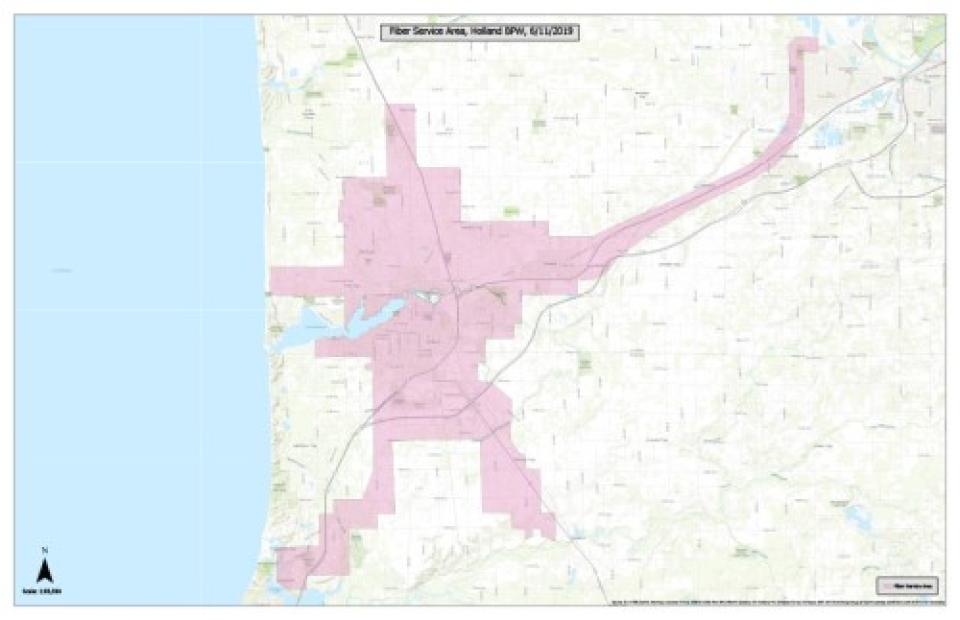
Holland has been formally exploring the need for better local connectivity since before 2016. It has been aided in this effort by the fact that the Holland Board of Public Works (HBPW), which already provides electricity, water, and waste water services, has been maintaining a small institutional fiber network that it first installed in 1992 (see current coverage in map, right, current as of May 2019).

Rescue Plan Dollars Resuscitate an Open Access Fiber Network Buildout in Erie County, New York

Plans for an open access fiber backbone in Erie County, New York (pop. 951,000) are being readjusted after having been stymied by the pandemic. The county will use Rescue Plan funding to cover the cost of building the backbone, which will be owned by the county and operated by ErieNet, a nonprofit local development corporation. The backbone will make connectivity directly available to anchor institutions and enterprise businesses, but the county hopes the project will draw private providers to build out last-mile infrastructure to residents. With the new fiber ring, Erie County seeks to increase both broadband availability and competition in the area. 

The project began in spring 2019, when the county announced its plan for a $20 million open access network, which at that time it was looking to have up and running before 2022. ErieNet’s original plan was a response to an acute need for connectivity among the county’s southern and eastern rural towns, as well as much of Buffalo – despite these areas’ proximity to relatively well-connected wealthier suburban communities nearby. The county is for the most part monopoly domain, served by Charter Spectrum, Lumen (formerly CenturyLink), and in some small patches, Verizon. Verizon has cherry picked wealthier areas like Kenmore, Williamsville, and Amherst, as well as a few blocks in Buffalo by the company’s hub there, but has not found the rural or high-density and low-income areas profitable enough to build to. Relatively smaller providers like Crown Castle and FirstLight have also made infrastructure investments in parts of the county, but do not appear to have expansion plans.

Caribou, Maine Moves Forward On Citywide Fiber Plan

Last March, Caribou, Maine city council members expressed unanimous support for a charter amendment allowing the Caribou Utilities District to establish a broadband infrastructure division. It was just the latest move in a multi-year quest by the city to finally deliver affordable fiber broadband access to every last city resident.

Groundwork for the effort was laid one year ago, when city council members approved using $159,000 in American Rescue Plan Act funds to craft a broadband engineering study with the help of Caribou’s Business Investment Group and executives from local ISP Pioneer Broadband.

Late last March, the Maine Senate unanimously approved LD 1949: “An Act to Amend the Caribou Utilities District Charter to Include Broadband Services,” which formally, as the name makes clear, provided approval for the CUD to expand its services into broadband access.

Now the hard work begins. 

The plan as it currently stands is to build an open-access dark fiber network to every unserved Caribou residential and business location. The city would own the network, but private ISPs would provide last mile service to customers. 

Image

“We would like two or more ISPs to provide citizens with a choice of providers,” Hugh Kirkpatrick, Caribou Utilities District general manager, recently told the Bangor Daily News. “Competition should keep monthly prices lower and customer service higher.”

Duluth, Minnesota Ponders A Major Bet On Open Access Fiber

Like countless U.S. communities, Duluth, Minnesota (pop. 86,000) got a crash course on the importance of affordable broadband during the Covid-19 crisis. Those struggles in telecommuting and home education helped fuel a dramatic new broadband expansion plan that, if approved by the city council, could revolutionize affordable access citywide.

Last April, the Duluth Economic Development Authority signed a $65,000 contract with Entrypoint LLC to examine the possibility of building a community-owned fiber network in Duluth. The result: a new Digital Access Master Plan that proposes the city spend $7-9 million to build a pilot open access fiber network in Lincoln Park next year. 

“Reliable high-speed internet is no longer a luxury,” Duluth Mayor Emily Larson proclaimed in a recent state of the city address. “It’s an essential utility no less important to our future success than our roads, water, and electricity.”

A Pilot Project, and Potentially More

Image

Under the proposal, 75 percent of the new network would be buried fiber and 25 percent would be microtrenched along public roads. The $7 to $9 million estimated price tag is based on a 60% take rate, short-term interest at 5 percent, and a long-term interest rate of 3 percent for 20 years. The initial pilot project would bring fiber to an estimated 1,900 Duluth residents next year. 

“A 60% take-rate may seem aggressive given the strong market position of the incumbent cable operator,” the plan states. “However, the survey data suggests a strong desire among residents and businesses in Duluth to see competition, choice, better pricing, and the reliability of a fiber optic network.”

Duluth, Minnesota Ponders A Major Bet On Open Access Fiber

Like countless U.S. communities, Duluth, Minnesota (pop. 86,000) got a crash course on the importance of affordable broadband during the Covid-19 crisis. Those struggles in telecommuting and home education helped fuel a dramatic new broadband expansion plan that, if approved by the city council, could revolutionize affordable access citywide.

Last April, the Duluth Economic Development Authority signed a $65,000 contract with Entrypoint LLC to examine the possibility of building a community-owned fiber network in Duluth. The result: a new Digital Access Master Plan that proposes the city spend $7-9 million to build a pilot open access fiber network in Lincoln Park next year. 

“Reliable high-speed internet is no longer a luxury,” Duluth Mayor Emily Larson proclaimed in a recent state of the city address. “It’s an essential utility no less important to our future success than our roads, water, and electricity.”

A Pilot Project and Potentially More

Under the proposal, 75 percent of the new network would be buried fiber and 25 percent would be microtrenched along public roads. The $7 to $9 million estimated price tag is based on a 60% take rate, short-term interest at 5 percent, and a long-term interest rate of 3 percent for 20 years. The initial pilot project would bring fiber to an estimated 1,900 Duluth residents next year.

“A 60% take-rate may seem aggressive given the strong market position of the incumbent cable operator,” the plan states. “However, the survey data suggests a strong desire among residents and businesses in Duluth to see competition, choice, better pricing, and the reliability of a fiber optic network.”

Local Internet Choice BUDs in Waldo County, Maine

Spurred to action by inadequate high-speed Internet service as the pandemic besieged their communities, local officials and citizen volunteers in five rural Maine towns formed the Southwestern Waldo County Broadband Coalition (SWCBC) in an effort to bring ubiquitous and affordable broadband to its portion of Waldo County.

Two years later, the SWCBC is close to securing a major victory for local Internet choice in the face of a well-funded opposition campaign sweeping the Pine Tree State as the Big Telecom lobby and its allies try to undermine the very idea of publicly-owned, locally-controlled broadband networks in Maine and elsewhere.

The five SWCBC towns clustered about 30 miles east of Augusta – home to approximately 5,600 Mainers – are looking to create what is known as a Broadband Utility District (BUD). Four of those towns (Freedom, Liberty, Palermo, and Searsmont) recently voted in favor of establishing a BUD. Montville will be the last of the five towns to vote on whether to BUDdy up with the neighboring municipalities via an Interlocal Agreement (ILA). That vote is slated for August 23.

Similar to Communication Union Districts (CUDs) that the neighboring state of Vermont is relying on to deliver reliable and affordable broadband to its residents and businesses, Maine state law “allows towns to band together to form a community-owned organization, controlled by the municipality members but a legally separate organization - a regional non-profit utility. The BUD is allowed to incur debt that is separate from and not guaranteed by the municipalities.”

New Report: Competition is Just a Click Away

A new report out from the Copia Institute highlights the failures of the current national broadband marketplace and the value of locally-driven connectivity solutions, while underscoring once again the potential for open access models to break entrenched monopoly power. Along the way, the report offers some useful ways of reframing our understanding of how we got to a place where Internet access is dominated by just a handful of companies across the United States.

Cities as Laboratories, and the Possibilities of Open Access

“Competition is Just a Click Away” covers a lot of ground. Its author - Karl Bode - is a veteran of the broadband policy space (including writing for ILSR recently), and has long helped shed light on the consequences in increasing monopoly power in the technology landscape.

In the report, he begins by laying out the problems borne from a lack of competition, including: the consequences of regulatory capture of the FCC by huge, for-profit companies, past and continued problems with mapping, and the resulting slower speeds, lack of investment, astonishing extraction of wealth, and worrying lobbying power enjoyed by monopoly providers, all fueled by increasingly high prices and the efficient extraction of wealth from communities to further concentrate market reach and lobbying power. 

An important early point made in the report is that, in the face of these realities, over the last fifteen years local cities have become “telecom laboratories where financial and technical innovation flourish, providing blueprints federal policy makers struggling to boost affordable broadband availability would be foolish to ignore.” Chattanooga and a handful of other city-owned and operated networks illustrate the power of communities to retake control of essential infrastructure.

The community broadband movement is an organic market response to market failure and the extractive power of unchecked monopolization.

Among the many results, the report points out, is that subscribers in the United States pay higher prices for slower service than many other places. But it doesn’t have to be that way, Bode reminds us.

Our Big List of American Rescue Plan Community Broadband Projects Hits 250

It’s been nine months since we launched our Big List of American Rescue Plan Act (ARPA) Community Broadband Projects, tracking what communities are doing with the various pots of federal money intended to go towards solving local broadband challenges. Since then, we’ve recorded 250 community projects and 27 states which have announced significant broadband grant programs or disbursement for new infrastructure projects. Here we highlight some of the community projects we’re really excited about, including those that have decided to build their own networks and those building on existing projects, as well as those using ARPA dollars for open access networks, affordable connectivity, or Internet access for students. We also discuss some examples of solutions we believe are less permanent, forward-thinking, or likely to result in long-term success, including the distribution of hotspots and the allocation of funds to monopoly providers. 

What We’re Excited About: Community-Owned Networks and Open Access  

Fortunately, we’re seeing a number of communities approve plans to spend their Rescue Plan dollars on building their own municipal networks. In Lexington, Tennessee (population 8,000), the city is collaborating with Lexington Electric to bring broadband to the community. An ARPA grant is expected to cover about $20 million of the total $50 million price tag, and the city will issue bonds for the rest. If this grant is received, Henderson County (28,000) – where Lexington is located – has agreed to a 10 percent match (from $300,000 to $500,000). 

Lessons on Retail and Wholesale Broadband Models from Europe, Asia, and the U.S. - Episode 505 of the Community Broadband Bits Podcast

This week on the podcast, Christopher is joined by Benoit Felton (Independent Consultant, Diffraction Analysis). During the conversation, the two discuss the transformational potential of broadband,  international developments in fiber deployment and lessons on wholesale broadband networks. 

They talk about the state of European broadband service, what keeps customers from changing providers within open access models, and compare “open access” with “wholesale” terminology.

Benoit and Chris discuss the reality of Internet connectivity and access in China and Southeast Asian countries finding recent success in fiber deployments. Finally, they end the show with thoughts on regulatory capture and why regulation is key to the success of wholesale networks.

This show is 49 minutes long and can be played on this page or via Apple Podcasts or the tool of your choice using this feed. 

Transcript below. 

We want your feedback and suggestions for the show-please e-mail us or leave a comment below.

Listen to other episodes here or view all episodes in our index. See other podcasts from the Institute for Local Self-Reliance here.

Thanks to Arne Huseby for the music. The song is Warm Duck Shuffle and is licensed under a Creative Commons Attribution (3.0) license.

Coming: Broadband Communities Summit 2022

As states and local governments look to leverage the flood of federal funds for the creation of ubiquitous high speed Internet access, an upcoming conference promises to be packed with practical insights from leading broadband experts on how to maximize the moment.

The Broadband Communities Summit 2022, which will once again be held in Houston, Texas at the downtown Marriott Marquis from May 2nd through May 5th, is an annual four-day event. Expected to draw over 1,200 participants, this year’s theme will be “Fiber: The Lifeblood of the New Economy.” It will be organized around a multitrack agenda, numerous workshops, and showcase an exhibit hall with dozens of vendors – all of which provides attendees with valuable networking opportunities with broadband systems operators.

The agenda will offer a variety of key features, including:

  • Expanded program addressing the booming multifamily housing segment 
  • Exclusive closed-door sharing session in owners' forums 
  • Insight into evolving business models 
  • Special hot topic clusters grouped around central themes, including financing opportunities and partnership models 
  • Expert advice and strategies for using broadband to create jobs and attract and keep businesses 
  • Legal strategies symposium

The opening day of the summit kicks off with several workshops, including a Broadband Breakfast mini-conference that focuses on both private and public financing; a workshop on the “flavors of open access (networks)” moderated by our own Christopher Mitchell and UTOPIA Fiber’s Chief Marketing Officer Kim McKinley; and a workshop on how the public and private sectors can work together to develop successful broadband partnerships, presented by the Coalition for Local Internet Choice (CLIC) President Jim Baller, CTC Energy and Technology President Joanne Hovis, Executive Director of the National Digital Inclusion Alliance Angela Siefer, and Fiber Broadband Association President and CEO Gary Bolton.