
NTIA-glossary

Content tagged with "NTIA-glossary"

National Telecommunications and Information Administration - a division of the Department of Commerce in Washington, DC.
Displaying 11 - 20 of 88

Mapping Digital Sovereignty Across Indian Country As Tribal Broadband Soars

In honor of Indigenous Peoples’ Day, ILSR celebrates the growing number of Tribal nations exercising digital sovereignty by building Tribally-owned broadband networks.

Our freshly updated Indigenous Networks map and census highlights the burgeoning Tribal broadband movement, offering a window into this critical work across Indian Country.

Our updates underscore how much has changed since 2020 when ILSR first undertook research on Tribal networks. When we began tracking the development of Tribal broadband, of the 574 federally-recognized Tribes in the nation, there were about 40 Tribal networks offering service.

Four years later, there are now twice as many active networks in operation with 50 more Tribes who have secured funding to build their own networks, thanks in part to unprecedented federal investments in Tribal broadband. An additional four dozen Tribes have expressed interest in following suit, determined to close the digital divide in what has historically been the least connected part of the United States.

Image
Indigenous Networks Map

Many Tribal broadband networks that we previously identified have continued to thrive. Others have been able to upgrade their services to offer fiber service, the gold standard of Internet connectivity.

Meanwhile, a steady stream of new Tribal broadband programs have launched, with networks coming online each year and many others on the horizon, signaling a period of tremendous growth in Tribal broadband.

Maine Issues RFP For Long-Planned MOOSE Net Middle Mile Fiber Network

The Maine Connectivity Authority (MCA), Maine’s quasi-governmental public agency in charge of broadband expansion and digital equity, is seeking proposals to help design and construct a major 536-mile fiber network that should dramatically improve affordable fiber access across vast swaths of the Pine Tree State.

For several years Maine officials have proposed spending $53 million to build a major middle mile fiber network known as the Maine Online Optical Statewide Enabling Network (MOOSE Net).

The middle mile network would extend fiber into numerous underserved Maine communities, boosting broadband competition and access while hopefully lowering prices.

Last year, Maine received a $30 million grant to help fund the network’s construction, courtesy of the National Telecommunications Information Administration’s (NTIA) $980 million Enabling Middle Mile Broadband Infrastructure Program. The MCA’s proposal was one of just 32 proposals selected out of 260 applicants for federal broadband funding.

Blueprints for BEAD: What We Can Learn From the Low-Cost Option That Was, Then Wasn’t, Then Was Again

Blueprints for BEAD is a series of short notes and analysis on nuances of BEAD that might otherwise get lost in the volume of material published on this federal funding program. Click the “Blueprints for BEAD” tag at the bottom of this story for other posts.

Few people dispute the vital importance of affordability in closing the digital divide. A 2021 Pew Research Center survey found that nearly half of all people without broadband cited cost as a barrier, with 20 percent listing cost as the primary reason for not subscribing to broadband service.

Research from EducationSuperHighway pegged that number even higher, estimating that lack of affordability explained about two thirds of the remaining digital divide in the country.

As the Broadband Equity, Access, and Deployment (BEAD) program steams ahead, questions about affordability have come to the fore. After all, deploying tens of thousands of miles of new fiber is only half the equation. BEAD will help build the physical networks necessary to connect the millions of households that still lack access to high-speed Internet service, but will it make a difference if they still can’t afford a plan? This possibility is all the more likely in light of the Affordability Connectivity Program’s (ACP) untimely demise.

Image
Empty Wallet

BEAD’s low-cost plan requirement sought to ease such concerns about affordability. To ensure households with limited financial means would actually see the benefits of the program’s massive infrastructure investment, this requirement mandated that all networks built using BEAD funds offer a low-cost plan for eligible subscribers.

FCC Rejects Broader Relief For Growing List Of RDOF Defaulters

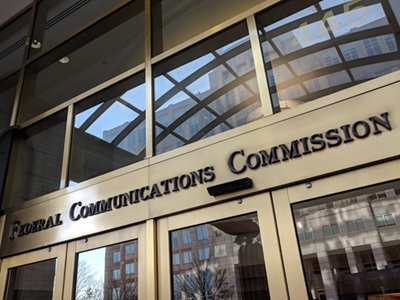
The Federal Communications Commission (FCC) says it won’t be providing broader relief for broadband operators that have defaulted on grant awards via the agency’s messy and controversial Rural Digital Opportunity Fund (RDOF) broadband subsidy program.

According to an FCC public notice, the FCC stated it found "no demonstrated need for broad relief" from provider penalties connected to either the RDOF or Connect America Fund II (CAF II) programs. It also shot down calls for a broader amnesty program for defaulters.

“Given the flexibility available under the existing default processes…we decline to provide a blanket amnesty,” the agency’s Wireline Competition Bureau said.

In a letter to the agency last February, a broad coalition of providers and consumer organizations suggested that either reduced penalties – or some sort of amnesty program – might speed up defaults, freeing areas for upcoming broadband infrastructure bill (Broadband Equity Access And Deployment, or BEAD) subsidies.

Image
FCC front entrance

The group was quick to point out that areas where RDOF and CAF II money has been committed are considered “served” for purposes of BEAD deployments, potentially boxing out many desperate U.S. communities from billions in potential funding.

“Many of the RDOF and CAF II awardees who cannot or will not deploy their networks are located in states with the greatest connectivity needs, like Missouri and Mississippi,” the authors wrote. “The Commission should not permit these unserved rural communities to face this type of double whammy and be left behind once again.”

But in its statement, the FCC insisted that changes to its approach aren’t necessary because, it claims, its existing processes are working.

CBRS Spectrum: A Potential Boon To Community Broadband

Recent federal government efforts to expand use of public Citizens Broadband Radio Service (CBRS) spectrum could be of significant help to municipalities and local communities looking to bridge the digital divide with the increasingly popular wireless technology.

CBRS spectrum refers to 150 MHz of spectrum in the 3.5 GHz band. In 2015, the FCC adopted rules for shared commercial use of the band, creating a three-tiered structure to avoid interference with military radar during collaborative use of the spectrum.

For municipalities, the spectrum has already proven to be a valuable way to deploy wireless access to the public. In Syracuse, New York, the city last fall launched a new public wireless network on the back of CRBS. In Longmont, Colorado, the St. Vrain Valley School District used CBRS to build a private LTE network connecting 4,000 students in partnership with NextLight, which operates Longmont's city-owned municipal fiber network.

Not all community deployments of CRBS have delivered satisfactory results for municipalities, however. The STEM Alliance in Westchester County, New York retired their efforts to deploy a CBRS network in Yonkers after they struggled with urban capacity constraints and low usage.

Blueprints for BEAD: Stakeholders May Use Rebuttal Power to Prevent New Errors in BEAD Maps

Blueprints for BEAD is a series of short notes and analysis on nuances of BEAD that might otherwise get lost in the volume of material published on this federal funding program. Click the “Blueprints for BEAD” tag at the bottom of this story for other posts.
 

By mid June, we will have blown past the halfway mark in the BEAD challenge process - with more than thirty states having completed their “challenge windows” and another handful set to close imminently. But the “challenge window” is only part of the overall challenge process, and there are reasons for communities to stay engaged with the process even after that window closes. Communities - don’t sleep on the rebuttal window!

Where We Sit Today

Each state must conduct a challenge process prior to opening up BEAD grants to verify that the data on the National Broadband Map is accurate. That process will have three stages: the challenge window, the rebuttal window, and the determination window. During the challenge window, eligible challengers (local and Tribal governments, nonprofits, and ISPs) can present evidence that locations are incorrectly categorized as served, underserved, or served. According to the NTIA’s Challenge Process Policy Notice, those same eligible entities can participate in the rebuttal window, where they supply evidence refuting a challenge that was made by someone else. After both of these periods are over, the state weighs all of the evidence and makes a final determination (determination window). 

Why might this rebuttal period be important for communities? In short, not all challenges are created equally. While we might primarily think of challenges that make the map more accurate, some challenges could, in fact, make the map less accurate. Some ISPs might make questionable challenges about the level of service they can or will provide.

Tribes Likely Have to Challenge RDOF And Other “Enforceable Commitments” on State BEAD Maps

As debate continues about the “collision course” between the Rural Digital Opportunity Fund (RDOF) and Broadband Equity, Access, and Deployment (BEAD) programs, it is worth highlighting the unique leverage Tribal nations have to resolve these concerns on Tribal lands as well as the challenges they may face in navigating the process.

Existing state and federal grant/loan programs are considered “enforceable commitments” under BEAD rules, making locations funded through those programs, including RDOF, ineligible for BEAD grants (unless those awards are declared to be in default). This rule prevents “duplication” of federal or state funding for broadband infrastructure build-outs.

The debate has emerged because some communities are concerned that RDOF-funded building has not yet begun and, in some cases, may never be built-out. In the meantime those locations remain ineligible for BEAD because of these enforceable commitments.

However, the rules about enforceable commitments and duplication are different on Tribal lands. When issuing its BEAD guidance, the National Telecommunications and Information Administration (NTIA) determined that federal and state grant funding for buildout on Tribal lands – like RDOF – that do not carry Tribal Government Resolutions of consent are not considered to be enforceable commitments.

USDA ReConnect Amps Up Broadband Funding to Tribal Nations

When a $25 million broadband funding award for the Colorado River Indian Tribe (CRIT) was announced in July 2023, CRIT Chairwoman Amelia Flores celebrated it as a “game changer.”

“Broadband access is essential,” Flores’s statement read, making “remote learning, telecommuting, conducting business, and simplifying staying connected” possible.

Coming amid a rolling series of announcements from the Tribal Broadband Connectivity Program – each lauding millions of dollars in broadband funding for Tribes – it would have been easy to file away CRIT’s award as another from that pathbreaking broadband funding program for Tribes.

But this was not the TBCP. Rather, CRIT was among a handful of Tribes that received substantial funding awards from another federal source that has recently stepped up their grantmaking to Tribes – the U.S. Department of Agriculture’s (USDA) ReConnect Grant Program, administered by the department’s Rural Utilities Service (RUS).

Image
USDA ReConnect Awardees logo

CRIT’s award is a helpful reminder that TBCP is not the be-all-end-all of funding for Tribal broadband. With an award cycle now open, ReConnect offers powerful tools and incentives –  including dedicated Tribal funding, 100 percent grants, and consent for any new infrastructure on sovereign lands – for Tribes looking to expand or launch broadband service.

TBCP, ReConnect, and Federal Funding for Tribal Broadband Infrastructure

Caution Ahead: RDOF and BEAD Collision Course

The Rural Digital Opportunity Fund (RDOF) was supposed to drive affordable fiber into vast swaths of long-underserved parts of rural America. And while the FCC administered program accomplished some of that goal, a multitude of problems have plagued the program since its inception, putting both current and future broadband funding opportunities at risk.

The $20.4 billion RDOF program was created in 2019 by the Trump FCC as a way to shore up affordable broadband access in traditionally unserved rural U.S. markets.

The money was to be doled out via reverse auction in several phases, with winners chosen based on having the maximum impact for minimum projected cost.

During phase one of the program, the FCC stated that 180 bidders won $9.2 billion over 10 years to provide broadband to 5.2 million locations across 49 states and the Commonwealth of the Northern Mariana Islands.

But, according to ILSR data, roughly 34 percent of census blocks that won RDOF funding–more than $3 billion in awards – are now in default. All told, 287,322 census blocks were defaulted on by more than 121 providers as of December 2023.

Image
RDOF top 10 screenshot

The defaults are only one part of a larger problem: namely that many communities bogged down in RDOF program dysfunction may risk losing out on the historic amount of federal funding to build modern broadband networks (BEAD) made possible by the 2021 bipartisan infrastructure law.

One Big Giant Mess

‘Scrappy’ Island Munis Lead Charge For Affordable Broadband In Maine

Peppered by winding country roads and remote islands, Maine exemplifies the challenges in even deployment of affordable broadband. But thanks to tenacious island communities and forward-thinking state leadership, a growing roster of community-owned broadband networks are leading the charge toward affordable access in the Pine Tree State.

Peggy Schaffer, former executive director of the state of Maine's broadband mapping and expansion effort, ConnectMaine, has played a starring role in shoring up Maine’s broadband mapping data after years of federal dysfunction.

Schaffer’s well versed in the broad array of challenges faced by remote Maine communities, and says she’s long been impressed by the “scrappy” nature of Maine’s community-owned island deployments, which have faced down and overcome no limit of onerous challenges in an  ongoing quest to finally bridge the state’s long standing digital divide.

Maine is currently ranked 49th in the U.S. in terms of resident access to gigabit-capable broadband service. Like so much of the country, the state is heavily dominated by regional monopolies that failed to uniformly deliver affordable, next-generation broadband, despite decades of federal subsidies, regulatory favors, and tax breaks.

Now local Maine communities are taking matters into their own hands, beginning with long-neglected island residents no stranger to unique logistical challenges.

Image
Islesboro Maine

‘It’s A Story Of Perseverance’