
spectrum

Content tagged with "spectrum"

Related Topics
Displaying 1 - 10 of 49

ILSR, Tribal Nations, and Other Groups Call For Tribal Licensing Window in Upcoming Spectrum Auction

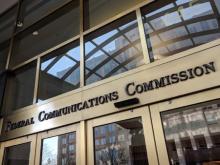
This week, the Institute for Local Self-Reliance joined with other public interest groups and  Tribal nations to urge the Federal Communications Commission (FCC)  to adopt a Tribal Licensing Window (TLW) in the upcoming auction of Upper C-Band spectrum.

“Meaningful access to licensed spectrum is critical for addressing persistent connectivity gaps on Tribal lands,” the comment states. A Tribal Licensing Window “is a targeted mechanism that helps ensure Tribes have a fair opportunity to [...] exercise self‑determination in broadband deployment.”

First instituted in radio broadcasting in 2010, the use of a Tribal licensing window gained steam in 2020 with the launch of the Tribal Priority Window in the 2.5 Ghz auction.

The 2.5 Ghz opportunity was enormously popular. As the story goes, the FCC expected something on the order of 10 applications from Tribes. Instead, more than 300 unique Tribal entities applied and were awarded licenses covering at least part of their Tribal lands.

And it has been a success. Tribes across the country have incorporated use of the spectrum into their retail broadband, public safety, and Tribal communications systems.  

ILSR and other commenters are hopeful that a Tribal Licensing Window in this auction can be even more impactful. For one, this auction pertains to greenfield spectrum - meaning that there are no existing license holders and the spectrum is available across the country - as opposed to the more limited availability in the 2.5 auction, which meant that some Tribes had no or only partial licenses available to them. This offers the chance for Tribes to access many times more spectrum capacity to address gaps in what are some of the most difficult places to build.

Secondly, during the 2.5 auction, the Commission elected to limit participation to Tribes in rural areas. Advocates hope that the FCC will instead permit all federally-recognized Tribes to participate in a C-Band Tribal Licensing Window, and will recognize Tribal trusts as well as reservation lands.

Fiber Acquisitions and the New BEAD Numbers Are In | Episode 120 of the Connect This! Show

Connect This! Show

Catch the latest episode of the Connect This! Show, with co-hosts Christopher Mitchell (ILSR) and Travis Carter joined by regular guests Kim McKinley (TAK Broadband) and Doug Dawson (CCG Consulting) to talk about all the recent broadband news that's fit to print. Topics include:

Join us live on September 5th at 2pm ET, or listen afterwards wherever you get your podcasts.

Email us at [email protected] with feedback and ideas for the show.

Subscribe to the show using this feed or find it on the Connect This! page, and watch on LinkedIn, on YouTube Live, on Facebook live, or below.

Wi-Fi Threatened: Why Congress Might Be Undermining Our Digital Future - Episode 653 of the Community Broadband Bits Podcast

In this episode of the podcast, Chris is joined by Harold Feld (Public Knowledge) and Michael Calabrese (New America’s Open Technology Institute) to unpack the growing threat to Wi-Fi and shared spectrum like CBRS. 

As Congress debates how to raise revenue through spectrum auctions, a Senate proposal could force the FCC to auction off the very spectrum Wi-Fi 7 needs to thrive—jeopardizing billions in economic value and the connected future we’ve come to depend on. 

They break down what’s at stake, how we got here, and what you can do to help protect this vital public resource.

This show is 43 minutes long and can be played on this page or via Apple Podcasts or the tool of your choice using this feed.

Transcript below.

We want your feedback and suggestions for the show-please e-mail us or leave a comment below.

Listen to other episodes or view all episodes in our index. See other podcasts from the Institute for Local Self-Reliance.

Thanks to Arne Huseby for the music. The song is Warm Duck Shuffle and is licensed under a Creative Commons Attribution (3.0) license

California's Affordable Broadband Play and Wi-Fi Under Threat | Episode 116 of the Connect This! Show

Connect This! Show

Catch the latest episode of the Connect This! Show, with co-hosts Christopher Mitchell (ILSR) and Travis Carter (USI Fiber) joined by regular guests Kim McKinley (TAK Broadband), Doug Dawson (CCG Consulting) and special guest Shayna Englin (California Community Foundation) to talk about all the recent broadband news that's fit to print. Topics include:

Join us live on June 20th at 2pm ET, or listen afterwards wherever you get your podcasts.

Email us at [email protected] with feedback and ideas for the show.

Subscribe to the show using this feed or find it on the Connect This! page, and watch on LinkedIn, on YouTube Live, on Facebook live, or below.

Dear Rural America: Starlink and Mobile Wireless Are Not Coming to Save You | Episode 102 of the Connect This! Show

Connect This! Show

Catch the latest episode of the Connect This! Show, with co-hosts Christopher Mitchell (ILSR) and Travis Carter (USI Fiber) joined by regular guests Kim McKinley (UTOPIA Fiber) and Doug Dawson (CCG Consulting) to talk about all the recent broadband news that's fit to print. 

Topics include:

Join us live on November 22, at 2pm ET or listen afterwards wherever you get your podcasts.

Watch the next show on December 6th at 2pm EST.

Email us at [email protected] with feedback and ideas for the show.

Subscribe to the show using this feed or find it on the Connect This! page, and watch on LinkedIn, on YouTube Live, on Facebook live, or below.


FWA vs. Wired Connections, Spectrum Sharing Rules, and Satellite Service | Episode 99.2 of the Connect This! Show

Connect This

Join us Thursday, August 29 at 4:30pm ET for the latest episode of the Connect This! Show. Co-hosts Christopher Mitchell and Travis Carter will be joined by regular guests Kim McKinley (UTOPIA Fiber) and Doug Dawson (CCG Consulting) to talk about the growth of the Fixed Wireless Access service marketplace by the large mobile carriers, proposed changes to CBRS spectrum sharing rules that could prove to be a boon for innovation and low-cost deployment, the bundling problem with TV and sports, and where to get your telecom news in a world where good journalism is getting gutted.

Email us at [email protected] with feedback and ideas for the show.

Subscribe to the show using this feed or find it on the Connect This! page, and watch on LinkedIn, on YouTube Live, on Facebook live, or below.

Remote video URL

Indigenous Connectivity Summit 2023 Calls to Action

Each year since its creation in 2017, the Indigenous Connectivity Summit (ICS) has convened those working on the frontlines of Tribal connectivity. It brings together decision makers and stakeholders to build support for digital sovereignty and quality, affordable connectivity for Indigenous communities. 

With less than 60 percent of those living on Tribal lands in the lower 48 states having access to basic broadband connections – as Native Nations have regularly been excluded from policy conversations around these issues – ICS has become an important voice as the federal government is finally investing billions of dollars to expand high-speed Internet access across Indian Country.

The Summit, held this year in Anchorage, Alaska, was hosted by the Indigenous Connectivity Institute, an affiliate of Connect Humanity, an organization that supports underserved communities’ pursuit of better Internet access and enhancing digital skills. The Summit has become the most prominent event of its type in North America.

Image
Indigenous Connectivity Summit 2023 Calls To Action

Summit participants don’t just convene and talk. They also agree on a series of calls-to-action for governments and other entities with an eye on promoting digital equity in Indigenous communities. Last year’s calls to action, which included messaging around inclusive Tribal consultation, government and industry accountability, Indigenous spectrum rights, and workforce development, served as the foundation for this year’s focus.

Tribal Broadband Bootcamp Comes to Saint Regis Mohawk Reservation in Northern New York

As a young woman of the Nuxalk Nation, Mallory Hans is “clearing a path for future generations.”

A 2022 graduate of the British Columbia Institute of Technology, she’s one of about 50 people hailing from various Tribes and First Nations across North America in attendance for the latest Tribal Broadband Bootcamp, a three-day intensive learning experience focused on building and running Tribal Internet networks.

Held in different tribal regions several times a year since the initiative began in 2021, this bootcamp (the eighth in an ongoing series of hands-on seminars) is being hosted at the Akwesasne Mohawk Casino Resort on the Saint Regis Mohawk reservation along the New York/Canada border.

“So far so good,” Mallory said on Day Two of the bootcamp just as the attendees broke into small groups to go through a variety of demonstration stations set up by bootcamp instructors and Tribal employees who run Mohawk Networks, which provides fiber-to-the-home (FTTH) Internet, video, and voice services across the reservation in northern New York.

Image
Mohawk Networks Truck

In continuing the driving impulse to demystify technologies and build capacity among cohorts in Tribal nations, Day Two was centered around fiber stations that included demonstrations of how network operation centers are run; one on fiber splicing; another showcasing equipment used to install fiber inside of households with representatives from Calix, and another station on the electronic equipment that measures the performance of fiber lines.

“I’m enjoying it, feeling more confident and finding out I’m capable,” said the 22 year-old, newly minted fiber technician.

Wireless Is Essential, But Fiber Remains the Future (For Now)

From the miraculous benefits of WiMax to the hype surrounding 5G, U.S. wireless companies have long promised near-Utopian levels of technological revolution.

Yet time after time these promises have fallen short, reminding a telecom sector all-too-familiar with hype that fiber optics remains, for now, the backbone of bridging the digital divide. 

From Google Fiber to Starry, numerous companies have promised to use wireless technology as a supplement or even replacement for future-proof fiber. But more often than not these promises have failed to have any meaningful impact at scale. Worse, many wireless services often fail to deliver on a routinely neglected aspect of telecom policy: affordability.

That’s not to say that wireless doesn’t have an immense, integral role to play in shoring up the nation’s broadband gaps. 5G, rural and urban small WISPs, satellite, and other wireless options are all essential in bridging the digital divide and extending access to rural communities and tribal nations (see: the FCC Tribal Priority Window and the beneficial wireless options that have emerged). 

But reality continues to demonstrate that there’s simply no substitute for the kind of high capacity, affordable fiber efforts being deployed by a steady parade of municipalities, cooperatives, and city-owned utilities. And as an historic level of federal subsidies wind their way to the states, the distinction is more important than ever. 

A Rich History Of Wishful Thinking

The industry crown for unwarranted wireless industry hype likely belongs to WiMax, a family of wireless broadband communication standards based on the IEEE 802.16 set of standards and introduced in 2001.

From 2001 to 2011, there were no shortage of missives about how the standard would revolutionize connectivity worldwide, ushering forth the golden age of affordable broadband access. There were countless warnings that marketing departments had gotten well ahead of themselves, all widely ignored by the speculative investment set.

Monopoly Pricing Disparities in LA County - Episode 523 of the Community Broadband Bits Podcast

This week on the podcast, Christopher is joined by Shayna Englin, Director of the Digital Equity Initiative at the California Community Foundation (CCF) to talk about a new report by CCF and its partners that reveals the systematic broadband cost inequities perpetuated in LA County by Charter Spectrum, the region's monopoly provider. "Sounding the Alarm," a pricing and policy impact study, shows not only that economically vulnerable households in Charter Spectrum territory pay more for slower service than those in wealthy neighborhoods, but that they are also saddled with worse contracts and regularly see fewer advertisements for the monopoly provider's lowest cost plans.

The result, Shayna shares, is that the higher poverty neighborhoods (often predominantly populated by households of color) often pay from $10 to $40/month more than low-poverty (often predominantly populated by white households) for the exact same service. Christopher and Shayne talk through the implications of these findings, and the report's call for policy changes to address Charter Spectrum's practices. They end the show by talking through some of the upcoming broadband infrastructure rules at the state level aimed at improving access and competition.

This show is 35 minutes long and can be played on this page or via Apple Podcasts or the tool of your choice using this feed

Transcript below. 

We want your feedback and suggestions for the show-please e-mail us or leave a comment below.

Listen to other episodes here or view all episodes in our index. See other podcasts from the Institute for Local Self-Reliance here.

Thanks to Arne Huseby for the music. The song is Warm Duck Shuffle and is licensed under a Creative Commons Attribution (3.0) license.