

pennsylvania

Content tagged with "pennsylvania"

Displaying 21 - 30 of 48

Outside Gettysburg, A Battle for Better Broadband
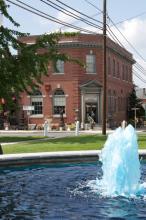
In the heart of Adams County, Pennsylvania, not far from the site of the pivotal Battle of Gettysburg and where President Abraham Lincoln later delivered his famous 1863 Gettysburg address declaring “a new birth of freedom,” plans are being drawn up in the battle for better broadband.

In the borough of New Oxford, ten miles east of the county seat (Gettysburg), the non-profit media group Community Media of South Central Pennsylvania is leading the charge to bring Fiber-to-the-Home (FTTH) victory for the approximately 102,000 residents spread out across the rural county’s 520 square miles.

But with restrictive state laws that protect incumbent providers from competition by not allowing municipalities to provide broadband service, and scarce funding for non-governmental entities to build broadband infrastructure, victory is far from certain.

Small Steps, Big Broadband Problem

The goal right now, Community Media’s Director of Operations Mark Wherley told us this week, is to secure $3 million to bring fiber access to 1,200 homes in New Oxford and Abbottstown, two of the 34 municipalities that make up Adams County, encircling Gettysburg.

Image

Working in conjunction with the Adams County Economic Alliance, Community Media is looking to tap the state’s Redevelopment Assistance Capital Program (RACP) for funds to start building the network. Through RACP, Community Media would be eligible to receive between $1 million and $5 million, provided they are able to raise a 50 percent matching contribution.

Pennsylvania Laws Aim to Expand Broadband

A pair of broadband bills in Pennsylvania (one of which has been signed into law by the governor, and the other having passed one chamber) represent a collective step forward for broadband by updating regulations and establishing a broadband grant program so as to promote network expansion in rural and unserved parts of the state of Pennsylvania.

Fewer Restrictions, More Money

The first is House Bill 2438 [pdf], which allows electric cooperatives to use existing easements for an affiliate to deliver broadband service without re-negotiating with property owners. The bill also allows cable companies to use cooperative-owned poles with permission and in accordance with existing rates and regulations. It’s designed to make it faster, cheaper, and easier to bring Internet access to rural parts of the state. 

Johnstown Area Regional Industries entrepreneurial coach Blake Fleegle said of the legislation: 

Every county in our region is looking at bringing high-dollar earners to our region. Employers are finding people can be just as effective working in Johnstown as they would be in Washington, D.C., or Pittsburgh. But they need to connect, and that's where broadband comes into play.

Chad Carrick, President and CEO of REA Energy Cooperative, likewise welcomed the legislation while emphasizing the role electric co-ops will play in the state: 

It may be hard for some to believe, but there is a good 40% of Indiana and Cambria counties that either don't have broadband Internet access or it's not up to snuff, according to our surveys to our membership.

2438 passed the state House in June, the Senate at the end of October, and was signed into law by the governor at the end of last month. 

Tri-County Rural Electric is Going Big as First Electric Cooperative To Do Fiber in Pennsylvania

When Craig Eccher, CEO Tri-County Rural Electric Cooperative, joined Christopher on the podcast last fall, he had an exciting project to talk about: the electric cooperative, after strong calls from its membership asking their utility to deliver broadband, stepped up and committed to an $80 million, 3,250-mile fiber build across the rugged terrain of rural Pennsylvania, the first leg propelled by $52.6 million in federal and state grants. Tri-Co Connections, the subsidiary building the network and serving as provider, has begun connecting residents in an aggressive plan to serve 10,000 users in the next three years. The move makes Tri-County the first electric co-op in Pennsylvania to enter the fiber space, and it's doing so in dramatic fashion.

More Humble Beginnings

Going HAM in Big Valley: How Rural Pennsylvanians Went Wireless

Tucked away in Kishacoquillas Valley (also known as Big Valley) between Stone and Jacks Mountains lies a 120-foot repurposed HAM radio tower, now the base of operations for the Rural Broadband Cooperative (RBC), a group bringing fixed wireless to a rural Pennsylvania community. RBC remains one of the many groups around the country making use of community ties to address connectivity issues in places where monopoly Internet service providers have for decades refused to invest.

More Details

RBC’s effort began in 2017. When asked about bringing high-speed broadband to the area,  Comcast replied that it would need $80,000 to lay a line half a dozen miles long, according to one founding member of RBC. So the group — among them a retired professor, a former telecommunications manager, and a musician — formed the non-profit cooperative and moved forward with a different plan.

They leased a patch of land 1,900 feet up on the side of Stone Mountain with a view over the crest and a repurposed former HAM radio tower to bring low-latency fixed wireless Internet to the area. In total, the effort cost $60,000, with the money raised by the cooperative’s initial members. The tower itself is run by solar and wind, with a battery backup. The group’s backhaul connection comes from a 100 gigabit fiber line from Keystone Initiative for Network-Based Education and Research.

Most of those living within a 15-mile radius of the tower can receive service, with those lacking direct line-of-sight still eligible so long as they can establish a connection to neighbors with two or fewer degrees of separation.

Currently, RBC offers two tiers of service: a basic connection clocking in at 5 Megabits per second (Mbps) download and 1 Mbps upload for $40/mo, or a 25/3 Mbps connection for $75/mo. New customers also pay a one-time $300 setup fee. It’s a far cry from the $100/mo for 3 Mbps connection some area residents are stuck with.

Broadband Access in Rural PA

State Legislatures 2020: Broadband Preemption Still a Risk

As state lawmakers debate in committee rooms and Capitol chambers around the country, various broadband and Internet network infrastructure bills are appearing on agendas. Some are good news for local communities interested in developing publicly owned networks while other preemption bills make projects more difficult to plan, fund, and execute. We've gathered together some notable bills from several states that merit watching - good, bad, and possibly both.

New Hampshire

For years, local communities were not allowed to bond to develop publicly owned broadband infrastructure in New Hampshire. Last year, the state adopted SB 170, which opened the door a crack so that municipalities can bond to develop infrastructure for public-private partnerships (PPPs) in "unserved" areas. This year, the New Hampshire General Court has the opportunity to push open the door a bit wider with SB 459.

SB 459 allows local communities to potentially define "unserved" areas themselves by putting more responsibility on Internet access providers. Municipalities must currently engage in a request for information process in which they must reach out to all Internet service providers operating in the community. SB 459, if adopted, would allow a community to consider areas "unserved" if a provider does not respond to such a request to clarify which premises are unserved. With the "unserved" designation, municipalities can bond to develop infrastructure to serve those premises.

The bill has bipartisan support and is scheduled for a March 11th hearing in the Senate Election Law and Municipal Affairs Committee. Read the text of SB 459 here [PDF] and follow its progress here.

Pennsylvania

Eight Pennsylvania Counties Join Forces to Improve Regional Connectivity

Local officials in eight mostly-rural counties in southwest Pennsylvania are combining efforts to determine first, what connectivity is available and, second, what can be done to improve it.

Seeking Updated Information

Westmoreland, Fayette, Cambria, Somerset, Blair, Bedford, Huntingdon, and Fulton counties have been working with consulting firm Design Nine to develop a survey to share with residents in the region. The Regional Broadband Task Force, established by the Southern Alleghenies Planning & Development Commission (SAP&DC), gathered limited data in the past. They estimate that six percent of folks in the region live in places without wired broadband Internet access.

An earlier study determined that:

...2.3 percentage of the 354,751 residents fall below that level of service [25 Mbps upload and 3 Mbps download]. About 1.6 percentage of Blair County’s 123,842 population and 2.2 percentage of Cambria County’s 134,550 population are lacking that basic level of connectivity. At the other end of the spectrum, 55.2 percentage of Fulton County’s 14,506 residents are without the service.

ARC Funds

Funding for the study comes from the Appalachian Regional Commission (ARC). The Task Force received $50,000 from ARC and the member counties contributed a matching $50,000 for the study. They began looking for a firm to help develop the study last fall and chose Design Nine hoping to determine:

  • Level of service being provided; the needs of local businesses and the reliability of the current services being provided;
  • An inventory of broadband assets already in place;
  • An assessment community broadband requirements for bandwidth needs;
  • Determine best technologies to meet the coal impacted community needs; and
  • Cost estimates for different deployment strategies

Businesses Want More in Westmoreland

Intelligencer Op-Ed: Satellite Internet access isn’t good enough for Pennsylvania

An op-ed written by Katie Kienbaum, Research Associate at ILSR, was published in The Intelligencer. Katie addresses the inadequacy of satellite Internet access and why federal funding should go to real broadband solutions. Find the full piece below: 

The digital divide is about to get much larger in rural Pennsylvania, and the federal government is bankrolling it.

Last year, the Federal Communications Commission, FCC, held a reverse auction that distributed approximately $1.5 billion to Internet access providers to connect underserved rural communities across the country. While this was an important step toward improving Internet access in many communities, in others it was a perverse step backwards — especially in Pennsylvania.

Rural communities desperately need better broadband to survive in the digital future. But instead of investing in high-quality networks that will allow rural families, farms and businesses to thrive, the FCC is burning millions on slow, unreliable satellite connectivity in Pennsylvania and 19 other states.

Nationally, the FCC awarded satellite company Viasat more than $120 million — including about $20 million for Pennsylvania — to provide internet access that most wouldn’t even consider broadband. Compared to other technologies, satellite has slower speeds, higher latency, much lower data caps and less reliability, all at higher prices. This low-quality connectivity makes it difficult to complete everyday tasks, like finding employment, accessing health care and finishing schoolwork.

It’s also all but impossible to run a business on satellite Internet access. As a result, most people resort to satellite internet access only when there are no other options available. Because of the technical limitations of satellite, it’s questionable whether Viasat will even be able to meet the modest quality standards established by the FCC.

It wasn’t inevitable that these communities got stuck with subsidized satellite. In the same auction, the FCC awarded $225 million to electric cooperatives, which will leverage the federal funding to deploy mostly gigabit-speed fiber, the fastest and most reliable broadband technology, in similarly rural areas.

Report Paints a Clearer Picture of Digital Divide in Pennsylvania

Maps produced by the Federal Communications Commission (FCC) show that the vast majority of Pennsylvanians have broadband access, but anecdotal evidence suggests otherwise. In order to get a clearer picture of on-the-ground broadband access and availability, a team from Pennsylvania State University proposed a research project for the Center for Rural Pennsylvania (CRPA) that would analyze millions of speed tests from around the state. A few staff members from the Institute for Local Self-Reliance were recruited to help with the research: Hannah Trostle and Hannah Bonestroo created the maps for the report and Christopher Mitchell contributed policy recommendations. 

Read the full report here.

A Growing Problem in Rural Counties 

The team collected more than 11 million speed tests in 2018 using the Measurement Lab (M-Lab) platform, which allows users to conduct tests on their actual broadband connections. When the M-Lab’s data was compared to the FCC’s Form 477 speed data, certain discrepancies became apparent. Researchers found that there are actually zero counties in Pennsylvania where at least 50% of residents have access to broadband. 

The findings also showed that not only are median speeds slower in rural counties compared to urban ones, but the discrepancy between FCC data and the measured speeds collected by M-Lab has grown significantly in rural counties over the last few years. This signifies a growing problem for policymakers hoping to bridge rural Pennsylvania’s digital divide. Without a clear and accurate analysis of connectivity, determining where and how funding should be used is difficult. 

Next Steps for Pennsylvania 

"Making Connections" With Next Century Cities in Pittsburgh; Still Time to Register

The Next Century Cities’ Regional Broadband Summit is quickly approaching. Summer tends to slip by without notice, but we don’t want this summer opportunity to also slip by. You can still register for the July 23 - 24 event in Pittsburgh, “Making Connections,” and touch base with elected officials from cities, towns, and counties from across the U.S. Municipal, nonprofit, and academic staff can register for free.

Monday’s Summit

On Monday, Next Centuries Cities will bring together experts in policy, broadband champions, and community leaders from all levels of government to tackle issues surrounding broadband deployment. Some of the topics they will discuss include digital equity, financing, rural connectivity, 5G, and they’ll offer success stories.

In addition to Christopher, you can expect to see presentations by:

Blair Levin, Senior Fellow from the Brookings Institution will provide the Keynote Address. Check out the agenda to see more about panel discussions and breakout sessions.

On Monday evening, attendees are invited to a welcome reception in Pittsburgh City Hall where vendors and public officials can connect in a casual setting.

Tuesday’s Speed Networking

On Tuesday, the event will focus on the Second Annual City-Vendor Connect, a “speed networking” event in which participants can speak to each other individually:

Make Connections at Next Century Cities' Pittsburgh Broadband Summit July 23 - 24

Is it summer already? If you aren’t already booked for July, Pittsburgh awaits. Next Century Cities is hosting Making Connections: A Regional Broadband Summit that will bring together experts, leaders, and champions from federal, state, and local government. Register here to sign up for the two-day event.

All-Star Lineup

In addition to our Christopher Mitchell, you will hear speakers such as:

Blair Levin, Senior Fellow from the Brookings Institution and one of people who have helped establish a vision for universal broadband in the U.S., will deliver the Keynote Address.

On July 23rd, listen to several panel presentations on successful models for deployment, digital equity, and financing. You’ll also have the chance to network with colleagues and participate in breakout sessions. There will be a Welcome Reception that evening at City Hall.

Tuesday, July 24th, will be dedicated to networking to bring communities and vendors together:
