
DigitalC Beats 2025 Targets, Now Tests If ‘Cleveland Model’ Can Be Replicated
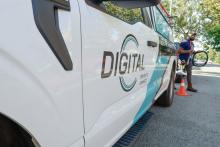
For years, Cleveland was labeled as one of the worst-connected cities in the nation despite the presence of AT&T and Charter Spectrum. But all of that is changing, thanks to an innovative nonprofit community network provider.
Even without getting a cent from the federal government’s flagship $42.5 billion dollar BEAD program, Cleveland is no longer just home to the Rock & Roll Hall of Fame. It’s now also the home of skyrocketing connectivity rates as DigitalC transforms the city’s digital landscape.
The data-backed progress was enough to convince the Cleveland City Council to recently sign off on a $4.35 million “performance payment” — part of an overall $20 million earmark from the city's coffers — to DigitalC after the nonprofit Internet provider blew past its 2025 goals for getting residents online and teaching them digital skills, a milestone city leaders are pointing to as proof that “The Cleveland Model” for closing the digital divide actually works.
Under its performance-based contract with the city, DigitalC was on the hook to add 4,700 new household Internet subscriptions and deliver digital skills training to 10,000 residents in 2025 or miss out on the multi-million dollar infusion of city cash.