
Charter Spectrum

Content tagged with "Charter Spectrum"

Related Topics
Displaying 11 - 20 of 51

Hudson, Ohio Accepting Bids For Citywide Fiber Build

Hudson, Ohio officials are now accepting bids on a promising new fiber-to-the-home network that should dramatically improve affordable, next-generation broadband access in the city of 23,000.

It’s just the latest effort by a city that has been exploring the option of municipal broadband infrastructure for more than a decade.

Just 15 miles north of Akron, the city has spent the better part of the last three years preparing to forge a new public-private-partnership (PPP) to expand access.

The city already owns and operates its own broadband network (Velocity Broadband, launched in 2015), but it exclusively serves the city’s businesses with gigabit-capable fiber.

The city’s new partnership would leverage that existing business network and core fiber assets to finally bring fiber optic connectivity to the city’s residents.

“The proposed work includes the installation of new fiber optic infrastructure, including approximately 11,750 lineal feet of 1.5-inch underground HDPE fiber conduit via horizontal directional drilling, 7,900 lineal feet of new aerial fiber, the placement of underground fiber vaults and handholes, and the subsequent fiber optic cable installation and testing,” the city’s proposal states.

In ProMarket: A Wave of Telecom Mergers

The CBN team's Associate Director for Communications Sean Gonsalves recently published a piece in ProMarket about the continuing consolidation of telecommunication markets and why municipal broadband is a better option. He writes:

"Last month, AT&T announced it would acquire all of Lumen Technologies’ fiber internet business for $5.75 billion. According to a company statement, the purchase will net AT&T one million fiber customers and significantly expand its fiber footprint in Denver, Las Vegas, Minneapolis-St. Paul, Orlando, Phoenix, Portland, Salt Lake City, and Seattle.

Across AT&T and Lumen’s service areas, where they offer wired or licensed fixed wireless Internet service, more than half of the locations they claim to serve have two or fewer options for high-speed internet service.

Good news for AT&T stockholders. Not so good news for broadband-hungry subscribers who, for years now, have been paying among the highest prices for internet service of any developed nation in the world. Ever wonder why that is? The answer is as painfully obvious as our overpriced monthly internet bills.

Image
A file tab reads "mergers and acquisitions"

When big telecom giants consolidate—especially in a market where most people have only one or maybe two internet service providers (ISPs) to choose from—the results are predictable: without meaningful competition for something as fundamental as internet connectivity in an internet-connected world, monopolists have no incentive to improve service, invest in network upgrades, or compete on price.

Charter and Cox Merge, Hotspots Under Threat, and the End of the Digital Equity Act | Episode 114 of the Connect This! Show

Connect This! Show

Catch the latest episode of the Connect This! Show, with co-hosts Christopher Mitchell (ILSR) and Travis Carter (USI Fiber) joined by regular guests Kim McKinley (TAK Broadband) and Doug Dawson (CCG Consulting) and special guest Angela Siefer (National Digital Inclusion Alliance) to talk about all the recent broadband news that's fit to print. Topics include:

Join us live on May 16th at 2pm ET, or listen afterwards wherever you get your podcasts.

Email us at [email protected] with feedback and ideas for the show.

Subscribe to the show using this feed or find it on the Connect This! page, and watch on LinkedIn, on YouTube Live, on Facebook live, or below.

Superior, Wisconsin Close To Launching City-Owned Open Access Fiber Network

Superior, Wisconsin officials say they’re getting very close to lighting up the first subscribers of a city-owned fiber network that will finally bring affordable, next-generation fiber access to the city’s long under-served community of 26,000.

“We have phase 1 in the ground and are working with Nokia right now for final configuration and testing,” Stephanie Becken, broadband manager for ConnectSuperior, tells ILSR.

“It's our plan to have our sign-up website ready in the next two weeks, as our two ISPs finalize their connections and offerings pages,” she says. “I'm hopeful we'll have drops and initial service started by mid-May, but we may be looking at June—there's always something!”

Image
Superior Wisconsin master plan cover sheet

In 2020 the city passed a resolution declaring fiber essential infrastructure. In 2021, the city council voted overwhelmingly to move forward on a deployment master plan developed for the city by EntryPoint Networks.

In 2023 the Superior city council voted 8-1 to approve deployment in the project’s first pilot area: a swath of around 830 homes and businesses lodged between Tower Avenue, Belknap Street, and North 21st streets. But the phase 1 target area has expanded a little since as the city has moved forward on logistics and planning.

Willmar, Minnesota Moves Forward With $24.5 Million Open Access Fiber Network

The city of Willmar, Minnesota (est. pop. 21,000), has voted to move forward on plans for a city-owned open access fiber network. The $24.5 million investment, which saw finalized approval by the Willmar city council earlier this month with a 4-3 vote, aims to drive accountable, affordable, fiber access to long underserved parts of the city about 100 miles west of Minneapolis/St. Paul.

In its 4-3 vote in early March, the City Council opted to continue work on the Connect Wilmar Initiative, something it says is an answer to the ongoing failures by regional incumbent telecom monopolies to provide uniform, high quality, high speed, affordable Internet access.

“Local internet providers were not interested in improving Willmar's internet infrastructure,” the city says. “After soliciting proposals, the city chose to partner with Hometown Fiber, aligning with Willmar’s long-term vision to provide fast, reliable internet through an open-access fiber network.”

Image
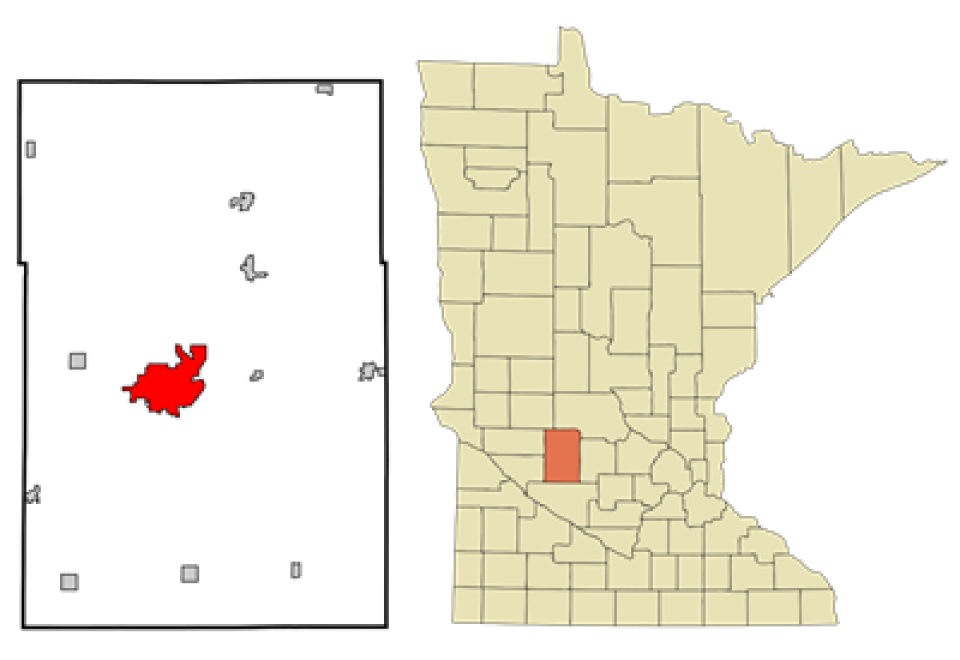
Willmar MN map highlight in state map that shows it is in the southern central part of the state

The decision to move forward on the network comes after several years of careful planning, starting with the creation of a city broadband committee in September of 2022, and a mapping of local broadband access (or lack thereof) completed in December of 2022.

Oswego County, NY Nabs $26 million ConnectALL Grant To Expand Fiber Access

Oswego County, NY officials are celebrating the award of a new $26 million New York State grant aimed at dramatically expanding affordable fiber access to long-underserved rural communities in the northwestern part of the state, just north of Syracuse.

According to the announcement by New York State Governor Kathy Hochul, Oswego’s latest grant award will help fund the deployment of 345 miles of new fiber infrastructure to largely rural unserved regions, helping to bring affordable broadband access to nearly 11,000 homes, businesses and community institutions across 22 towns and villages.

Oswego County will own the finished open access network and lease the fiber to Internet Service Providers (SPs), including Empire Access, "on a non-discriminatory and non-exclusive basis."

Empire, a family-owned ISP and named the fastest ISP in the nation by PCMag in 2021, currently offers local residents symmetrical 500 Megabit per second (Mbps) service for $50 a month; symmetrical 1 gigabit per second (Gbps) service for $65 a month; and symmetrical 2 Gbps service for $100 a month.

New York City Expands Free Wireless, But Missed Opportunities Loom Large

New York City Mayor Eric Adams recently unveiled plans to improve public safety, housing, and the overall livability of the Big Apple.

Among them is $6 million in new funding to expand the New York Public Library’s (NYPL) “Neighborhood Internet” network, providing free Internet to an additional 2,000 households receiving Section 8 rental assistance.

The city hopes that the program, which is first focused on expanding Internet access to low-income households in Upper Manhattan and the Bronx, will ultimately be expanded to reach as many low income NYC residents as possible. But the effort still remains a far cry from the bolder, bigger, “master plan” initiative scrapped by the Adams administration in 2022.

Image
Brick facade front of NYPL Bronx Parkchester library

Low income city residents simply need a library card to connect to the NYPL network in the limited parts of the city where access is currently being offered. The NYPL has experimented with Citizens Broadband Radio Service (CBRS), fixed wireless, and some fiber for connectivity. The program also provides low income users with a Chromebook with Wi-Fi access.

In Our View: States Should Consider Adopting Their Own Affordable Broadband Law in a New York Minute

Now that the lengthy legal beef has been settled and New York’s Affordable Broadband Act (ABA) is set to take effect this month, it marks a potentially pivotal moment in a national effort to address one of the biggest barriers to broadband adoption: 

Affordability.

The first-in-the-nation law requiring large Internet Service Providers (ISPs) operating in New York to offer a $15/month plan for qualifying low-income households stands to benefit the approximately 1.7 million New Yorkers who had been enrolled in the federal Affordable Connectivity Program (ACP) Congress allowed to expire last spring.

With a new administration entering the White House – supported by GOP Congressional leaders who blocked previous ACP renewal efforts – the newly enacted ABA “paints a path that other states will look at,” as New Street Research analyst Blair Levin recently noted.

Image
US Supreme Court building

“In a world where the federal government is subsidizing low-income households for $30 a month, states did not need to take action to address low-income broadband affordability,” Levin added. But now, without the ACP benefit, “states may try to assist low-income households to keep them connected.”

Roanoke Cooperative Thinks Big With North Carolina Fybe Fiber Expansion

North Carolina’s Roanoke Cooperative continues to make steady progress with expansion of its Fybe last mile fiber network within The Tar Heel State.

Cooperative officials tell ILSR that the cooperative and a coalition of organizations across North Carolina have major expansion plans in the works, starting with a fiber build in Halifax County, population 47,298.

Currently, Fybe provides fiber broadband service to around 6,000 subscribers in North Carolina, but thanks to an historic infusion of federal and state grants, the hope is to expand fiber access to the bulk of unserved addresses county-wide.

Fybe COO Bo Coughlin tells ILSR that the lion’s share of the cooperative's upcoming efforts to bring affordable connectivity to unserved and under-served portions of North Carolina will be under the banner of a coalition dubbed Encore, a nonprofit collaboration between MCNC, North Carolina Electric Membership Cooperatives (EMC), and Fybe.

“MCNC has been around for 40 years,” Coughlin notes. “It started as an economic Development institution funded by the state. Their goal was originally to help birth the microchip industry in RTP down in Raleigh, but today they provide transport to around a hundred universities, charter schools, and community anchor institutions across nearly 100 counties.”

Image
Fybe service territory map

Back in April, Fybe won a $9 million Growing Rural Economies with Access to Technology (GREAT) grant to help bring fiber to the largely underserved, heavily-rural residents of Martin, Bertie, Halifax, and Hertford counties.

“So currently, we pass about 5,000 total homes across Northampton and Halifax,” Coughlin said of Fybe’s current footprint.

Maine Issues RFP For Long-Planned MOOSE Net Middle Mile Fiber Network

The Maine Connectivity Authority (MCA), Maine’s quasi-governmental public agency in charge of broadband expansion and digital equity, is seeking proposals to help design and construct a major 536-mile fiber network that should dramatically improve affordable fiber access across vast swaths of the Pine Tree State.

For several years Maine officials have proposed spending $53 million to build a major middle mile fiber network known as the Maine Online Optical Statewide Enabling Network (MOOSE Net).

The middle mile network would extend fiber into numerous underserved Maine communities, boosting broadband competition and access while hopefully lowering prices.

Last year, Maine received a $30 million grant to help fund the network’s construction, courtesy of the National Telecommunications Information Administration’s (NTIA) $980 million Enabling Middle Mile Broadband Infrastructure Program. The MCA’s proposal was one of just 32 proposals selected out of 260 applicants for federal broadband funding.