
BEAD

Content tagged with "BEAD"

Displaying 11 - 20 of 235

How Rural America Gets Left Behind - Episode 660 of the Community Broadband Bits Podcast

In this episode of the podcast, Chris reconnects with Jonathan Chambers from Conexon to unpack the past, present, and future of federal broadband policy. 

They revisit the lessons of the Rural Digital Opportunity Fund (RDOF), the wave of defaults that followed, and why definitions of “broadband” have so often favored weaker technologies over fiber.

Jonathan shares insights on the BEAD program, the risks of funneling funds to satellite providers, and how policy choices today will shape whether rural communities thrive or wither tomorrow.

Despite frustrations, he ends with a call for evidence-based decisions and hope that local voices can still steer broadband investment where it’s needed most.

This show is 48 minutes long and can be played on this page or via Apple Podcasts or the tool of your choice using this feed.

Transcript below.

We want your feedback and suggestions for the show-please e-mail us or leave a comment below.

Listen to other episodes or view all episodes in our index. See other podcasts from the Institute for Local Self-Reliance.

Thanks to Arne Huseby for the music. The song is Warm Duck Shuffle and is licensed under a Creative Commons Attribution (3.0) license

Secret Fiber Caps and Fiber Platforms | Episode 121 of the Connect This! Show

Connect This! Show

Catch the latest episode of the Connect This! Show, with co-hosts Christopher Mitchell (ILSR) and Travis Carter joined by regular guest Doug Dawson (CCG Consulting) and special guests Josh Johnson and Donny Smith, from Fibersmith -  an OSS/BSS design and management firm for operators around the country. Topics of discussion  include:

Join us live on September 26th at 2pm ET, or listen afterwards wherever you get your podcasts.

Email us at [email protected] with feedback and ideas for the show.

Subscribe to the show using this feed or find it on the Connect This! page, and watch on LinkedIn, on YouTube Live, on Facebook live, or below.

How Federal Changes Could Derail BEAD - Episode 659 of the Community Broadband Bits Podcast

In this episode of the podcast, Chris is joined by Sarah Morris, Managing Director of Technology at Waxman Strategies and former Principal Deputy Assistant Secretary at NTIA.

Sarah offers an insider’s perspective on the BEAD program, reflecting on her time helping design and launch the $42.5 billion initiative to close the digital divide.

Together, they unpack the Trump administration’s recent push to steer more households toward satellite service, what it means for state-led broadband planning, and the risks of undermining Congress’s original vision for BEAD.

The conversation also dives into the importance of non-deployment funds, why state-driven processes matter, and how to keep accountability and community needs at the center of federal broadband policy.

This show is 41 minutes long and can be played on this page or via Apple Podcasts or the tool of your choice using this feed.

Transcript below.

We want your feedback and suggestions for the show-please e-mail us or leave a comment below.

Listen to other episodes or view all episodes in our index. See other podcasts from the Institute for Local Self-Reliance.

Thanks to Arne Huseby for the music. The song is Warm Duck Shuffle and is licensed under a Creative Commons Attribution (3.0) license

In Our View: Trump Administration Doubles Down on Pulling Investment Away from Rural Internet Access

Update Below - New Information

NTIA, the federal office administering the largest single investment to expand Internet access across the nation, appears to once again be changing the BEAD program in ways that would only force states to further reduce investment in rural areas.

Commerce Secretary Howard Lutnick, who oversees the NTIA office, has already introduced delays to the $42.5 billion Internet access expansion program, creating a year-long slow-down at a time when many states could be already connecting homes.

Now, even as the administration claims to be expediting the process, NTIA seems to have added yet another time-consuming wrinkle: a super secret “Best and Final Offer” round imposed on states after submitting final proposals.

Image
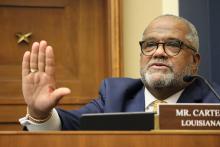
US Treasury Secretary Howard Lutnick testifies before Congress

A quick reminder of where we are: states were forced to redo all their work in recent weeks to follow new rules aimed at cutting costs by making the program demonstrably worse for hundreds of thousands of families.

Rather than spend money to help get these families access to comparably affordable fiber networks, states now have to push billions toward low-Earth orbit satellite services which offer them far worse connectivity at much higher prices to each subscriber. And yet, NTIA called this process of reducing investment in rural America the “Benefit of the Bargain” round.

Fiber Acquisitions and the New BEAD Numbers Are In | Episode 120 of the Connect This! Show

Connect This! Show

Catch the latest episode of the Connect This! Show, with co-hosts Christopher Mitchell (ILSR) and Travis Carter joined by regular guests Kim McKinley (TAK Broadband) and Doug Dawson (CCG Consulting) to talk about all the recent broadband news that's fit to print. Topics include:

Join us live on September 5th at 2pm ET, or listen afterwards wherever you get your podcasts.

Email us at [email protected] with feedback and ideas for the show.

Subscribe to the show using this feed or find it on the Connect This! page, and watch on LinkedIn, on YouTube Live, on Facebook live, or below.

Event: What's Next for Broadband in Minnesota?

On September 10th, in New Prague, the Minnesota Public Broadband Alliance (MPBA) will be hosting an in-person event with speakers aimed at community leaders and residents working to expand Internet access to unserved and underserved homes.

At the moment, featured speakers include:

  • Gigi Sohn (American Association for Public Broadband)
  • Christopher Mitchell (Director, Community Broadband Networks, Institute for Local Self-Reliance)
  • Bree Maki (Director, Minnesota Office of Broadband Development)

On the docket for conversation and questions includes where cities, providers, nonprofits, and other entities fit into the current landscape with respect to the Broadband Equity, Access, and Deployment Act (BEAD), other funding opportunities, and a host of other topics aimed at expanding access to infrastructure.

The MPBA is a coalition of towns, cities, and counties in Minnesota working to drive smart public investment towards broadband infrastructure.

The in-person event is free, but registration is required. Register here.

Affordability Law Whodunnit Gets Less Mysterious, But Murkiness Remains

The mystery of who and what killed the California Affordable Home Internet Act is coming into view.

As a California lawmaker hinted when the bill was abruptly withdrawn in June, the evidence seems to be pointing to the new leadership now directing the National Telecommunications and Information Administration (NTIA) – the agency administering the $42.5 billion federal BEAD program to expand Internet access.

In a recently released FAQ published by the NTIA this week, a corroborating clue has emerged.

And what may be the smoking gun is a bullet buried on page 48, under section 3.29, after the question: "May an Eligible Entity (states) require a specific rate for the low-cost service option (LCSO) when required by state law?”

NTIA's answer:

“No. The IIJA prohibits NTIA or the Assistant Secretary from engaging in rate regulation. Because the Assistant Secretary must approve the LCSO in the Final Proposal, the rate contained may not be the result of rate regulation. The RPN (Restructuring Policy Notice) addressed this fundamental flaw in the BEAD NOFO. The RPN eliminated BEAD NOFO requirements dictating price and other terms for the required low-cost service option.”

“Per the RPN, states may not apply state laws to reimpose LCSO requirements removed by the RPN. More specifically, the RPN ‘prohibits Eligible Entities from explicitly or implicitly setting the LCSO rate a subgrantee must offer’ (BEAD Restructuring Policy Notice, p.7). Violation would result in rejection of the Final (BEAD) Proposal (emphasis added).”

High Cost Of The “Bargain:” Trump Administration BEAD Changes Herald Slower, More Expensive Broadband

Recent Trump administration changes to a massive federal broadband grant program are lowering standards for broadband access, shifting the focus away from affordability and equity, and potentially redirecting billions of dollars away from future-proof fiber networks toward slower, more expensive satellite options that don’t seem likely to fix U.S. broadband woes.

But states, worried about losing an historic round of broadband grants, may be too intimidated to be up front about the potential downside of changes the Trump administration calls “the benefit of the bargain.”  

That’s the early story coming out of states like Tennessee, Colorado, and Texas, where state leaders are being forced to dramatically revamp billions of dollars in Broadband, Equity, Access, and Deployment (BEAD) grant planning.

In all three states the changes have introduced new delays and lowered last mile quality control standards. But an early look at the revamped bidding process in all three states shows that billions of dollars are likely being redirected away from locally-owned fiber networks to billionaire-owned low-Earth-orbit (LEO) satellite broadband options insufficient to the task.

Sky High Promises: The Limits of Starlink - Episode 657 of the Community Broadband Bits Podcast

In this episode of the podcast, Sascha Meinrath returns to unpack the mythology surrounding Starlink and similar “miracle” broadband solutions. 

He and the CBN team (Chris, Sean, and Ry) dive into how overhyping space-based Internet distracts from building reliable, ground-up infrastructure that communities actually need. 

From confusing speed metrics to misleading policy narratives, they explore how Starlink has become a tech mirage—promising abundance while leaving many still unconnected.

This show is 49 minutes long and can be played on this page or via Apple Podcasts or the tool of your choice using this feed.

Transcript below.

We want your feedback and suggestions for the show-please e-mail us or leave a comment below.

Listen to other episodes or view all episodes in our index. See other podcasts from the Institute for Local Self-Reliance.

Thanks to Arne Huseby for the music. The song is Warm Duck Shuffle and is licensed under a Creative Commons Attribution (3.0) license

Whodunit Brewing in California: What Killed California’s Affordable Broadband Law?

Last week, a California Assemblymember who had sponsored legislation for a broadband affordability law abruptly withdrew the legislation. 

But what really killed the broadband affordability bill in California? Was it opposition to the proposed legislation from within the state or pressure from the Trump administration?

The Bill Was Advancing Until…

Modeled on New York’s Affordable Broadband Act (ABA), the California Affordable Home Internet Act was first introduced in January. It aimed to require Internet service providers that operate in the Golden State to offer a $15 per month broadband service plan for income-eligible households.

Image
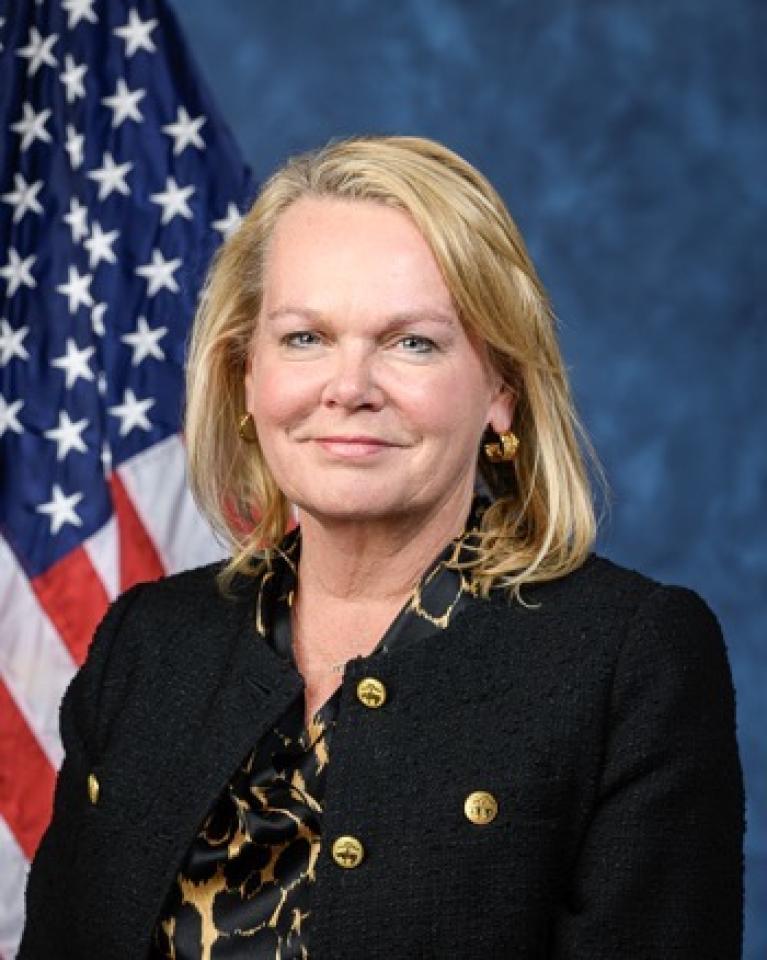
CA Assembly member Tasha Boerner smiles at camera wearing a light blue sleeveless dress with ruffles

The proposed legislation was introduced as AB 353 by Assemblymember Tasha Boerner and was initially supported by the California Alliance for Digital Equity (CADE).

Over the intervening months, CADE and proponents of the bill offered resources and recommendations on how the bill could be made more effective than the ABA, hoping to avoid the pitfalls that advocates were seeing with the rollout and implementation of New York’s law.

On June 4, the California bill advanced through the state Assembly and moved on to the state senate by a 52-17 margin.