
American Rescue Plan

Content tagged with "American Rescue Plan"

Related Topics
Displaying 1 - 10 of 244

Roanoke Cooperative Plans $2.4 Million Rural North Carolina Fiber Expansion

Roanoke Cooperative’s Fybe has been awarded $2.4 million in state funds to expand affordable access to high speed Internet to 826 locations across eight predominantly rural North Carolina counties that for years have been left lingering in a broadband desert.

Fybe, the cooperative's fiber business, will receive $2.4 million through the state’s Stop-Gap Solutions program to connect 826 locations across Bertie, Chowan, Gates, Granville, Halifax, Hertford, Martin, and Northampton counties. The fiber expansion is expected to be completed by the end of 2026.

“This investment allows us to continue expanding reliable, high-speed internet to rural communities that need it most,” Fybe President Bo Coughlin recently said of the expansion. “Access to broadband is essential for education, healthcare, business growth, and everyday life, and we’re proud to be part of the effort to ensure more North Carolinians can stay connected.”

Image
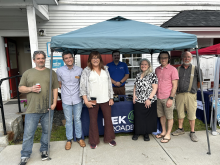
A group of young African American kids gather around a Roanoke Cooperative employee on Ag Safety Day

North Carolina’s Stop-Gap Solutions program is designed to reach hard-to-access locations and close gaps in broadband coverage. The program is administered by the North Carolina Department of Information Technology’s Division of Broadband and Digital Opportunity and is funded primarily through the federal 2021 American Rescue Plan Act (ARPA).

San Juan Islands’ Rock Island Communications Passes 7,000 Subscribers

The remote islands of San Juan County, Washington are increasingly being served with next-generation fiber and wireless thanks to Rock Island Communications (RIC), a locally-owned Internet subsidiary of the Orcas Power & Light Cooperative (OPALCO).

Part of a member-owned, cooperative utility that’s been providing electricity to the county since 1937 – RIC is celebrating a decade of what it calls “remarkable growth” for the tall task of remote island deployments to the county of 18,000.

The subsidiary says it just reached 7,000 subscribers across San Juan County, and that its annual revenue has grown dramatically during the last decade – from approximately $1.8 million in 2015 to more than $12.3 million in 2025.

“Over the past decade, Rock Island has also achieved several important financial milestones that demonstrate the success of OPALCO’s long-term vision,” OPALCO’s Krista Bouchey says of the expansion. “The company became cash-flow positive in 2020, and in 2023 and 2024 achieved positive net income, marking a major turning point after years of investing in infrastructure and growing its subscriber base.”

Image
Rock Island Communications headquarters in building that looks like house

The San Juan Islands are clustered in the most northwest tip of Washington state, off the coast of the cities of Bellingham and Anacortes, not far from the Canadian border. A little more than a third of the residents of the 20 islands are seasonal, and the lion’s share of the territory is only accessible by ferry.

Pennsylvania’s Claverack Cooperative Passes 100 Mile Fiber Milestone

Pennsylvania’s Claverack Rural Electric Cooperative (REC) says it’s making steady inroads in expanding affordable fiber access throughout rural Bradford and Wyoming Counties, where many frustrated locals have been stuck on the wrong side of the digital divide for the better part of a generation.

Not long ago, Claverack joined a growing roster of electric cooperatives that are extending into broadband access, often leveraging the experience and expertise that informed their efforts at rural electrification almost a century earlier. According to Claverack officials, they recently passed a notable milestone: the cooperative just wrapped up a project that delivered 100 miles of new fiber-optic cable to pass roughly 1,300 previously-unserved and underserved homes and businesses in rural Bradford and Wyoming counties.

“We were proud to share this milestone with the people who made it possible,” Steve Allabaugh, Claverack REC president and CEO, said of the project. “Years of planning, investment, and collaboration brought us to this moment.”

Image
Claverack REC sign at dusk with a gorgeous orange and deep purple sky

The Wysox, Pennsylvania-based cooperative currently services a 2,250‐square‐mile territory across eight counties in Northeastern Pa. (Bradford, Lackawanna, Luzerne, Lycoming, Sullivan, Susquehanna, Tioga, and Wyoming counties), maintaining more than 2,800 miles of electrical power lines and delivering electricity service to over 19,000 paying members.

Updated Resource: Community Networks Continue to Win Big in California's Infrastructure Grant Program

Last May, we shared a dashboard we built to track how community networks were doing in California's Last-Mile Federal Funding Account broadband grant program. With a new round of winners recently announced, we've updated our dashboards to show who, where, and how much community networks are getting. In the first round, they were seeing unprecedented success, punching far above their weight in comparison to the monopolies (which have a long track record of success in landing the bulk of state broadband grant dollars across the country). 

We're happy to say that the latest round shows community networks doing equally well. In late 2025 and early 2026, California announced an additional nine grants. Every county in California has now received grant funding for last-mile broadband expansion. Two of the awards were multi-county projects, stretching to include counties that were also served through the first round of funding.

Hoopa Valley Utility Authority was a big winner again, selected for a nearly $40 million award to serve areas of Trinity and Humboldt Counties. The project, called Hoopa TRAIL for Hoopa Trinity Rural Access Initiative Linkup, will serve nearly two thousand locations with gigabit symmetrical speeds. Taken together, community networks secured half of the awards and funding announced in this round. Other awards went to the Contra Costa Transportation Authority, for a planned public-private partnership, Comcast, AT&T, a regional Internet service provider, and a unique nonprofit-private partnership. Altogether, over $110 million was awarded in this round of grants, bringing the running total in the program to $1.23 billion.

Chittenden County CUD Continues Affordable Fiber Expansion In Vermont

Vermont’s Communications Union Districts (CUDs), which were the subject of a 2024 ILSR report, continue to make steady inroads in delivering high-quality broadband access to long-neglected rural Vermont residents. 

That includes the Chittenden County Communication Union District (CCCUD), which recently announced the completion of a planned fiber extension into the heavily rural communities of Essex Town, Essex Junction, Jericho, Shelburne, Westford, and Williston.

The deployment was completed in partnership with Fidium Fiber, which says the expansion brought fiber optic connectivity to more than 1,900 homes and businesses across the six towns for the first time ever.

Users in these markets have the option of three tiers of service: a symmetrical 100 megabit per second (Mbps) tier for a promotional rate of $30 a month; a symmetrical 1 gigabit per second (Gbps) tier for a promotional rate of $50 per month; and a symmetrical 2 Gbps option for a promotional rate of $60 per month. Those prices jump to $70, $110, and $125 per month when the promo period ends.

When Starlink Rewrites the Rules of Broadband Funding - Episode 675 of the Community Broadband Bits Podcast

In this episode of the podcast, Chris is joined by Doug Adams, head of Broadband Marketers and writer at Broadband.io, and Karl Bode for a wide-ranging discussion on recent developments reshaping federal broadband policy.

The conversation centers on Starlink’s latest efforts to reshape BEAD program requirements through confidential riders sent to state broadband offices—requests that would dramatically reduce accountability, alter performance standards, and deliver large sums of public funding upfront. 

Doug breaks down what states are being asked to accept, why NTIA has reportedly warned states not to sign on, and how these demands differ from the obligations placed on fiber and fixed wireless providers.

Chris and Karl place the moment in historical context, comparing it to past telecom subsidy failures and raising concerns about affordability, capacity limits, consumer protections, and long-term resilience. 

The discussion also touches on broader themes: the erosion of federal oversight, the future of municipal broadband, how ARPA funds are still quietly delivering results in states like New York, and why community-driven fiber networks may once again become the fallback as federal promises falter.

The episode closes with reflections on accountability, public trust, and the real-world impacts of policy decisions on rural communities.

This show is 50 minutes long and can be played on this page or via Apple Podcasts or the tool of your choice using this feed

You can also check out the video version via YouTube.

Transcript below.

We want your feedback and suggestions for the show-please e-mail us or leave a comment below.

Listen to other episodes or view all episodes in our index. See other podcasts from the Institute for Local Self-Reliance.

Thanks to Arne Huseby for the music. The song is Warm Duck Shuffle and is licensed under a Creative Commons Attribution (3.0) license

New Mexico Completes First ARPA Broadband Deployment In Rural Chaves County

New Mexico’s Office of Broadband Access and Expansion (OBAE) has announced the completion of a landmark broadband infrastructure expansion project that delivered affordable next-gen broadband access to dozens of long-neglected homes in a remote subdivision in rural Chaves County.

According to the OBAE announcement, the successful completion of the Chaves County project is OBAE’s first grant project to reach 100 percent completion, and the first Connect New Mexico Pilot Program project funded through the federal American Rescue Plan Act (ARPA) Capital Projects Fund to reach the final stage.

“This project’s completion delivers on the state’s promise to connect New Mexico families in the most remote areas of the state,” said Andy Exell, OBAE’s ARPA Program Coordinator.

“For these dozens of homeowners to finally get high-speed internet is a life changer.”

Image
Penasco Valley Telephone Cooperative fiber tech looks inside a roadside fiber cabinet

Like so many rural U.S. communities, residents of Chaves County were often deemed unprofitable to serve by entrenched private phone providers.

That changed in  2023 when OBAE awarded Artesia, New Mexico based Penasco Valley Telephone Cooperative Inc. (PVT) an ARPA grant of $487,000. Officials say construction included roughly 11 miles of pole-attached aerial fiber to the rural residences. With matching PVT funds, the broadband project’s total budget was $649,000.

The U.S. Treasury awarded New Mexico $117 million in grants through ARPA to expand and deploy broadband to unserved and underserved neighborhoods. 

Vienna, Maine Looks To Grow Fledgling Muni-Network

Vienna, Maine recently launched its own municipal fiber network, finally bringing affordable next-generation broadband access to the small town’s 600 residents. As soon as service was made available, 240 of the town's 400 plus households immediately signed up for service, and the town’s focus has shifted to demonstrating the value of fast affordable access to remaining locals that regional incumbents are trying to lure away with temporary promotional offers.

The Vienna Broadband Authority recently told the Bangor Daily News it needs 270 consistent subscriber households to maintain financial viability, so they’ve taken to demonstrating high speed connectivity at the local firehouse in order to pique the public interest.

The Vienna network was made possible largely thanks to a $2.3 million grant in 2023 from the Maine Connectivity Authority (MCA), which in turn was made possible by the 2021 American Rescue Plan Act (ARPA) passed by Congress. The town-owned network is being run in cooperation with Machias-based Axiom.

Image
A dozen or so residents stand outside the Vienna Fire department for an event

Axiom is providing locals with three options for service: symmetrical 100 megabit per second (Mbps) service for $60 a month; symmetrical 250 Mbps service for $65 a month; and symmetrical 500 Mbps service for $110 a month. The town also offers yearly seasonal rates of $612, $663, and $1122, respectively.

The municipality’s pricing comes without usage caps, hidden fees, or long term contracts. Interested locals have to pay a $99 installation deposit that is refunded once a customer is connected.  

New York Expands Its Historic Investment In Municipal Broadband

New York Governor Kathy Hochul has announced a dramatic expansion of the state’s Municipal Infrastructure Program (MIP), resulting in an additional $36 million cash infusion for the growing number of creative, community-owned and operated fiber expansion projects in the state.

According to a state announcement, the existing MIP program, launched in early 2024, has already funded more than $268 million in assorted open access fiber projects across the state. A state broadband office dashboard tracks all active municipal projects funded to date.

That includes efforts like the growing open access municipal fiber network in Dryden, New York, which has been steadily delivering affordable next-gen fiber to the long-underserved rural communities of Dryden and nearby Caroline (population 3,321).

New York State officials say the $268 million in MIP grant funding has funded active projects across 24 New York counties, resulting in more than 2,300 miles of new fiber optic infrastructure and 68 new wireless hubs serving more than 96,000 homes and businesses. Most of this funding was made possible by the 2021 federal American Rescue Plan Act (ARPA).

The MIP program is part of New York state’s billion dollar ConnectALL Initiative, and was specifically designed to support municipal broadband projects proven to be a viable, and increasingly popular, way to bring affordable, high-quality Internet service to long-neglected U.S. communities.

Superior, Wisconsin’s ‘Game Changing’ Open Access Fiber Network Goes Live

Superior, Wisconsin’s community-owned open access fiber network has gone live in its first two deployment neighborhoods, as the city works toward providing affordable next-generation fiber access to the city’s long under-served community of 26,000.

When we last checked in with Superior back in April, the city was working with Nokia for final configuration and testing before launch. Now, the municipal broadband network says its ConnectSuperior fiber network is live in its first two target neighborhoods in the northern part of the city (see the city’s latest deployment map).

The city’s open access network means that multiple broadband providers can compete over the same shared infrastructure. Historically such a model helps boost competition and drive down costs for both consumers and competitors. That’s already the case in Superior, where the city’s website lists two providers – Advanced Stream and Superion Networks – with more on the way.

Image
Superior Wisconsin UW Superior entrance

Advanced Stream is offering locals three tiers of service: a symmetrical 300 megabit per second (Mbps) tier for $63 a month; a symmetrical 650 Mbps tier for $75 a month; and a symmetrical one gigabit per second (Gbps) tier for $83 a month.

Superion is offering three tiers of service as well: a symmetrical 300 Mbps tier for $63 a month; a symmetrical 650 Mbps tier for $75 a month; and a symmetrical 1 Gbps tier for $85 a month. Both companies offer phone bundles for a modest additional surcharge.