
Cox

Content tagged with "Cox"

Related Topics
Displaying 21 - 30 of 35

Cox Discourages Internet Use That Competes with Core Cable Product

Another story of frustration as cable companies try to discourage Internet use on their last generation networks.

An article earlier this month in StopTheCap! tells the story of the John Heeley family, long time Cox customers and avid Netflix fans. The Heeley's received a letter from Cox warning them about their "excessive Internet usage." They were more than a little annoyed, considering they fork over $2,400 a year to the cable giant provider so called to express their displeasure:

Heeley’s fiancé Shelley was angry after realizing just how much the couple already spends with Cox.

“I called them on the phone and the first thing they want to do is get you to upgrade and spend even more money with them,” she tells Stop the Cap! “They tried to vaguely threaten our service if we continued to ‘overuse the Internet’ and suggested we cut back or cancel Netflix which they think is the reason we went over the limit.”

Shelley says she was born at night, but not last night.

“How convenient they want you to stop using Netflix, Amazon, or other online video services that their cable TV competes with,” Shelley says. “It is unfair competition.”

Shelley requested a Cox supervisor and threatened the company right back, telling Cox if they sent one more letter like that, the Heeley family would take their business elsewhere.

“He told us quietly we could ignore the letter and any future letters and they will add a note on our account,” Shelley tells us. “He confided they have customers going over the limit all the time and the letter is really about educating customers about usage.”

Ketchum, Idaho: No Tolerance for Cox Push Polls

Cox pushed Ketchum one step too far. The community of 2,700 formed a broadband advisory committee in November, 2012, and included a representative from Cox on the committee. Brennan Rego of the Idaho Mountain Express recently reported on happenings in Ketchum.

When residents in Wood River Valley started receiving push poll telephone calls from Cox to poison any possibility of a community owned network, Mayor Randy Hall and city leaders reacted promptly. They booted Cox off the broadband advisory committee.

Consistent with Cox push polls in other places, questions were leading:

 “The questions were so outrageous, I didn’t want to continue with the survey,” [Valley resident Sarah Michael] said. “I got offended. They were inappropriate and misleading.”
 

Michael said that, in essence, one question asked: Would you support Ketchum’s broadband initiative if you knew the city would cut police, fire and other essential services to pay for it?
    

“Who’s going to answer yes to that?” she said.

Michael and other residents who received the calls contacted surprised city staff and Mayor Hall. 

 “As the mayor, I can’t stand by and let somebody imply that I’m going to compromise the Police Department and the Fire Department by taking money away from them and putting it toward a broadband initiative,” Hall said. “That’s insane. I would never do that. I think the survey was trying to create fear.”

Cox claimed the questions were designed to "learn more about the public's opinion" but would not divulge the wording of the survey questions.

The city posted a disclaimer on its website to ensure residents knew the survey was not associated with the committee. 

“Cox is a very valuable member of our community,” Hall said. “But to imply that the city is willing to compromise the health and safety of its citizens by funding a broadband initiative is false and irresponsible.”
    

Hall said he considers Cox’s “unilateral action” in deciding to conduct the survey a “breach of trust,” but that the city would welcome a new representative of the company to the committee.

Community Broadband Bits 19 - John St. Julien from Lafayette

Today we invited John St. Julien, of Lafayette Pro Fiber fame, on episode 19 of the Community Broadband Bits podcast. John was an essential piece of the organizing effort in Lafayette's efforts to build its own community fiber network. In many ways, he has worked to ensure the "community" piece is emphasized over the "fiber" piece. John and I discuss the organizing effort in Lafayette that led to their successful referendum in 2005, including some lessons for others who want to organize their own communities. We also talk about some of the lengths that big cable and telephone companies will go to stop communities. In the course of our discussion, we talk about a push poll that backfired on those trying to scare voters -- we made the full audio available here. John will be back on a future show to offer more thoughts on how local activists can work within the community to encourage a local, publicly owned solution. For background on the LUS Fiber network in Lafayette, we strongly recommend our Broadband at the Speed of Light report, which features a case study of the network. Also, four episodes ago, we interviewed Geoff Daily about his work to develop apps on the LUS Fiber network. Read the transcript from this interview here. We want your feedback and suggestions for the show - please e-mail us or leave a comment below. Also, feel free to suggest other guests, topics, or questions you want us to address. This show is 25 minutes long and can be played below on this page or subscribe via iTunes or via the tool of your choice using this feed. Search for us in iTunes and leave a positive comment! Listen to previous episodes here. You can download the Mp3 file directly from here. Find more episodes in our podcast index. Thanks to Fit and the Conniptions for the music, licensed using Creative Commons.

Audio of Dirty Trick Push Poll in Lafayette from 2005

We sometimes fail to communicate the great lengths to which big cable and telecommunications companies will go to intimidate and scare voters into opposing a community broadband projects. They have deployed a variety of dirty tricks and we have done a poor job of cataloging them. But a recent phone call with John St. Julien in Lafayette, Louisiana, reminded me of a push poll that an alert citizen recorded back when Cox, Bellsouth (now AT&T), and/or other opponents of the municipal broadband project commissioned a "push poll" to scare voters into opposing a referendum on whether the City should build its own network. We tell the full story about this campaign in our Broadband at the Speed of Light report. But in anticipation of our interview with John St Julien tomorrow, we thought we should make sure our readers/listeners had a chance to hear this 30 minute call. In it, a pollster is asking a series of questions commissioned by opponents to the community broadband network and responding to it. The audio is sometimes hard to make out, but well worth it as the person recording it has some pretty funny responses to some of the questions being posed. This is just one of the reasons that referenda are a poor tool for measuring community support of a project. While the big companies can dump unlimited funds into their self-interested "vote no" campaigns, the city itself cannot encourage voters to go one way or another. And local groups supporting a community broadband network have far fewer resources. For instance, when Longmont, Colorado, had its first referendum, Comcast blitzed the community with something like $250,000 in ads and misinformation (setting a local record for expenditures) -- resulting in a pretty significant majority for the "nay" voters. After citizens realized they'd been had, they clamored for another vote. Two years later, Comcast dropped $400,000 on Longmont but the grassroots successfully out-organized the cash-dump. If you want to know more about how your community can win a fight like this, read more about Lafayette and listen to our conversation with John St. Julien tomorrow (the first of several). Here is the push poll and response.

Chanute's Gig: Rural Kansas Network Built Without Borrowing

Image
The Institute for Local Self-Reliance has just released a new case study on community broadband -- this one examines how Chanute, Kansas, built its own broadband network over a period of many years without borrowing. Download a PDF of Chanute's Gig: One Rural Kansas Community's Tradition of Innovation Led to a Gigabit and Ubiquitous Wireless Coverage here. Local businesses are strong supporters of the network. From Ash Grove Cement to MagnaTech, business clients have remained satisfied subscribers. The network continues to encourage economic development and provides connectivity options that attract high bandwidth employers. The network generates $600,000 per year for Chanute’s Electric Utility, 5 percent of which goes to the general fund as a franchising fee each year. Author Christopher Mitchell, Director of the Telecommunications as Commons Initiative at the Institute for Local Self-Reliance, believes Chanute can offer valuable lessons to other communities across the United States. “This community has demonstrated that communities can meet their own telecommunications needs with smart public investments — they did not wait for national corporations to solve their problems.” City Manager J.D. Lester refers to municipal broadband as “the great equalizer for Rural America,” saying: “You don’t have to live in Kansas City to work there.” The City also operates a 4G WiMAX network that connects public safety and is used to feed Wi-Fi hotspots throughout the community. Local leaders plan to expand the network to offer access to all residents and businesses in the future as extending it become financially feasible. As it expands, it will offer the potential for smart-grid type investments in the gas, water, and electrical utilities — all of which are owned and operated by the local government. One of the key lessons other communities can take away from this case study is how planning and prioritizing community investments in broadband can greatly benefit the community, especially local businesses. Chanute took advantage of several opportunities to expand what started as a very basic network over the course of many years at low cost.

Harold Feld Examines The Meaning Behind The Verizon/SpectrumCo/Cox Deal

Several months ago, we wrote this post but it got lost in the system. We think it still worthwhile, so here it is.

The word "cartel" drums up many negative annotations - drug cartels, oil cartels. Never anything positive, such as bunny cartels or chocolate cartels. Harold Feld (of Public Knowledge) explains the emergence of another cartel in My Insanely Long Field Guide To The Verizon/SpectrumCo/Cox Deal, on his Tales of the Sausage Factory blog. This is  great tutorial on how the deal came about and what it can mean for the future of broadband.

Rather than chocolate, drugs, oil, or bunnies, the product in question is telecommunications services. At the heart of the cartel are the familiar names: Verizon, Cox, and SpectrumCo. The latter being a consortium of Comcast, Time Warner Cable, and Bright House. All the big hitters in telecom are involved in a way that is veiled, secretive, and not good for competition.

"It's almost as if your companies got in a room together, and you agreed to throw in the towel and stop competing against each other," Sen. Al Franken to representatives from Verizon and the cable companies at the Senate Judiciary Subcommittee on Antitrust, Competition Policy, and Consumer Rights, March 21, 2012.

Feld's investigation begins with the licensing and collecting of spectrum by SpectrumCo but ends with a more practical look at how these big hitters have decided that it is better to join forces than to compete. Side agreements, secretive multi-layered entities, and threaded loopholes keep the FCC at bay. This begins as an article about telecommunications, but quickly expands into an antitrust primer. The most alarming facet of this situation is that the product in question is information.

Joel Kelsey of Free Press testified at that same committee, warning how this deal will compromise access, quality, and affordability to broadband in America and how drive us further behind the rest of the world.

Update:

On August 16, 2012, the Department of Justice announced that it approved the deal with changes. Citing:

Fiber Referendum Fails in Siloam Springs

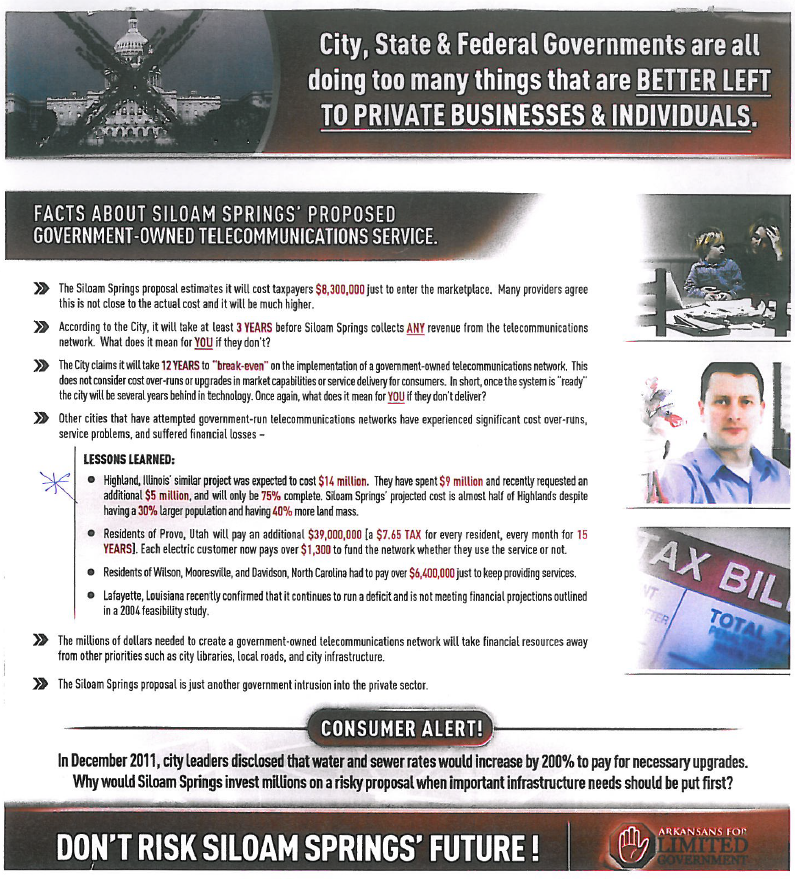
In an unsurprising result, voters in Siloam Springs, Arkansas, chose not to build their own FTTH network. The margin was 58% against, 42% for. According to that article, the opponents (bankrolled largely by national cable company Cox) outspent proponents by 3:1. We previously covered this plan and were concerned that the number one reason identified for proposing the network was to diversify revenue for the local government. Quite frankly, that is a poor reason to go head to head against massive companies like Cox and CenturyLink. The biggest benefits of community networks tend to be the hard to quantify -- aggregate savings to the community from lower prices from all providers in a competitive environment, increased economic development, better customer service from a local provider, etc. These networks are built to be financially self-sufficient, but we caution against expecting them to be a piggy bank for the local government. Unlike the successful Longmont approach, where those advocating for the community network engaged others who had been through similar fights elsewhere, it seemed like Siloam Springs preferred not to ask for help. Meanwhile, Cox tapped its nationwide resources to oppose the network, with misinformation like this: Siloam Springs Opposition Download the full size flyer here. Communities that want to build community networks should engage the wider community of community broadband supporters and be prepared for flyers like this one. And when seeking local support, make sure you find messages that resonate. Make sure you read about the grassroots movement in Lafayette in our recent report or how Chattanooga had hundreds of community meetings to explain its plan. These networks face stiff opposition from entrenched opponents that want to be the sole gatekeepers to the Internet -- ensuring a real choice means doing real organizing.

Arkansas Town Targeted by Cox Prior to Community Broadband Referendum

Siloam Springs, sporting 15,000 people in the northwestern corner of Arkansas, could be the next community to build its own community fiber network. But first they have to pass a referendum in May in the face of stiff opposition from Cox Cable, which would prefer not to face real competition. For over 100 years, the city has provided its own electricity via its electrical department. Now, it wants to join the more than 150 other communities that have done so. After last year's changes to Arkansas law, Siloam Springs has the authority to move forward if it so chooses. Pamela Hill at the City Wire has covered the situation with a series of stories, starting with an explanation of why they are moving forward:
David Cameron, city administrator, said the proposal is not so much about dissatisfaction with current providers as it is about finding new revenue for the city. Cameron said revenue from electric services has been a key source of funding for various projects and necessities for the city. That “enterprise” fund is getting smaller, Cameron said, and an alternative funding source is needed. “We have done a good job managing accounts, building a reserve,” Cameron said. “We want to keep building on the programs we have. It takes money and funds to do that.” City officials discussed the issue for the last 18 months and decided to put it to a referendum. Voters will decide the issue May 22.
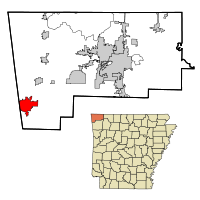
That is a fairly unique reason. Most communities want to build these networks to encourage economic development and other indirect benefits to the community. Given the challenge of building and operating networks, few set a primary goal of boosting city revenue. Map of Siloam Springs
If approved by voters, the city plans to spend $8.3 million to install 100 miles of fiber optic cable directly to homes and businesses. The city should be able to repay the debt in 12 years, if things go according to a feasibility study presented to the city’s board of directors in January.

USA Today Covers Lafayette Community Fiber Success

The USA Today occasionally covered the Lafayette muni fiber network fight as Cox and Bellsouth used every dirty trick conceivable against the community to shut it down. Reporter Rick Jervis looks back in now that the network is available to everyone in town.
The battle over broadband in Lafayette is part of a growing number of clashes across the USA that pit municipalities against telecom firms for the right to deliver Web access to homes and businesses. More than 150 local governments across the country have built or are planning to build cyber networks, says Christopher Mitchell of the Washington-based Institute for Local Self-Reliance, a non-profit group that advocates community development and local access to technology. Mitchell says those efforts often draw opposition in the form of misinformation campaigns, lawsuits from private providers or unfavorable state laws resulting from telecom lobbying. Nineteen states either ban cities and counties from getting into the broadband business — or make it difficult.
Minor quibble: the Institute for Local Self-Reliance (and particularly my work) is not Washington-based. Like the toy in Crackerjack boxes, we cannot have a story about community networks without at least one blatant lie from some cable company employee. No disappointments here:
"Our initial objection was, and remains, that it is an unfair advantage for your competitor to also be your regulator," says Todd Smith, a Cox spokesman. "Many states prohibit government from competing with the private sector."
I challenge Todd Smith to name one way in which LUS Fiber regulates Cox. When the local government makes rules that impact either Cox or LUS Fiber, such rules have to be non-disciminatory or they violate state and federal laws. If incumbents think the community is violating any laws, we know that they know how to hire lawyers and file lawsuits.

Cable Monopoly Result of Private Sector, not Public

A common misconception is that local governments award exclusive (or monopolistic) franchises to cable companies and that is why the US has so little cable competition.  However, no local government has done this since the 1996 Telecommunications Act 1992 Cable Act made the practice illegal.

But even before the '96 Telecom Act '92 Cable Act, local governments tended to award non-exclusive contracts to cable companies because they wanted more competition, not less -- as illustrated in this article about Cox preparing to renew its franchise agreement with New Orleans.

Federal laws and Federal Communications Commission decisions also have sharply curtailed the city's negotiating ability. Even if other companies were seeking permission to provide cable to local customers, said William Aaron, a legal adviser to the council on telecommunications issues, council members could not arbitrarily refuse to renew the Cox franchise. The council could do that only on the basis of certain limited criteria, such as that the company has not lived up to the terms of the 1995 agreement. Cox has had a nonexclusive franchise to operate in Orleans Parish since 1981, meaning that other companies also can apply to provide cable services, though none has done so. The franchise was renewed in 1995.
For years, state and federal policies have limited local authority to require just compensation for access to the valuable right-of-way because the cable and telephone companies pretended that they would invest more and create competition if local authority were preempted. Local authority has been significantly preempted in many communities without any real increase in competition or lowering of prices. No surprise there - another victory for companies better at lobbying than providing essential services.