
Fast, affordable Internet access for all.

Fast, affordable Internet access for all.

The Institute for Local Self-Reliance (ILSR) is a national nonprofit working to reverse today’s extreme levels of corporate concentration and advance policies to rebuild the economic capacity of local communities. We use in-depth research, reporting, and data analysis to produce influential reports and articles.

Sometimes we come across a fun bit of Internet history that we think is worth highlighting. In this case, Travis Carter, co-host of our Connect This! show, sent this fun and informative history of dial-up broadband over our way and we thought some of you would want to watch it in its entirety.

For more than a year and a half, the nation’s top telecommunications regulator has been stuck in limbo, thanks to a combination of federal dysfunction and industry lobbying. Now the nomination of popular reformer Gigi Sohn to the FCC is facing a full frontal assault by telecom monopolies dedicated to preventing the agency from standing up to monopoly power.

Breaking new ground in New York, state leaders are launching the first municipal fiber-to-the-home (FTTH) projects in the Empire State with funds from its new ConnectALL Initiative. Four small rural communities in four different counties will be the beneficiaries of New York’s initial foray into municipal broadband. At the end of May, Gov. Kathy Hochul’s office announced the $10 million grant award, which will fund fiber deployments to the Village of Sherburne in Chenango County, the Town of Nichols in Tioga County, the Town of Diana in Lewis County, and the Town of Pitcairn in St. Lawrence County.

In March, the Institute for Local Self-Reliance and the National Digital Inclusion Alliance held a livestream event on the range of challenges and tools available to communities to accomplish infrastructure, equity, and inclusion goals.

With so much attention on how the Broadband Equity, Access, and Deployment (BEAD) Act is continuing to unfold (including from us), it’s important to remember that the FCC’s Rural Digital Opportunity Fund (RDOF) is still in the process of authorizing bids from its $9.2 billion auction conducted in December of 2020. Today we’re releasing a new resource we hope will be helpful in keeping tabs on which providers have gotten money, how much has been authorized, and in which states.

It’s been nine months since we launched our Big List of American Rescue Plan Act (ARPA) Community Broadband Projects, tracking what communities are doing with the various pots of federal money intended to go towards solving local broadband challenges. Since then, we’ve recorded 250 community projects and 27 states which have announced significant broadband grant programs or disbursement for new infrastructure projects. Here we highlight some of the community projects we’re really excited about, including those that have decided to build their own networks and those building on existing projects, as well as those using ARPA dollars for open access networks, affordable connectivity, or Internet access for students. We also discuss some examples of solutions we believe are less permanent, forward-thinking, or likely to result in long-term success, including the distribution of hotspots and the allocation of funds to monopoly providers.
This morning, the Department of Treasury announced the first round of Capital Projects Fund (CPF) awards to states putting together portfolios to deploy new infrastructure to unserved households.

Join us live on Thursday, June 9, at 5pm ET in the chat for the latest episode of the Connect This! Show.

The BEAD Notice of Funding Opportunity (NOFO) released by NTIA is packed with guidance and regulations for how tens of billions in new funding with be spent. Reading the rules closely gives us a sense of who they might advantage, at least early on, and the line NTIA is trying to walk in giving the money the most bang for its buck while also heading off abuse.
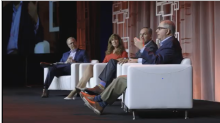
With a fiber-to-the-home (FTTH) boom sweeping across the nation as communities look to build or expand access to ubiquitous, reliable, high-speed Internet infrastructure, Fiber Connect 2022 is poised to bring together leading network operators well versed in a multitude of technologies, local government and public sector leaders, network builders, and an assortment leading industry experts later this month. Coming on the heels of last year’s gathering – the largest Fiber Connect conference to date – this year’s event will return to Nashville from June 12 – 15.

Join us today, June 2, at 5pm ET in the chat for the latest episode of the Connect This! Show. Co-hosts Christopher Mitchell (ILSR) and Travis Carter (USI Fiber) are joined by regular guests Kim McKinley (UTOPIA Fiber) and Doug Dawson (CCG Consulting).


